

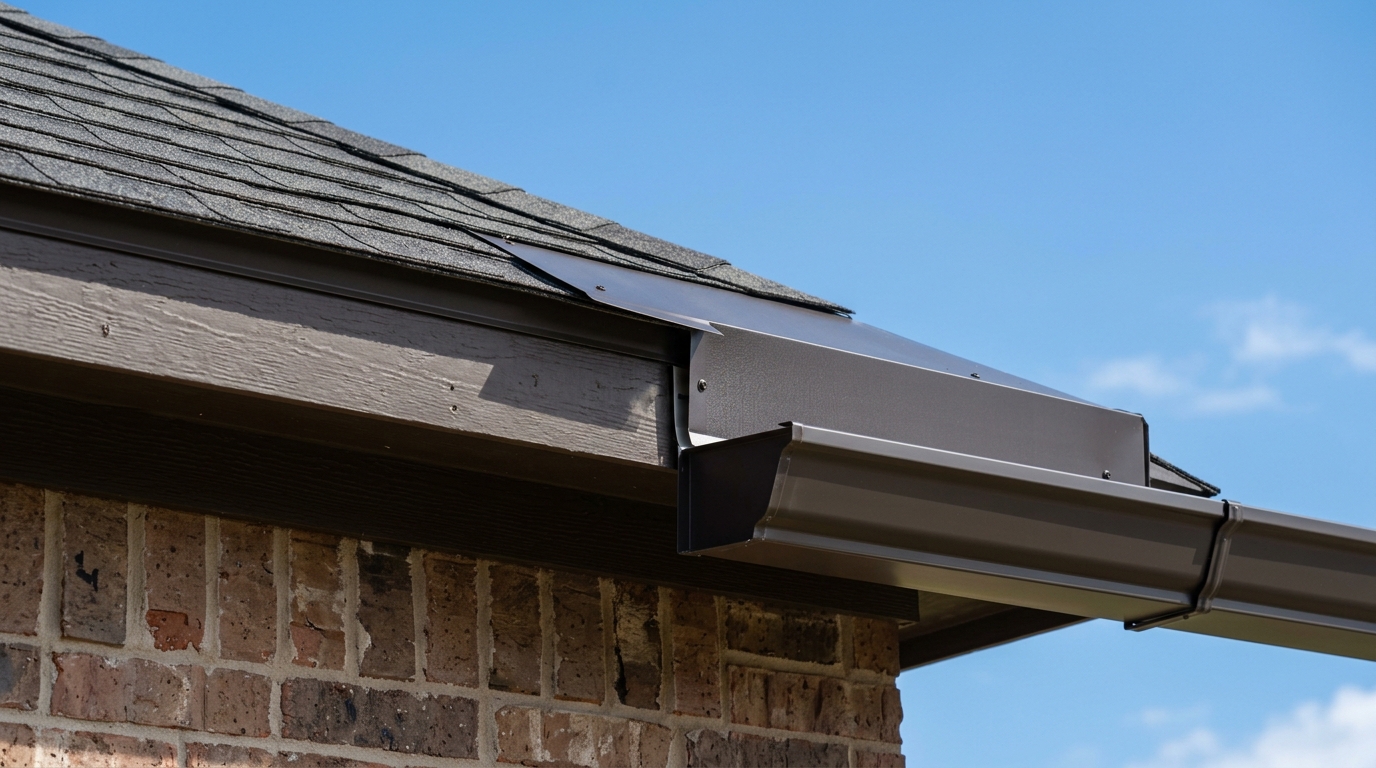
When homeowners think about their roof, they picture shingles, maybe flashing around the chimney, possibly gutters. Few think about drip edges, yet this simple strip of metal running along the roof’s perimeter is one of the most important components protecting your home from water damage.
Drip edge is metal flashing installed along the eaves and rakes of your roof. Its job sounds basic: direct water away from the fascia and into the gutters. But without a drip edge, water clings to the underside of shingles and runs down the fascia board, rotting wood, damaging soffits, and eventually creating leaks inside your home. It also seals a gap that allows pests into your attic.
Texas building code requires drip edges on all shingle roofs, and for good reason. This guide explains what drip edge does, why it matters in Allen’s weather conditions, and what happens when roofs lack this essential protection.
What Is a Drip Edge and How Does It Work
A drip edge is metal flashing installed along the edges of your roof at both the eaves (horizontal edges) and rakes (sloped edges at gable ends). Most drip edges are made from aluminum, galvanized steel, or copper. The profile resembles an L or T shape that extends beyond the fascia board, typically by at least a quarter inch.
The mechanics are simple but effective. Water follows the path of least resistance. Without a drip edge, rainwater running off shingles clings to the roof edge and travels down the fascia, eventually saturating the wood. With a drip edge installed, water runs off the shingles, hits the metal flashing, and drops directly into the gutter. Surface tension and gravity work together to keep water moving away from vulnerable wood components.
The drip edge also covers what roofers call the “carpenter’s gap,” the small space between the roof deck and fascia board. This gap exists on nearly every roof, and without a drip edge sealing it, the opening becomes an entry point for insects, birds, rodents, and other pests seeking shelter in your attic. During any roof installation, proper drip edge placement is just as important as the shingles themselves.
Why Drip Edge Is Required by Texas Building Code
Drip edge is not optional in Texas. Section R905.2.8.5 of the International Residential Code, which Texas has adopted, requires drip edges at the eaves and rakes of all shingle roofs. The code specifies precise installation requirements that roofers must follow.
Adjacent segments of drip edge must overlap by at least two inches to maintain continuous protection. The vertical leg must extend at least one quarter inch below the roof sheathing and reach at least two inches up onto the roof deck. Fasteners must be spaced no more than twelve inches apart. These specifications exist because proper installation determines whether a drip edge actually protects your home.
Home inspectors check for drip edges during pre-sale inspections. Missing or improperly installed drip edges can fail an inspection, delay a home sale, or create issues with insurance claims after storm damage. Understanding Texas roofing laws helps homeowners ensure their roof meets all code requirements and protects their investment.
What Happens to Your Roof Without a Drip Edge
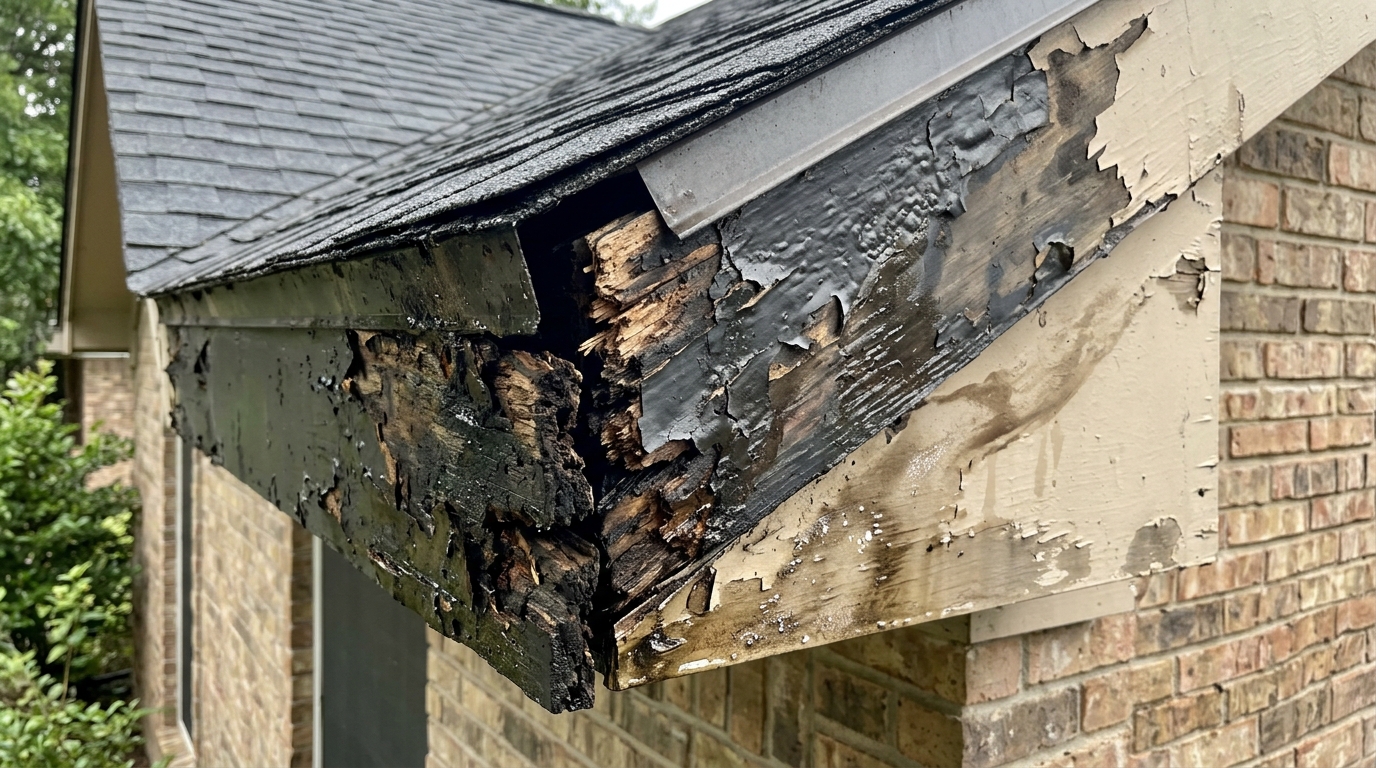
The consequences of missing the drip edge develop gradually, often remaining invisible until significant damage has occurred.
Fascia and soffit rot is the most common result. Water running behind gutters saturates the fascia board with every rain. Over months and years, this moisture causes the wood to swell, warp, and eventually rot. Damaged fascia can no longer support gutters properly, leading to sagging and separation that makes the water problem worse.
Roof deck deterioration follows the same pattern. Moisture wicks into the exposed edges of plywood or OSB decking, causing swelling and delamination. The decking weakens along the entire perimeter of your roof, compromising structural integrity where shingles attach.
Interior leaks eventually appear once fascia damage progresses far enough. Water works its way behind siding, into wall cavities, and through ceiling materials. The leak may show up in a bedroom or living room, far from where water actually entered.
Mold and mildew growth accompanies all of this moisture intrusion. Damp wood in enclosed spaces creates ideal conditions for mold colonization in attic spaces and wall cavities.
Pest entry becomes possible when the carpenter’s gap remains unsealed. Squirrels, birds, wasps, and rodents recognize the opening and use it to access your attic. Once inside, they cause additional damage and create health concerns.
Your gutters work less efficiently without a drip edge directing water into them. Rain overshoots the gutter or runs behind it, pooling at your foundation instead of draining through your gutter services and downspouts as designed.
Why Drip Edge Matters More in Allen’s Climate
North Texas weather creates specific challenges that make drip edge even more important for local homes.
Wind-driven rain is common during Texas thunderstorms. When rain falls nearly horizontal, it can blow upward and under shingle edges. Drip edge with adequate flange depth prevents this by providing a barrier that wind-driven water cannot easily bypass.
Temperature swings stress roofing materials constantly. Allen can experience forty-degree temperature changes in a single day. This expansion and contraction cycle can lift shingle edges over time, exposing the roof deck to water intrusion. Drip edge provides secondary protection when shingle edges no longer sit flat.
Heavy downpours challenge gutter capacity. During intense rainfall, high water volume can overwhelm gutters. Without a drip edge ensuring water enters the gutter channel, excess water runs down the fascia instead. After severe storms, consider scheduling emergency roofing inspections to check for damage to drip edges and other vulnerable components.
Hail can dent, bend, or displace drip edges along entire sections of roof edge. The metal may look intact from the ground but no longer function properly.
Intense UV radiation degrades sealants at drip edge joints faster than in milder climates. Joint sealants can crack and separate after just a few Texas summers, allowing water behind the drip edge.
Types of Drip Edge and Which Works Best
Not all drip edges are identical. Three main profiles serve different purposes.
Type C, often called L-style, is the simplest design. It bends at a ninety-degree angle, forming a basic L shape. This style costs the least and works adequately for basic applications, but provides less protection against wind-driven rain than other profiles.
Type D, sometimes called T-style or D-metal, includes an extended flange at the bottom that directs water further away from the fascia. Most roofing professionals recommend Type D for residential applications in areas with significant rainfall because it handles high water volume more effectively.
Type F, also known as gutter apron, has a longer leading edge that extends further down the fascia. This profile is particularly useful for retrofit installations on existing roofs because the extended edge can be positioned over existing shingles without requiring their removal.
Material selection matters as well. Aluminum is the most common choice because it resists corrosion, weighs little, and can be painted to match gutters or fascia. Galvanized steel offers greater strength and rigidity, making it preferable in high-wind areas, though it eventually rusts if the zinc coating is compromised. Copper is the premium option, lasting fifty years or more and developing an attractive patina over time. Similar considerations apply when selecting materials for metal roofing projects.
Building code requires minimum material thickness: 24-gauge for steel and 0.019 inches for aluminum. Thinner materials may not withstand Texas wind loads.
Signs Your Drip Edge Is Damaged or Missing
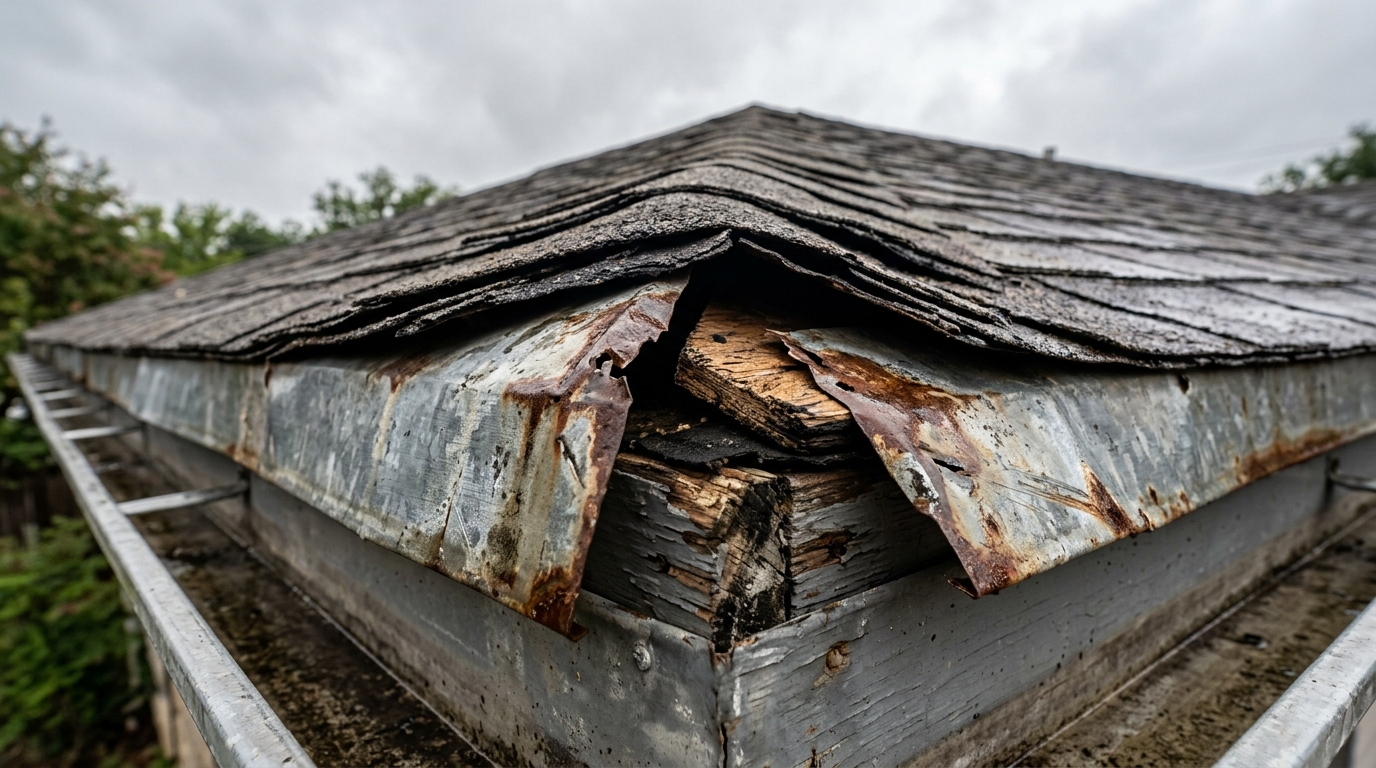
Some warning signs are visible from the ground. Others require closer inspection.
Visible rust, corrosion, or discoloration along roof edges indicates the protective coating has failed on the steel drip edge. Once rust begins, the metal deteriorates quickly.
Bent, dented, or displaced sections suggest storm damage. Metal that no longer lies flat against the fascia cannot direct water properly.
Water stains on fascia boards or soffit panels indicate water is getting behind the gutter. If your fascia shows discoloration or peeling paint, suspect drip edge problems.
Gutters pulling away from the fascia often result from rotting wood caused by water intrusion that a proper drip edge would have prevented.
Active dripping behind gutters during rainfall is the clearest sign of failure. If you see water running down your fascia during a storm, something is wrong with the drip edge system.
A visible gap between shingles and fascia with no metal covering means the drip edge was never installed. This situation requires prompt attention. Schedule a roof inspection if you notice any of these warning signs.
Can Drip Edge Be Added to an Existing Roof
Yes, drip edge can be installed on a roof that lacks it, though the process is significantly more expensive than including drip edge during a roof replacement.
Retrofit installation requires lifting the bottom row of shingles, positioning the drip edge, and reinstalling the shingles. This process takes considerable time and carries risk of damaging existing shingles, particularly if they have aged and become brittle.
Cost differences are substantial. Installing drip edges during roof replacement costs approximately $1.50 to $3 per linear foot. Retrofitting a drip edge onto an existing roof costs $5 to $9 per linear foot because of the additional labor involved.
For retrofit installations, Type F (gutter apron) style is often the best choice because its longer leading edge can be positioned over existing shingles more easily than other profiles.
If your roof is approaching the end of its service life, waiting to include a drip edge during a full roof replacement is usually more cost-effective than paying for a separate retrofit project. However, if significant water damage is occurring, the cost of immediate retrofit may be less than the cost of continued damage.
Professional installation is strongly recommended. Improper installation can void roofing warranties and cause shingle damage that creates new problems.
What Drip Edge Installation Costs
Understanding typical costs helps you evaluate quotes and avoid being overcharged.
During a roof replacement, drip edge installation costs $1.50 to $3 per linear foot including labor and materials. For a typical home requiring 200 to 300 linear feet of drip edge, total cost ranges from $300 to $900 as part of the larger roofing project.
Retrofit installation on an existing roof costs $5 to $9 per linear foot due to the additional labor of lifting and replacing shingles. The same 200 to 300 linear feet would cost $1,000 to $2,700 as a standalone project.
Material costs alone run $0.50 to $1 per linear foot for aluminum, $0.50 to $1.20 for galvanized steel, and $3.50 to $9.50 for copper. The labor component represents the majority of installed cost.
These costs are modest compared to the repairs that missing drip edge causes. Fascia replacement runs $9 to $34 per linear foot. Soffit repair costs $500 to $2,600 depending on extent. Roof deck repair can reach into thousands of dollars. Water damage remediation inside the home adds further expense. Including proper drip edges during shingle roofing installation prevents these far larger expenses.
Questions to Ask Your Roofer About Drip Edge
Not all roofing contractors handle drip edges properly. Some exclude it from estimates to present a lower price. Others install it incorrectly or use substandard materials.
Before signing any contract, ask these questions. Is the drip edge included in your estimate? If the price seems unusually low, this component may have been excluded. What type of drip edge will you install: Type C, Type D, or Type F? What material will you use: aluminum or galvanized steel? Will you install a drip edge at both eaves and rakes? Will you overlap joints at least two inches per code requirements?
Get the answers in writing. A reputable GAF Master Elite certified contractor includes drip edge as standard practice and can document exactly what will be installed.
Be wary of any contractor who suggests drip edge is optional or unnecessary. Code requires it. Your home needs it. Any contractor suggesting otherwise is either uninformed or attempting to cut corners.
Schedule a Drip Edge Inspection Now!
Concerned your roof may be missing a drip edge or that the existing drip edge has been damaged? Do not wait for fascia rot or interior leaks to develop. Contact Pickle Roofing Solutions for a professional inspection and honest assessment of your roof’s condition. Call (469) 247-8310 or visit our contact page to schedule your evaluation today.
Frequently Asked Questions
Is drip edge required by code in Texas?
Yes. Texas has adopted the International Residential Code, which requires drip edges at eaves and rake edges of all shingle roofs. Section R905.2.8.5 specifies installation requirements including minimum overlap, extension dimensions, and fastener spacing. Homes built or reroofed without a proper drip edge may not pass inspection.
Can I install drip edge myself?
While drip edge installation appears straightforward, it requires working at roof height and precise positioning to function properly. Incorrect installation can void roofing warranties, damage shingles, and fail to protect your home. Most homeowners benefit from professional installation that ensures code compliance and proper integration with other roofing components.
Does the drip edge go over or under the underlayment?
Installation differs by location. At the eaves (horizontal edges), a drip edge is installed under the underlayment so water flows over the metal and into gutters. At the rakes (sloped edges at gable ends), a drip edge is installed over the underlayment to protect against wind-driven rain. This sequence ensures water always flows over the drip edge rather than behind it.
How long does the drip edge last?
Most drip edges last 20 to 30 years depending on material and exposure. Aluminum resists corrosion indefinitely but can dent. Galvanized steel eventually rusts once the zinc coating wears through. Copper can last 50 years or more. Regardless of material, drip edges should be replaced during roof replacement rather than reused.
Does drip edge work with gutters?
Yes, drip edges and gutters work together. Drip edge ensures water flows off the roof and into the gutter channel rather than running down the fascia or overshooting the gutter. Homes with gutters still need a drip edge. Homes without gutters also need a drip edge to keep water from running down the fascia, though adding gutters provides better overall water management.
What if my home was built without a drip edge?
Older homes were sometimes built before drip edges became code-required. If your home lacks a drip edge, you have two options: retrofit installation on the existing roof or include a drip edge during your next roof replacement. If you notice water stains on fascia, rot, or pest entry, address the problem sooner rather than waiting. The cost of continued damage exceeds the cost of proper drip edge installation.
About Pickle Roofing Solutions
Pickle Roofing Solutions is a trusted roofing contractor in Allen serving homeowners throughout the Dallas-Fort Worth metroplex. Our team ensures every roof we install includes a proper drip edge along with all other code-required components. We never cut corners to lower estimates, and we stand behind our work with warranties that protect your investment.