
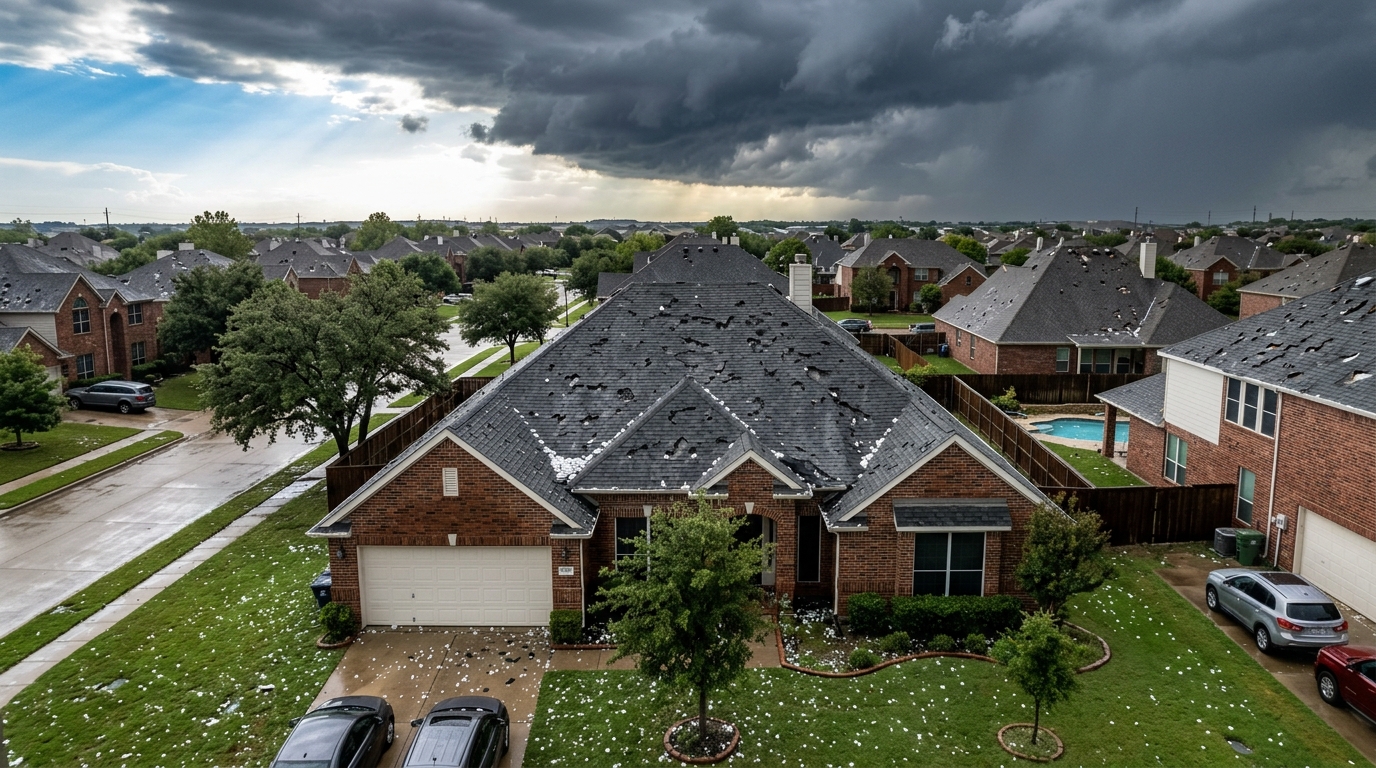
North Texas sits squarely in what meteorologists call “Hail Alley,” a region where warm, moist air from the Gulf of Mexico collides with dry western air masses to spawn severe thunderstorms from March through June. The Dallas-Fort Worth metroplex experiences significant hail events three to five times annually, with some storms dropping ice chunks exceeding baseball size. For homeowners in Allen, Plano, Frisco, and McKinney, hail is not a matter of if but when.
Standard three-tab asphalt shingles were never designed for this kind of punishment. A single severe hailstorm can shred years off a roof’s lifespan, leaving homeowners facing costly repairs, insurance claims, and the frustration of going through the process again after the next storm season.
Hail-resistant roofing offers a different approach. These materials are engineered to withstand impacts that would destroy conventional shingles, reduce insurance premiums through documented discounts, and extend roof lifespan by years or even decades. This guide covers the hail-resistant options available to North Texas homeowners, explains how impact resistance is tested and rated, breaks down what these upgrades cost, and shows how to maximize insurance savings.
Why Allen Homes Face Elevated Hail Risk
The DFW metroplex occupies one of the most active hail corridors in the United States. Spring storms tracking northeast from West Texas put the region directly in their path year after year. Hailstones between one and three inches in diameter are a near-annual reality for communities across Collin County.
The financial impact is substantial. Industry estimates suggest hail damage claims can average $10,000 or more per incident, though costs vary widely by storm severity and home size. Even moderate claims carry consequences beyond the immediate repair cost. Repeated claims can raise premiums significantly, and some carriers have begun non-renewing policies in hail-prone areas after multiple claims.
This reality has shifted how many homeowners think about roofing. Rather than accepting storm damage as inevitable and relying on insurance to cover repeated repairs, more Allen residents are investing in hail-resistant materials as proactive protection. The emergency roofing calls that follow every spring storm season have convinced many homeowners that a better approach exists.
How Impact Resistance Is Measured: The UL 2218 Standard
When shopping for hail-resistant roofing, you will encounter references to UL 2218 and Class ratings. Understanding what these mean helps you evaluate products and verify that what gets installed on your home actually provides the protection you are paying for.
Underwriters Laboratories, an independent testing organization, developed the UL 2218 standard as the gold standard for measuring impact resistance in roofing materials. The test simulates hail impact by dropping steel balls of varying sizes onto roofing samples from specified heights. To pass, the material must not crack, tear, or split after being struck twice in the same spot.
Four classes exist, based on the size of the steel ball and drop height. Class 1 uses a 1.25-inch ball dropped from 12 feet and provides minimal protection. Class 2 uses a 1.5-inch ball from 15 feet for basic protection. Class 3 uses a 1.75-inch ball from 17 feet for good protection. Class 4, the highest rating, uses a 2-inch steel ball weighing 1.4 pounds dropped from 20 feet, simulating golf ball to baseball-sized hail striking at terminal velocity around 100 mph.
Standard architectural shingles fail the Class 4 test. Impact-resistant shingle roofing products that pass it earn the Class 4 designation and qualify for significant insurance premium discounts in Texas.
Class 4 Impact-Resistant Shingles
For most DFW homeowners who want hail protection while maintaining a traditional shingle appearance, Class 4 impact-resistant shingles represent the most practical upgrade. These products look identical to standard architectural shingles from the street, but the difference lies in their chemistry.
Class 4 shingles are manufactured with SBS (styrene-butadiene-styrene) polymer-modified asphalt. This rubberizing compound allows the shingle to flex under impact rather than cracking like traditional asphalt. When hail strikes a standard shingle, the rigid material fractures and loses protective granules. When hail strikes an SBS-modified shingle, the material absorbs the impact energy and returns to shape.
Current DFW pricing for Class 4 shingles runs approximately $4.50 to $6.25 per square foot installed, representing a 15 to 25 percent premium over standard architectural shingles. The expected lifespan is 25 to 30 years, and the SBS modifiers provide additional benefits beyond impact resistance. They also resist UV degradation and thermal cracking better than standard asphalt, typically extending functional life by 5 to 10 years compared to conventional products.
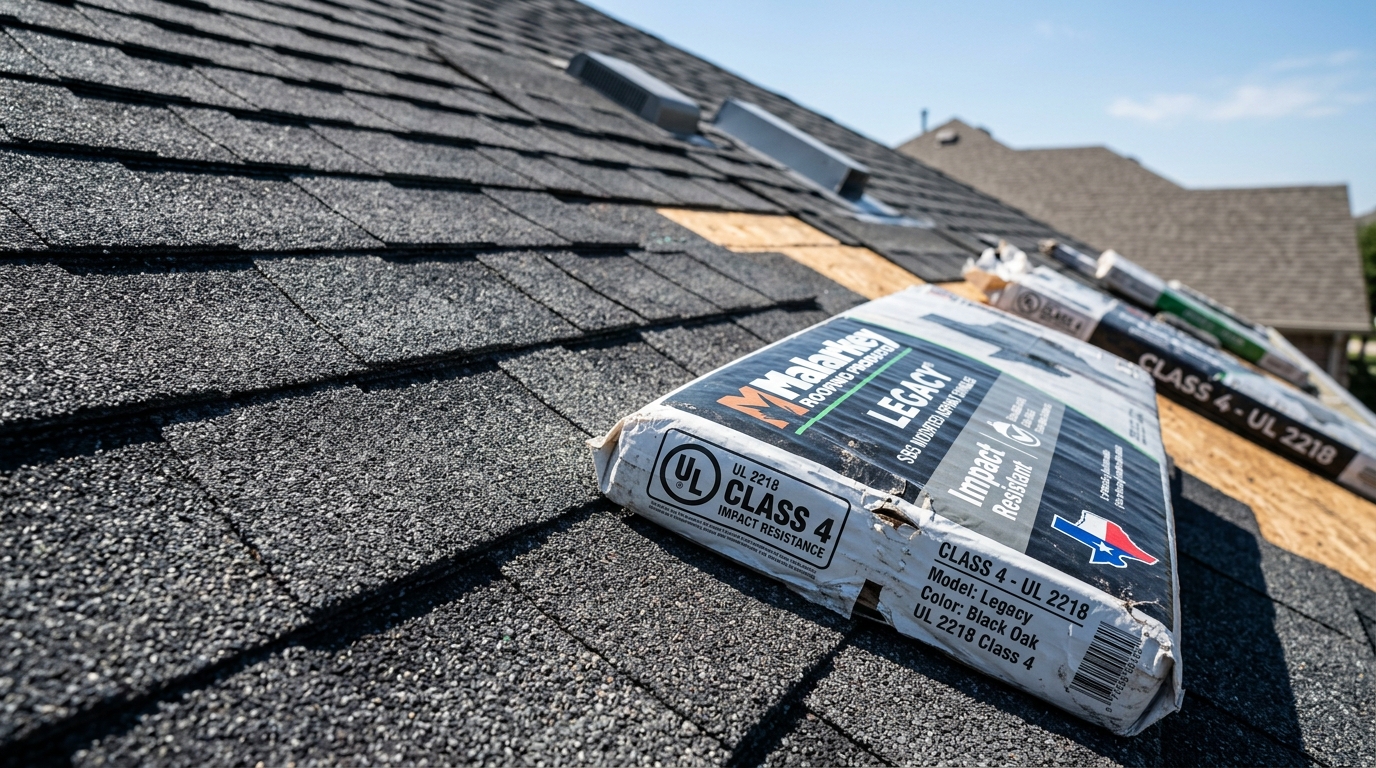
Major manufacturers including GAF, Owens Corning, and CertainTeed all produce quality Class 4 shingle lines. When scheduling roof installation, verify that the product specified has the UL 2218 Class 4 stamp directly on the packaging. This certification is what qualifies the installation for insurance discounts.
Metal Roofing for Hail Protection
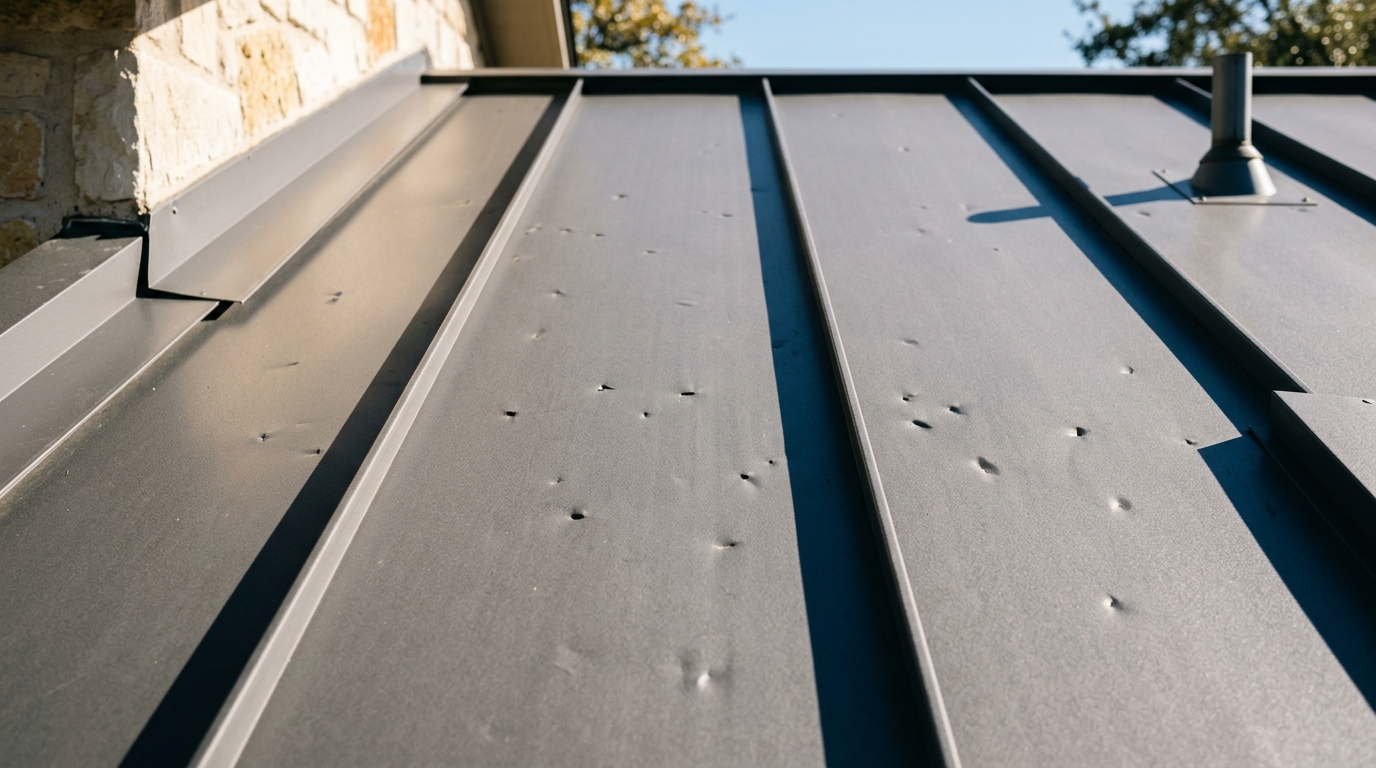
Standing seam metal roofing offers the highest level of hail protection available for residential applications. The physics are straightforward: metal panels are thicker and more rigid than any shingle product, dispersing impact energy across a much larger surface area rather than concentrating it at the strike point.
When hail hits metal roofing, it typically leaves cosmetic dents but rarely penetrates or compromises the waterproof integrity of the roof. Twenty-year-old metal roofs in North Texas that have survived multiple severe storms often show nothing more than minor dimpling visible only upon close inspection.
Metal roofing carries a lifespan of 40 to 70 years with proper installation, far exceeding any asphalt product. The installed cost runs two to three times higher than Class 4 impact-resistant shingles for comparable square footage. However, when lifetime cost is calculated including avoided replacements and minimal maintenance requirements, metal often works out favorably for homeowners who plan to stay in their homes long term.
Most metal roofing systems qualify for Class 4 insurance discounts, though an important distinction exists. Many insurance carriers require homeowners to sign a “cosmetic damage waiver” to receive the full discount on metal roofs. This waiver means the insurer will not pay for replacement if hail causes dents that do not affect the roof’s function. The roof remains fully capable of protecting your home, but visible denting would not trigger a covered claim.
Stone-coated steel roofing offers a middle ground, combining metal’s durability with an aesthetic closer to traditional shingles or tile. The stone granule coating helps absorb some impact energy while providing UV protection and reducing the thermal expansion issues common with bare metal in Texas heat.
Tile and Slate Options
For homeowners seeking premium hail protection with distinctive aesthetics, concrete tile, clay tile, and natural slate all offer excellent impact resistance.
Modern concrete tile roofing products designed specifically for severe weather regions can handle extreme hail with minimal cracking. These tiles are manufactured with enhanced density and sometimes incorporate polymer additives that increase flexibility under impact. Clay tile provides similar performance for Spanish and Mediterranean architectural styles.
Natural slate roofing represents the most durable option available. Made from actual stone, slate can last 100 years or more with proper maintenance and is inherently resistant to hail damage. The material simply does not crack under impacts that would destroy shingle products.
Both tile and slate require structural considerations. These materials weigh significantly more than asphalt shingles or metal panels, and not all roof structures can support the added load without reinforcement. Installed costs run $10 to $25 per square foot for quality tile products and $15 to $30 or more for slate, representing three to five times the cost of Class 4 shingles.
Insurance discounts for tile and slate installations typically match or slightly exceed those available for Class 4 shingles, often in the 25 to 35 percent range. The premium materials are best suited for Spanish, Mediterranean, or luxury properties where both the budget and architectural style align.
Insurance Discounts for Hail-Resistant Roofing
The Texas Department of Insurance actively encourages the use of impact-resistant roofing materials to reduce overall claim volume across the state. Most major Texas insurance carriers respond by offering premium discounts for Class 4 installations, typically ranging from 15 to 35 percent depending on the carrier and policy.
Understanding Texas roofing laws and insurance requirements helps homeowners maximize these savings. To qualify for a discount, roofing materials must be tested and certified under UL Standard 2218 and properly labeled with the impact resistance classification. The manufacturer must include the UL label or equivalent certification from a Texas Department of Insurance-approved laboratory, along with the specific class rating.
After installation, your contractor must complete TDI form PC068, the Impact-Resistant Roofing Installation Form. This documentation is what your insurance company requires to apply the premium credit. Without it, even a properly installed Class 4 roof will not generate the discount.
The financial case for impact-resistant roofing becomes clear when calculating return on investment. A 20 to 30 percent annual premium savings on a typical Texas homeowner’s policy can recoup the 15 to 25 percent shingle premium within five to seven years. Beyond that point, every year of insurance savings represents pure return on your roofing investment, and you still have a roof designed to survive the hail events that would send standard shingles to the dumpster.
How to Claim Your Insurance Discount
Securing your insurance discount requires proper documentation and proactive communication with your carrier. Follow these steps during your roof replacement project to ensure the discount is applied correctly.
Before installation begins, contact your insurance agent to confirm that your carrier offers impact-resistant roofing discounts and to understand exactly what documentation they require. Some insurers have specific approved product lists or documentation formats. Knowing these requirements in advance prevents delays.
Request product documentation from your contractor showing the UL 2218 Class 4 certification for the specific shingles being installed. This typically includes manufacturer product data sheets and may include ICC-ES evaluation reports.
After installation, obtain a signed certificate from your contractor confirming that Class 4 impact-resistant shingles were installed. This document should include the product name, manufacturer, and installation date. Your contractor should also complete TDI form PC068.
Submit all documentation to your insurance company along with the contractor’s completed form. Keep copies of everything for your records. Then verify that the discount appears on your next policy renewal. If it does not show up, follow up immediately with your agent. Missing documentation is the most common cause of discount delays, and resolving the issue promptly ensures you do not lose months of savings.
Comparing Hail-Resistant Roofing Options
Choosing the right hail-resistant roofing depends on your budget, how long you plan to stay in your home, and your aesthetic preferences.
Class 4 impact-resistant shingles offer the best value for most homeowners. The 15 to 25 percent price premium over standard shingles is offset by insurance discounts typically recouped within five to seven years. These products last 25 to 30 years and look identical to traditional architectural shingles, making them suitable for virtually any neighborhood and HOA environment.
Metal roofing provides the highest durability and longest lifespan at 40 to 70 years. The two to three times higher upfront cost makes sense for homeowners who plan to stay in their homes long term or who are tired of filing insurance claims after every spring storm. Insurance discounts match Class 4 shingles at 20 to 30 percent, though the cosmetic damage waiver requirement is an important consideration.
Tile and slate represent premium options for homes where architectural style and budget align. Lifespans of 50 to 100-plus years and insurance discounts of 25 to 35 percent make these materials excellent long-term investments, but the three to five times cost premium and structural requirements limit their practicality for many properties.
Standard architectural shingles remain the lowest upfront cost option, but in hail-prone North Texas, they also represent the highest long-term cost. With no impact rating, no insurance discount, and a 15 to 25 year lifespan that can be dramatically shortened by a single severe storm, conventional shingles often prove to be false economy. Schedule a professional roof inspection to assess your current roof’s condition and discuss which upgrade path makes the most sense for your situation.
What to Watch For: Avoiding Hail-Resistant Roofing Scams
The popularity of impact-resistant roofing has unfortunately attracted contractors who cut corners or misrepresent products. Protect yourself by verifying several key points.
Before installation begins, check that the shingle bundles on site carry the UL 2218 Class 4 stamp directly on the packaging. Do not accept vague marketing language like “hail-resistant” or “impact-rated” without the specific UL 2218 Class 4 certification. Only certified products qualify for insurance discounts.
Some contractors substitute lower-tier products while charging Class 4 prices. The bundles look similar, and most homeowners cannot identify the difference visually. Verification before shingles go on your roof is the only protection.
Ensure your contractor uses the proper high-wind nailing pattern required by IRC R905.2.4.1. Impact-resistant shingles installed with incorrect fastener patterns may void your wind warranty even though the shingle itself carries an impact rating. Also watch for contractors who reuse old flashing or skimp on synthetic underlayment to increase profit margins.
Get the Class 4 specification in writing in your contract, including the specific product name and manufacturer. A GAF Master Elite certified contractor will provide this documentation as standard practice and stands behind both materials and workmanship.
Schedule a Hail-Resistant Roofing Consultation Now!
Ready to stop worrying about hail season? Contact Pickle Roofing Solutions to discuss which hail-resistant roofing option makes the most sense for your home and budget. We will explain the insurance discount process, help you understand your options, and provide a detailed estimate for upgrading your roof’s storm protection. Call (469) 247-8310 or visit our contact page to schedule your consultation today.
Frequently Asked Questions
Are Class 4 shingles hail-proof?
No roofing material is completely hail-proof. Class 4 shingles are tested to withstand impacts from 2-inch steel balls dropped from 20 feet, which simulates golf ball to baseball-sized hail at terminal velocity. They can still be damaged by exceptionally large hail or unusual strike angles. However, they dramatically outperform standard shingles and significantly reduce the likelihood of functional damage requiring replacement after typical North Texas hail events.
How much do Class 4 shingles cost compared to standard shingles?
In the DFW market, Class 4 impact-resistant shingles typically cost $4.50 to $6.25 per square foot installed, compared to $3.50 to $5.00 for standard architectural shingles. This represents a 15 to 25 percent premium. The additional cost is frequently offset within five to seven years through insurance premium discounts of 15 to 35 percent.
Can I add impact-resistant shingles to an existing roof?
Impact-resistant shingles require a full roof replacement to be effective. They cannot simply be layered over existing shingles. The installation must follow manufacturer specifications and IRC requirements to qualify for insurance discounts and warranty coverage.
Do all insurance companies offer Class 4 discounts?
Most major Texas insurance carriers offer discounts for Class 4 impact-resistant roofing, but discount amounts vary significantly by carrier and policy. Some insurers offer 15 percent while others offer 35 percent for the same Class 4 installation. Always confirm the specific discount available with your carrier before making roofing decisions.
What is a cosmetic damage waiver?
A cosmetic damage waiver is a policy provision common with metal roofing that excludes coverage for hail damage that is purely aesthetic. If hail dents your metal roof but does not affect its waterproofing function, the insurer will not pay for replacement under a cosmetic waiver. Many carriers require this waiver to offer the full Class 4 discount on metal roofs. The tradeoff is lower premiums in exchange for accepting that functional dents will not trigger a claim.
How long do impact-resistant shingles last?
Class 4 impact-resistant shingles typically last 25 to 30 years, compared to 15 to 25 years for standard architectural shingles. The SBS polymer modifiers that provide impact resistance also improve UV and thermal performance, helping these shingles maintain integrity longer in Texas heat and sun exposure.
About Pickle Roofing Solutions
Pickle Roofing Solutions is a trusted roofing contractor in Allen serving homeowners throughout the Dallas-Fort Worth metroplex. Our team specializes in hail-resistant roofing installations that protect North Texas homes from the severe weather our region experiences every spring. We handle all documentation required for insurance discounts and stand behind our work with comprehensive warranties.