
Slate roofing is one of the oldest and most respected roofing materials in the world. It has been used on cathedrals, government buildings, and historic homes for centuries, and some of those original roofs are still functioning today. For North Texas homeowners researching premium roofing options, slate represents the far end of the durability and cost spectrum. Whether it belongs in your Allen-area home depends on a clear-eyed look at what the material delivers, what it demands, and how it performs under the specific conditions Collin County throws at it.
What Slate Roofing Actually Is
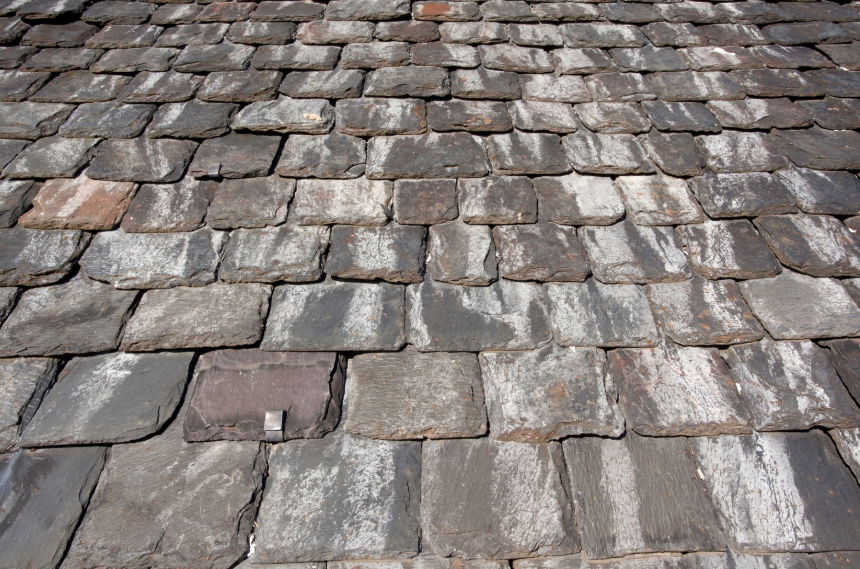
Slate is a fine-grained metamorphic rock formed under intense heat and pressure deep within the earth. When quarried and cut into thin tiles for roofing, it produces one of the most dimensionally stable and water-resistant materials available. Each tile is a piece of natural stone, which means no two are identical in color or texture. The result is a roof with visual depth and character that no manufactured material fully replicates.
Slate used in U.S. roofing is primarily sourced from quarries in Vermont, Pennsylvania, New York, and Virginia, as well as imported material from Spain, Brazil, and China. The quality, color availability, and expected lifespan vary significantly by source. Vermont soft slate carries a lifespan of roughly 75 to 125 years. Vermont hard slate and premium Spanish slate can last 150 years or longer when properly installed and maintained.
In the Dallas-Fort Worth market, slate roofing appears most frequently on high-end custom homes, historic properties, and estate-level residential construction. It is far less common than asphalt shingles or tile, but it is available from contractors with the specialized skills required to install it correctly.
Natural Slate vs. Synthetic Slate: Understanding the Distinction
Before evaluating whether slate makes sense for a North Texas home, it helps to understand that the term is used for two very different products.
Natural slate is quarried stone cut into tiles. It carries the full lifespan, fire resistance, and thermal mass that make slate remarkable. It also carries the full weight, cost, and installation complexity.
Synthetic slate is an engineered product manufactured from materials such as recycled rubber, polymer resin, or fiber cement, designed to mimic the appearance of natural slate at a fraction of the weight and cost. Products like DaVinci synthetic slate are widely available in the DFW market and offer a meaningful middle ground for homeowners who want the aesthetic without the structural demands.
| Factor | Natural Slate | Synthetic Slate |
|---|---|---|
| Lifespan | 75–150+ years | 40–60 years |
| Cost (installed) | $15–$30+ per sq. ft. | $9–$16 per sq. ft. |
| Weight per square | 800–1,500 lbs | 150–250 lbs |
| Structural requirement | Engineering assessment required | Compatible with most standard framing |
| Appearance | Unique, natural variation per tile | Consistent, uniform appearance |
| Hail performance | Harder grades highly resistant | Varies by manufacturer; generally good |
| Installer availability (DFW) | Limited specialists | More widely available |
For most Allen-area homeowners, the practical decision is between natural and synthetic slate as much as it is between slate and other materials entirely.
The Pros of Slate Roofing
Lifespan that outlasts everything else. No commonly available roofing material comes close to natural slate’s longevity. A quality installation using hard slate can serve a home for 100 to 150 years. Over a 30-year mortgage period, an asphalt shingle roof may need to be replaced once or twice. A slate roof installed today may never need replacement during the current owner’s lifetime, or their children’s.
Exceptional resistance to fire, water, and heat. Slate is non-combustible and non-porous. It does not absorb water, does not warp from moisture cycling, and does not degrade from UV exposure the way asphalt does. In a climate like Allen’s, where summer attic temperatures can damage shingles from below, slate’s thermal mass and density mean it is largely indifferent to heat stress that compromises lighter materials.
Hail performance at the harder grades. Natural hard slate and high-quality synthetic slate both perform well under hail impact. Unlike asphalt shingles, which crack, bruise, and lose granules when struck, dense stone resists impact damage at the hail sizes common to Collin County. This is a meaningful advantage in a market where hail damage claims are an annual reality.
Low long-term maintenance. A properly installed slate roof requires very little ongoing attention. Individual tiles that crack or slip can be replaced without disturbing surrounding material, which is a repair model that stands in sharp contrast to asphalt, where localized damage often requires broader shingle replacement.
Resale value and curb appeal. Slate commands attention from buyers. In the North Texas luxury market, a slate roof signals permanence and quality in a way that shingles and even metal cannot match. Real estate professionals consistently identify slate as a premium feature that increases both buyer interest and appraised value.
The Cons of Slate Roofing
Upfront cost is significantly higher than any alternative. Installed natural slate runs $15 to $30 or more per square foot, putting a typical Allen-area home at $30,000 to $70,000 or higher depending on roof complexity. Even synthetic slate at $9 to $16 per square foot lands well above a premium shingle roofing installation. The long-term math can favor slate, but the upfront capital requirement is a real barrier for most homeowners.
Weight that most standard framing cannot support. Natural slate weighs 800 to 1,500 pounds per square (100 square feet), compared to roughly 250 to 400 pounds for asphalt shingles. Most homes built in Allen’s newer subdivisions were not framed to support that load. A structural engineer must assess the framing before any natural slate installation, and reinforcement is often required, adding further cost. Synthetic slate sidesteps this issue almost entirely.
Installer scarcity in Collin County. Proper slate installation requires specialized skills that most roofing crews do not have. Slate must be handled carefully to avoid breakage before installation, fastened with specific hardware, and laid with precise overlap and water management details. In the DFW market, qualified slate installers are available but significantly less numerous than general roofing contractors. Choosing an unqualified crew to save money on labor is one of the most reliable ways to end up with a failed slate roof.
Individual tile fragility under foot traffic. While slate is highly durable against environmental exposure, individual tiles crack readily when walked on incorrectly. Maintenance that requires roof access, including HVAC work, chimney repair, or solar installation, must be handled by technicians who understand how to move across a slate surface without causing damage.
Repair matching. When individual tiles need replacement on an older natural slate roof, matching the original material in color, thickness, and texture can be challenging. Slate from different quarries and different eras does not always look the same side by side.
How Slate Performs in the North Texas Climate

The North Texas climate presents a specific set of conditions that determine whether slate is a practical choice or simply an expensive one.
Heat. Allen summers are brutal, and attic temperatures without proper ventilation regularly exceed 140 degrees. Slate handles heat without degradation. The material itself does not soften, blister, or lose surface integrity under prolonged thermal exposure. Combined with proper attic ventilation, a slate roof sheds heat stress better than asphalt in a direct comparison.
Hail. This is the most consequential performance question for any roofing material in Collin County. Hard natural slate rates well against typical DFW hail events. Hailstones in the 1-inch range, which are common, do not typically crack dense stone tile. Larger hail events, which do occur in this market, present more risk, particularly to softer slate grades. High-quality synthetic slate from manufacturers with legitimate impact resistance ratings also performs well against moderate hail. Either way, a roof inspection after a significant hail event is still warranted regardless of material type.
Wind. Properly fastened slate resists high winds effectively. The weight of the material actually works in its favor here: tiles do not lift the way lighter shingles can during severe wind events. Flashing integrity and fastener quality are the variables that matter most.
Temperature cycling. North Texas experiences significant temperature swings across seasons. Natural slate handles thermal expansion and contraction well because stone has very low thermal expansion coefficients. This is one area where slate outperforms metal over long periods, as metal roofing requires more attention to expansion joint management across its lifespan.
Cost Breakdown: What to Budget for Slate in Allen, TX
Slate pricing is influenced by material grade, source, roof complexity, structural reinforcement requirements, and contractor specialization. The ranges below reflect North Texas market conditions:
- Natural hard slate (installed): $20 to $35 per square foot; $40,000 to $70,000+ for a typical Allen home
- Natural soft slate (installed): $15 to $25 per square foot; $30,000 to $50,000 for a typical home
- Synthetic slate (installed): $9 to $16 per square foot; $18,000 to $32,000 for a typical home
- Structural reinforcement (if required): $2,000 to $8,000 depending on scope
- Specialty copper flashing (common with slate): Adds $1,500 to $4,000 depending on roof complexity
For comparison, a premium shingle roof replacement in Allen runs $8,000 to $18,000, and metal roofing typically falls between $18,000 and $35,000.Tile roofing in clay or concrete occupies a middle range of $15,000 to $35,000. Slate sits at the top of all these options by a considerable margin, which is why the return-on-investment calculation only works for homeowners with a genuine long-term horizon.
Who Slate Roofing Makes Sense for in North Texas
Slate is not the right answer for most Allen homeowners, and that honesty is worth stating plainly. But for a specific profile, it is the most rational long-term investment available.
Slate makes sense when several conditions align:
- You are building a custom home or performing a full roof replacement on a home you plan to hold for 20 years or more
- Your home’s framing can support natural slate, or you are willing to invest in reinforcement, or you are open to synthetic slate as an alternative
- Aesthetics and property differentiation are meaningful priorities, not just a secondary consideration
- You want a roof that will not need full replacement again during your ownership tenure
Slate is likely the wrong choice if:
- Your primary concern is minimizing upfront cost
- You expect to sell within 10 years and are uncertain whether the local market will reward the premium
- Your home has significant structural limitations that would make natural slate installation a major engineering project
- Finding qualified maintenance contractors long-term is a practical concern for your situation
For Allen homeowners who want slate’s aesthetic without its full structural and financial demands, synthetic slate from a certified installer is the more practical path. It delivers 40 to 60 years of performance at a significantly lower cost and weight, and it is compatible with the standard framing found in most Collin County homes. Work with a roofing contractor in Allen, TX who has verified experience with both natural and synthetic slate before committing to either.
Schedule a Slate Roofing Consultation in Allen, TX Today
If you are considering slate roofing for your home, the right starting point is a roof assessment that accounts for your structure, budget, and long-term ownership plans. Call Pickle Roofing Solutions at (469) 247-8310 or visit our contact page to schedule your consultation in Allen, TX.
Frequently Asked Questions
Does slate hold up against North Texas hail?
Hard natural slate and quality synthetic slate both perform well against the hail sizes most common in Collin County. The stone’s density resists impact damage at the 1-inch range that triggers widespread shingle damage. Larger events that exceed 2 inches in diameter present more risk, particularly for softer slate grades. A post-storm inspection is still the right call regardless of material.
Can my Allen home support a natural slate roof?
Most homes in Allen’s newer subdivisions were not originally framed for slate’s weight. A structural assessment is required before any natural slate installation. Reinforcement is frequently necessary and adds cost. Synthetic slate, which weighs roughly the same as asphalt shingles, is compatible with standard residential framing without modification.
How long does a slate roof last in Texas heat?
Slate is largely indifferent to heat. Unlike asphalt, which degrades under sustained thermal stress, stone does not soften, blister, or lose surface integrity in heat. Properly installed with adequate attic ventilation, a natural slate roof in North Texas can realistically serve 100 years or more.
Is synthetic slate a worthwhile alternative to natural slate?
For most North Texas homeowners, yes. Synthetic slate offers slate’s aesthetic at a meaningfully lower upfront cost, without the structural demands of stone. The tradeoff is lifespan: 40 to 60 years versus 100-plus for natural hard slate. For a homeowner with a 20 to 30-year horizon, synthetic slate often delivers the better financial outcome when all factors are weighed.
How do I find a qualified slate installer in the DFW area?
Qualified slate installers are available in the DFW market but are significantly less numerous than general roofing contractors. Ask specifically whether the contractor has completed natural or synthetic slate projects, request references for those specific jobs, and verify that the installation approach includes a structural assessment, proper underlayment and flashing specifications, and correct fastener selection for slate’s weight.
Does slate add resale value in the North Texas market?
Yes, though the degree depends on the specific home and neighborhood. In Allen and the broader Collin County market, a slate roof on a custom or estate-level home is a recognized premium feature. Buyers in that segment understand the material’s longevity and quality. In entry-level or mid-range neighborhoods, the premium may not be fully recovered at sale.
What maintenance does a slate roof require?
Slate requires less routine maintenance than asphalt. Individual tiles that crack or slip from fastener failure can be replaced without disturbing the surrounding field. Annual or biennial inspections to check flashing integrity, valley condition, and fastener status are the primary ongoing maintenance tasks. Keep the roof clear of debris accumulation and avoid walking the surface without proper protection to prevent breaking tiles.
About Pickle Roofing Solutions
Pickle Roofing Solutions is a GAF Master Elite certified roofing company serving Allen, TX and the greater Dallas-Fort Worth area. Their team installs and services both natural and synthetic slate roofing systems, with a full structural assessment built into every slate consultation. Whether you are exploring slate for a new custom build or evaluating whether a slate replacement makes sense on an existing home, the team provides a direct, honest assessment grounded in what North Texas conditions actually require.