

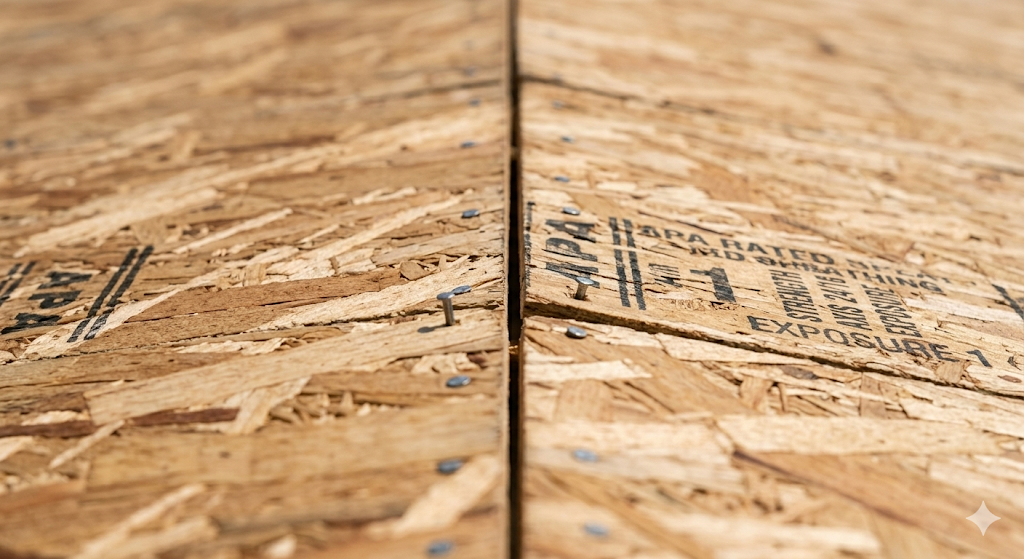
Most Allen homeowners can describe their shingles. Far fewer know what lies directly beneath them. Roof decking, also called roof sheathing, is the structural wood layer that sits between your home’s rafters and everything above, including underlayment, flashing, and your finished roofing material. It is one of the most critical components of your entire roofing system, and when it fails, everything on top of it is at risk.
Below is a breakdown of what roof decking is, how it works, what materials are used in North Texas homes, and the warning signs that yours may need attention.
The Foundation Beneath Every Roof
Roof decking forms the continuous wooden surface that ties your roof structure together. It attaches to the trusses and rafters in your attic, spanning the gaps between them to create a solid, load-bearing platform. Every other roofing component, from the synthetic underlayment to the felt paper, metal flashing, and shingles or tiles on top, fastens directly to this surface.
Without solid decking, none of those layers have anything meaningful to hold them in place. A nail driven through a shingle that hits compromised or rotted decking will not hold under wind load. That is why roofing professionals assess the condition of the deck before any new material goes down. Decking that looks fine from the attic can still have soft spots, delamination, or moisture damage that will undermine a new roof from day one.
The structural role of roof decking is especially relevant for Allen homeowners. North Texas weather puts roofs through sustained punishment, including hail events that concentrate impact force across the entire deck surface, high summer temperatures that stress wood panels over time, and wind loads that test how securely every layer is fastened. A sound deck is the starting point for a roof that can handle all of it. If you have not had yours assessed recently, a professional roof inspection can confirm whether your decking is in good shape before any issue becomes a larger problem.
How Roof Decking Connects to the Rest of Your Roofing System
Roof decking does not work in isolation. It is one layer in a system where each component depends on the one beneath it. Understanding how they connect helps clarify why the decking condition matters so much.
Trusses and rafters form the skeleton of your roof and bear its structural load. Decking spans across them to create a continuous surface. On top of the decking comes the underlayment, a water-resistant barrier that provides a secondary line of defense against moisture. Flashing is then installed at penetration points, valleys, and edges to redirect water away from vulnerable seams. Finally, the outer roofing material, whether that is asphalt shingles, metal panels, tile, or slate, fastens through the underlayment into the decking.
Each fastener in shingle roofing or metal roofing depends on the decking having enough density and integrity to hold the nail or screw in place under load. When decking softens from moisture absorption or deteriorates from age, fastener pull-out becomes a real risk, particularly during the kind of high-wind events that move through Collin County several times a year.
OSB vs. Plywood: What Is Used in North Texas Homes?
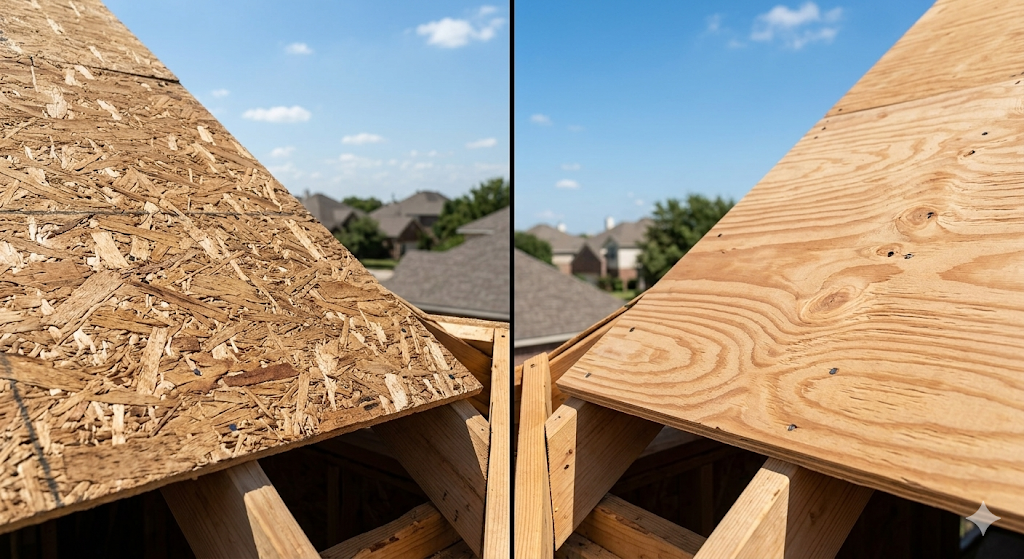
Two wood-panel products dominate residential roof decking in the United States: oriented strand board (OSB) and plywood. Both meet building code requirements, both are installed the same way, and both are found throughout Allen-area homes. Their differences come down to material composition, cost, and how each responds to moisture.
OSB is manufactured by compressing layers of wood strands bonded with resin under heat and pressure. The strands are arranged in cross-oriented layers, which gives the panel consistent strength across its entire surface with no knotholes or weak points. Plywood is constructed from thin wood veneers glued together in alternating grain directions, which gives it stiffness and a quicker drying profile when exposed to moisture.
The table below breaks down how each material compares across the factors that matter most during a roof replacement:
| Factor | OSB | Plywood | Winner |
|---|---|---|---|
| Cost | $10–$20/sheet | $20–$45/sheet | OSB |
| Moisture Resistance | Moderate — swells at edges; slower to dry | Better — dries faster; returns to shape | Plywood |
| Strength | High — consistent load distribution | High — approx. 10% stiffer than OSB | Tie |
| Weight | Heavier (78 lbs per 4×8 sheet) | Lighter (67 lbs per 4×8 sheet) | Plywood |
| Availability | Excellent — widely stocked in DFW | Good — less common in some markets | OSB |
| Best Use | New construction, standard re-roofing | High-moisture zones, replacement projects | Depends |
For most North Texas roof replacements, OSB is the standard choice. It costs less per sheet, is consistently available at DFW suppliers, and performs reliably when installed correctly and covered promptly. Plywood holds an advantage in situations where prolonged moisture exposure is a concern, since it dries faster and is less prone to edge swelling. Your contractor will assess your specific situation and recommend the appropriate material based on structure, existing conditions, and local code requirements.
How Thick Does Roof Decking Need to Be?
The standard thickness for residential roof decking is 7/16 inch, which is sufficient for roofs with truss or rafter spacing of 24 inches on center. Homes with wider spacing, heavier roofing materials such as tile or slate, or specific local code requirements may call for 5/8-inch panels, which offer greater stiffness and nail-holding strength.
Thickness matters more than most homeowners realize. Panels that are too thin for the rafter spacing they span will flex under foot traffic during installation and may develop a wavy appearance once shingles are laid. This is not just cosmetic. Waviness in the finished surface often signals that the decking is moving, which stresses the fasteners holding your shingles in place over time. Experienced contractors specify panel thickness based on the structural reality of your roof, not just what is cheapest or most available.
Warning Signs Your Roof Decking May Be Failing
Roof decking is not visible from the street, and most homeowners never see it directly. But it communicates through the symptoms it produces at the surface and in the attic. Catching these signs early keeps a manageable repair from becoming a full structural replacement.
Soft or Spongy Spots
Walking on a roof that has compromised decking often reveals soft zones where the panel has lost structural integrity from moisture damage or rot. A contractor performing an inspection will probe the surface to identify these areas.
Visible Sagging or Waviness
Sections of roof that dip or ripple between rafters indicate that decking has either delaminated, swollen from moisture, or is no longer adequately supported. This is one of the early indicators addressed in a thorough inspection and should not be ignored.
Attic Signs: Mold, Staining, or Daylight
Looking up from inside the attic reveals a lot. Dark staining or water marks on the underside of the decking indicate past or ongoing moisture infiltration. Mold growth suggests sustained dampness. Pinpoints of daylight visible through gaps in the deck mean structural breaches exist. These issues frequently connect to problems that attic services can address alongside any decking repair.
Shingles That Will Not Lie Flat
Shingles that buckle, cup, or lift without wind pressure are sometimes blamed on the shingle product itself. The actual culprit is often the decking beneath them shifting, swelling, or losing its flat profile as it deteriorates.
Granule Loss Concentrated in One Area
Accelerated granule loss from asphalt shingles in a localized zone can indicate that the decking beneath that section has softened, causing the shingles to flex more than they should and wear faster at that point.
When Does Roof Decking Need to Be Replaced?
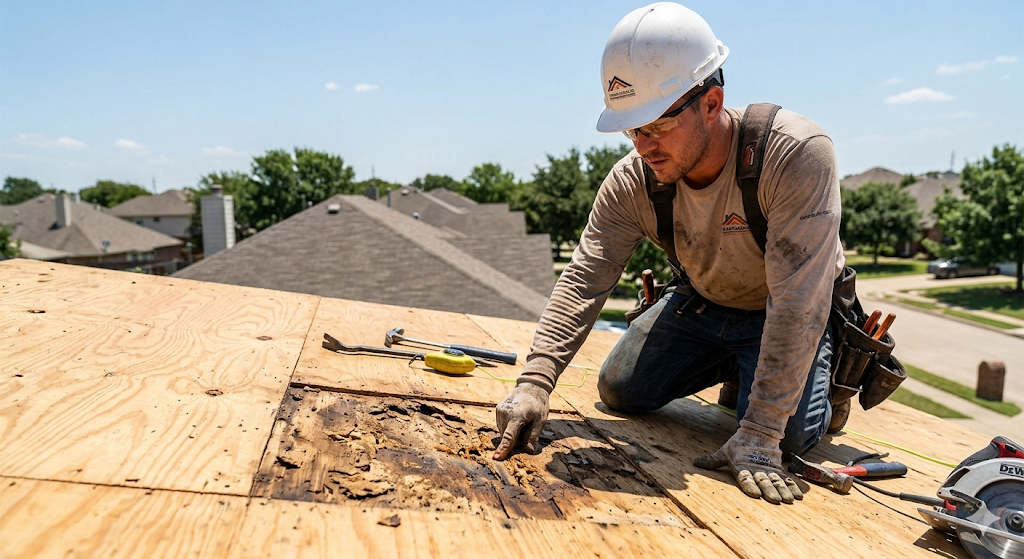
Not every roof replacement requires full decking replacement. Contractors assess the deck as the old material comes off and replace only the panels that have sustained damage. Spot replacement of a few sheets is common and adds relatively little to total project cost.
Full deck replacement becomes necessary when moisture damage is widespread, when the existing panels have been repeatedly penetrated by fasteners over multiple re-roofing cycles, or when the material has reached the end of its structural life alongside an aging roof system. In Texas, heat cycling over decades gradually dries and stresses wood panels, which can accelerate deterioration when combined with any moisture intrusion.
Cost depends on the extent of replacement needed and current lumber prices. Partial replacement covering a few damaged sections adds a few hundred dollars to a re-roofing project. Full decking replacement on an average-sized home adds more significantly to the total, which is why catching damage early through regular inspections is worth the investment.
If you suspect your decking is compromised and cannot wait for a scheduled inspection, emergency roofing services can assess and stabilize the situation before further weather exposure causes additional damage.
Working with a qualified Allen, TX roofing contractor ensures that decking assessment is part of every re-roofing job and that replacement is recommended only where the damage warrants it, not as a blanket upsell.
Schedule Your Roof Inspection in Allen, TX
If you have questions about the condition of your roof decking, do not wait for interior damage to appear. Pickle Roofing Solutions provides thorough inspections that assess the full roofing system, including the structural layers beneath the surface. Call (469) 247-8310 or visit our contact page to schedule your consultation today.
Frequently Asked Questions
What is the difference between roof decking and roof sheathing?
They refer to the same component. Roof decking and roof sheathing are interchangeable terms for the structural wood panel layer that covers the rafters and supports everything above it.
How long does roof decking last?
Well-installed decking that stays dry typically lasts the life of the roof system, often 30 to 50 years or more. Moisture is the primary enemy. Chronic leaks, inadequate ventilation, or sustained condensation can degrade decking decades ahead of schedule.
Does homeowners insurance cover roof decking replacement?
It depends on the cause of damage. If decking fails because of a covered event such as a hail strike or wind damage that allows water intrusion, your policy may cover replacement. Deterioration from age or neglect is generally excluded. An adjuster will assess the cause when a claim is filed.
Can roof decking be repaired without replacing the whole roof?
Yes. Damaged sections can be cut out and replaced with new panels without disturbing the surrounding structure. This type of spot repair is typically done when roof repairs are performed or identified during a re-roofing project.
Is OSB or plywood better for roof decking in Texas?
Both are acceptable under Texas building codes. OSB is the more common choice in North Texas due to its lower cost and consistent availability. Plywood offers better moisture recovery performance, which matters more in climates with sustained humidity or frequent rain exposure. Your contractor will recommend based on your home’s specific conditions.
How do I know if my roof decking needs replacement?
Signs include soft spots when walking on the roof, visible sagging or waviness in roof sections, mold or staining visible from the attic, and shingles that will not lie flat. A professional inspection is the most reliable way to confirm the extent of any damage.
What thickness of roof decking do I need?
The standard for most residential roofs with 24-inch rafter spacing is 7/16-inch panels. Roofs with heavier materials such as tile or slate, or with wider truss spacing, typically require 5/8-inch panels. Local building codes in Collin County may specify minimum requirements your contractor will follow.
About Pickle Roofing Solutions
Pickle Roofing Solutions is a family-owned, GAF-certified roofing company serving Allen, TX and the greater Dallas-Fort Worth area. With decades of experience handling everything from routine repairs to full system replacements, the team brings technical expertise and transparent communication to every project. Whether the job involves a few damaged decking panels or a complete re-roof, Pickle Roofing delivers workmanship backed by manufacturer and labor warranties.