
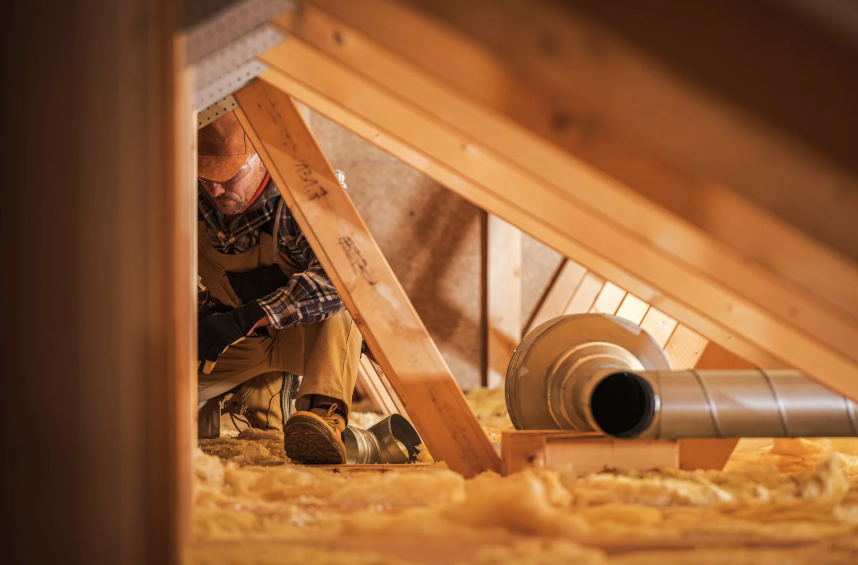
Most Allen homeowners think about roof damage as something that happens from the outside. Hail cracks a shingle. Wind lifts a tab. A tree limb lands on the ridge. Those are real threats, and North Texas delivers them regularly. But a significant portion of premature roof failure in Collin County starts from the inside, specifically from what is happening in the attic space just beneath the shingles.
Attic ventilation is the system that controls heat and moisture in that space. When it works correctly, your roof performs close to its rated lifespan. When it is undersized, blocked, or unbalanced, your shingles age faster, your roof decking softens, and your home’s cooling system works harder than it should. For Allen homeowners, where summer heat is relentless and hail damage is a recurring reality, understanding this dynamic is not a minor detail. It is a core part of protecting your investment.
What Attic Ventilation Actually Is
Attic ventilation is the controlled movement of air through your attic space. Fresh air enters low, typically through soffit vents installed along the underside of your eaves. Hot, moisture-laden air exits high, typically through a ridge vent running along the peak of the roof or through box vents or turbines cut into the roof field.
That low-to-high airflow path is the key. It is not accidental. It is designed around the physics of air movement: cool air is denser and settles near the floor, hot air rises and collects near the peak. A properly designed ventilation system uses that natural convection to flush heat and moisture out continuously, without requiring mechanical power, as long as intake and exhaust are both functioning and balanced.
The moment that path breaks down, whether because soffit vents are blocked by insulation, because intake and exhaust are mismatched, or because the home was built to outdated standards, heat and moisture accumulate. In Allen, TX, where summer afternoon temperatures consistently exceed 100 degrees Fahrenheit outdoors, an attic without functioning ventilation can reach 150 degrees or more at peak hours. That is the environment your shingles are being cooked from underneath.
How a Hot Attic Destroys Shingles from Below
Most homeowners understand that UV radiation from the sun degrades asphalt shingles from the surface over time. Fewer realize that the same shingles are being attacked simultaneously from beneath by attic heat. This dual-side thermal stress is one of the primary reasons roofs in North Texas underperform their rated lifespans.
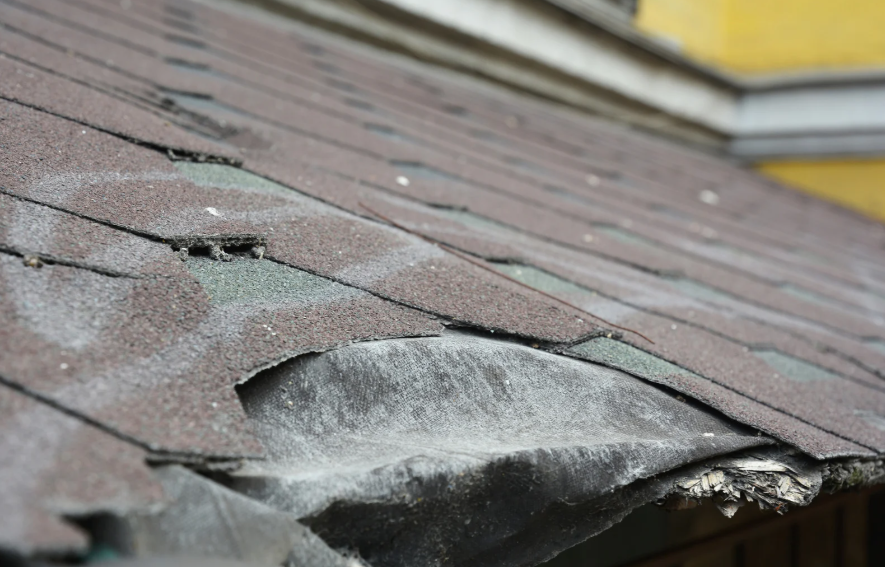
Asphalt shingles contain oils that keep the material flexible and weather-resistant through seasonal expansion and contraction. When attic temperatures climb to extremes and remain there for weeks at a time, those oils bake out of the shingle faster than normal wear would cause. The result is premature brittleness, surface cracking, and accelerated granule loss. A shingle that would remain flexible through a hail impact at age ten becomes fragile and fracture-prone at age seven if it has been running hot from below the whole time.
The effect is not evenly distributed across the roof. South-facing and west-facing slopes absorb the most direct sun from above and receive the most radiant heat from the attic below. Those slopes show wear years ahead of north-facing sections on the same roof, a pattern that a professional roof inspection can identify and document.
The compounding problem for Allen-area homeowners is hail. When a hail event strikes a roof whose shingles have been thermally compromised from below, the damage is more extensive than it would be on a roof with intact material integrity. Brittle shingles crack rather than absorb impact. Insurance adjusters see more extensive damage. The claim is larger, or the roof fails inspection entirely. Proper attic ventilation is part of keeping your shingle roofing in the physical condition it needs to be in when North Texas hail season arrives.
The Moisture Problem: Why Ventilation Matters Year-Round
Heat is the summer story. Moisture is the year-round one, and it is the more structurally serious threat.
Even in a climate as dry as North Texas, temperature differentials between day and night create condensation inside attic spaces during cooler months. Warm, humid air rising from the living space below, from cooking, bathing, and normal respiration, makes its way into the attic. Without adequate exhaust ventilation to carry that air out, it hits the cold underside of the roof decking and condenses into liquid water.
Over time, that moisture cycles repeatedly into the plywood or OSB panels that form your roof deck. Wood absorbs moisture, softens, and eventually rots. Decking that has been through multiple seasons of moisture cycling develops soft spots, delamination, and structural weakness well before any surface damage would suggest a problem. A nail driven into compromised decking does not hold under wind load. A shingle fastened to soft decking will lift in the next severe storm.
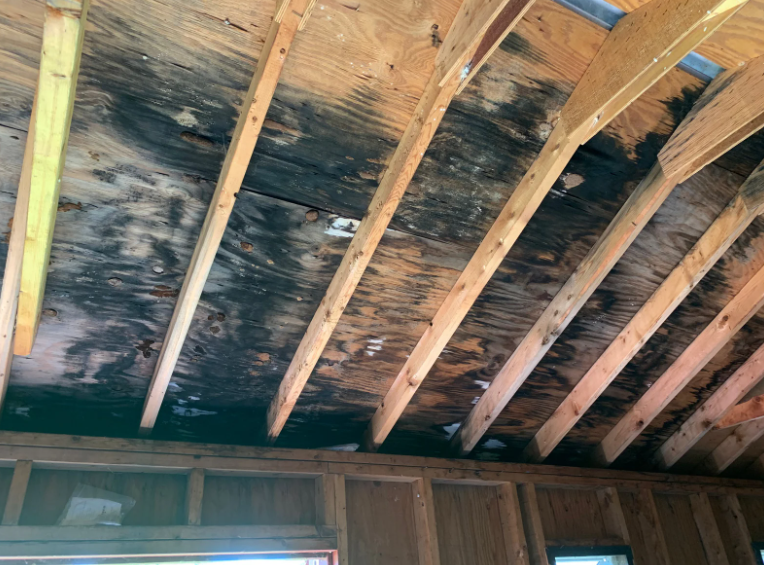
Mold is the visible symptom of this process. Dark staining on the underside of decking, visible from inside the attic, indicates sustained moisture presence. Once mold establishes in attic insulation or framing, the remediation cost is significant on its own, separate from any roofing work required. Addressing ventilation before moisture damage reaches this stage is far less expensive than addressing it after. The attic services Pickle Roofing Solutions provides are specifically designed to evaluate this condition and correct it before the roof above is compromised.
How Ventilation Affects Your Energy Bills in Allen, TX
The energy cost of poor attic ventilation is measurable and consistent. When an attic reaches 150 degrees on a July afternoon in Allen, that heat does not stay in the attic. It radiates downward through the ceiling into your living space, and your air conditioning system has to compensate for it.
The result is a home that never quite gets to the set temperature during peak afternoon hours, an HVAC system running continuously rather than cycling on and off, and energy bills that reflect the difference. Texas homeowners who address inadequate attic ventilation commonly see cooling cost reductions in the 10 to 15 percent range. On a summer electric bill in Collin County, that is a meaningful number.
The HVAC system itself also benefits. A unit that runs continuously under peak load wears out faster. Compressor failure in an overtaxed system is an expensive outcome that better attic ventilation can defer. The investment in improving ventilation pays returns across multiple systems in your home, not just the roof.
Warning Signs Your Allen Home Has a Ventilation Problem
Attic ventilation problems are rarely visible from the curb. They communicate through symptoms that are easy to attribute to other causes unless you know what to look for.
Shingles curling, cupping, or buckling. When the roof deck beneath shingles swells from moisture or when shingles themselves are heat-stressed from below, the surface irregularity shows up as curling at the edges or cupping across the face. This is one of the most visible signs of a ventilation-related problem and one of the clearest indicators that a roof inspection is warranted.
Accelerated granule loss. Finding a heavy concentration of granules in your gutters or downspout discharge, especially from a roof that is not yet old, suggests the shingles are degrading faster than their design lifespan. Thermal stress from below is a common accelerant of this process.
Uneven shingle wear across slopes. If your south-facing or west-facing roof sections show significantly more wear than north-facing sections, heat from both above and below is concentrating on those exposures. Ventilation improvements can slow this differential aging.
High attic temperature in summer. Open your attic access on a July afternoon. If the heat is striking, the space is not ventilating adequately. Properly ventilated attics in Texas should run 20 to 30 degrees above outdoor temperature, not 50 to 60 degrees above it.
Visible mold, staining, or moisture on attic decking. Any dark staining, soft spots, or visible mold on the underside of your roof deck from inside the attic is a serious finding. It means moisture has been present long enough to cause biological growth and should trigger both ventilation correction and a full roof inspection to assess decking integrity.
Higher-than-expected energy bills. If your summer cooling costs are consistently higher than comparable homes in your Allen neighborhood without an obvious explanation, your attic may be the source. This is worth evaluating before attributing the difference solely to HVAC equipment.
How Much Ventilation Does an Allen, TX Home Need?
Texas building codes follow the International Residential Code, which sets a minimum ventilation ratio of 1 square foot of net free ventilation area for every 150 square feet of attic floor space. This ratio assumes a balanced system with equal intake and exhaust. If the system is unbalanced toward either intake or exhaust, the effective performance of the ventilation drops even if the total vent area meets the minimum ratio on paper.
For Allen-area homes, many roofing professionals recommend targeting the 1:150 ratio rather than relying on the minimum, particularly for homes built before the mid-2000s when ventilation standards were less rigorous. Older neighborhoods in Allen with established mature tree canopy also face the added complication of blocked or partially obscured soffits, which can reduce intake capacity below what the vent count would suggest.
One of the most common ventilation failures is a system that has adequate exhaust but insufficient intake. A ridge vent with blocked soffit vents does not create the low-to-high airflow path it is designed for. Instead, it pulls air from wherever it can, including from other exhaust vents, which short-circuits the system and reduces actual attic airflow significantly. A professional assessment of both intake and exhaust capacity is the only reliable way to confirm a system is genuinely balanced.
Ventilation Types That Work in North Texas
For detailed coverage of each vent type and installation considerations, the ridge vent guide covers the full spectrum. For Allen homeowners assessing their current setup, the key distinctions are:
Ridge vents with soffit intake remain the most effective passive system for North Texas residential roofs. The continuous ridge exhaust paired with unobstructed soffit intake creates consistent airflow across the full attic floor, with no moving parts and minimal maintenance requirements.
Box vents and turbine vents can supplement ridge systems or serve as primary exhaust on roofs without a continuous ridge line. Turbines require wind to activate and can be noisy when bearings wear. Box vents are static and require multiple units to match the exhaust coverage of a continuous ridge vent.
Power attic ventilators can be effective when passive systems cannot be adequately retrofitted, but they introduce a risk: if the home is not airtight and the fan is powerful enough, it can depressurize the attic and pull conditioned air from the living space rather than outside air through the soffits, increasing rather than decreasing energy consumption. This is a calibration issue that requires professional assessment to get right.
The critical principle in any configuration is balance. Exhaust capacity without matched intake is not ventilation. It is turbulence with limited practical benefit.
Ventilation, Roof Replacement, and Warranty Implications
If your home has reached the point where poor ventilation has compromised the shingles and decking to the extent that roof replacement is necessary, ventilation correction is not optional at that stage. It must be part of the re-roofing scope.
Installing new shingles over a roof system with the same inadequate ventilation that degraded the previous ones accelerates the new roof’s deterioration from day one. Most shingle manufacturers, including GAF, specify minimum ventilation requirements as a condition of warranty coverage. A new roof installed without meeting those requirements may void the manufacturer’s material warranty, leaving you with a new roof and no coverage for premature failure caused by heat damage.
A reputable roofing contractor in Allen, TX will assess your attic ventilation as part of any re-roofing evaluation and include necessary corrections in the project scope. If ventilation is flagged as a problem during a roof inspection before full replacement is needed, addressing it through targeted roof repairs and ventilation upgrades can extend the remaining life of the existing roof considerably.
Schedule an Attic Ventilation Assessment in Allen, TX Now
If your home is showing signs of heat stress, elevated energy bills, or premature shingle wear, the cause may be working against your roof from the inside. Pickle Roofing Solutions provides thorough attic and roof inspections for Allen-area homeowners. Call (469) 247-8310 or visit our contact page to schedule your assessment today.
Frequently Asked Questions
How hot does an attic get in Allen, TX in summer without proper ventilation?
Attic temperatures in poorly ventilated North Texas homes commonly reach 140 to 160 degrees Fahrenheit during peak afternoon hours in July and August. In extreme cases, temperatures approaching 170 degrees have been measured in homes built before modern ventilation standards. A properly ventilated attic should run no more than 20 to 30 degrees above outdoor temperature.
Does attic ventilation help in winter as well as summer?
Yes. In summer, ventilation exhausts heat to protect shingles and reduce cooling costs. In cooler months, it exhausts moisture-laden air before it condenses on the underside of the roof deck. Both functions are critical to roof longevity. In Allen, where winters include occasional freezing events, ventilation also reduces the risk of ice damming along the eave.
Can insulation block attic ventilation?
Yes, and this is one of the most common ventilation failures in existing homes. Blown-in insulation that has shifted or been added without ventilation baffles can completely cover soffit vent openings, eliminating intake airflow. From the exterior, the vents appear present and functional. From inside the attic, they are sealed. A proper ventilation assessment checks the intake path, not just whether vents exist.
How do I know if my attic ventilation is balanced?
Balanced ventilation requires approximately equal intake and exhaust capacity. Signs of imbalance include moisture on attic decking despite exhaust vents being present, excessive heat concentration at the ridge despite intake being present, and inconsistent shingle wear between slopes. A professional assessment measures actual net free area on both sides of the system.
Will improving my attic ventilation extend my roof’s lifespan?
In homes where heat and moisture stress have been contributing to premature shingle degradation, correcting ventilation can meaningfully extend remaining roof life. Roofs in Texas with inadequate ventilation have been documented to reach only 60 to 70 percent of their expected lifespan. Addressing ventilation early in a roof’s life is one of the highest-return maintenance investments available to North Texas homeowners.
Is a power attic ventilator better than a ridge vent?
Not necessarily. A properly installed ridge vent paired with unobstructed soffit intake is the preferred system for most Allen residential roofs because it requires no power and has no moving parts to fail. Power attic ventilators can supplement passive systems in homes where soffit intake cannot be adequately expanded, but they require careful calibration to avoid drawing conditioned air from the living space rather than outside air through the soffits.
How often should attic ventilation be inspected in Allen, TX?
An attic ventilation assessment should be part of any routine roof inspection, which is recommended annually or after any significant storm event. Homeowners should also check for soffit blockage and vent damage after major hail events, as storm impact can crush or dislodge vent components without causing visible shingle damage at the same time.
About Pickle Roofing Solutions
Pickle Roofing Solutions is a GAF Master Elite certified roofing company serving Allen, TX and the greater Dallas-Fort Worth area. Their inspections include a full assessment of attic ventilation, insulation placement, and deck condition, not just the shingle surface. When ventilation corrections are needed alongside roofing work, the team coordinates both scopes so your new or repaired roof system performs as designed from the first day forward.