
Summer heat in Allen, TX is no joke. Attic temperatures can push past 150°F on a clear July afternoon, and your conventional roof absorbs most of that solar energy and sends it straight inside. A cool roof reflects sunlight away instead of soaking it up, which keeps your home cooler and cuts the load on your AC. At Pickle Roofing Solutions, we have installed roofing systems for Texas homeowners since 2012, and we have seen firsthand how much the right roofing material changes a summer energy bill. This guide covers exactly what that difference looks like in real numbers.
Ready to find out what a cool roof could save you? Call us at (469) 247-8310 or send us a message today.
Key Takeaways
- A cool roof strongly reflects sunlight and can reduce cooling energy use by 10 to 15 percent according to Energy.gov.
- In Allen’s climate, the difference between a cool roof and traditional shingles shows up most on your summer utility bills.
- Not every reflective product performs the same; look for materials rated by the Cool Roof Rating Council (CRRC) or ENERGY STAR.
- Cool roof materials vary from reflective shingles to coatings and metal, each with different upfront costs and payback timelines.
- A GAF Master Elite certified contractor can help you pick the right product for your roof type and local weather patterns.
Why Allen Summers Push Your Roof to the Limit
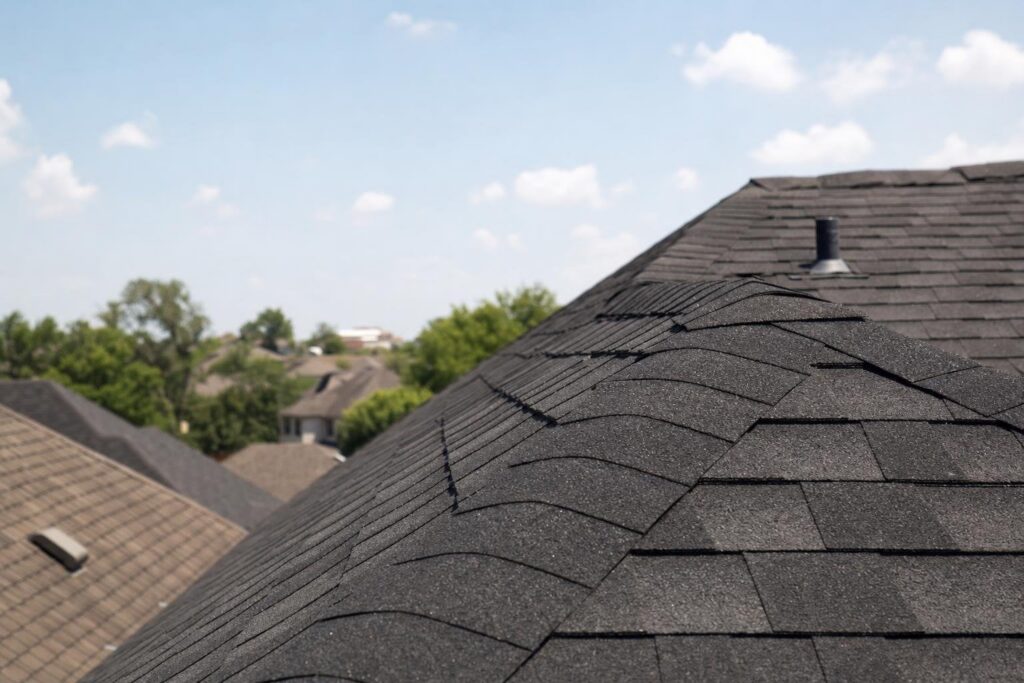
Your electricity bill spikes every July for a reason. Allen sits in IECC Climate Zone 3, one of the hottest mixed-humid climate zones in the country. July and August highs regularly top 100°F here, and that heat doesn’t stop at your shingles. A conventional dark asphalt roof can push attic temperatures to 150°F or higher. Your HVAC system then works overtime trying to fight heat that’s radiating straight down through your ceiling.
This isn’t a rare heat wave. It’s North Texas in summer, year after year. That sustained heat load is exactly why energy efficient roofing in Allen has become a real conversation for homeowners, not just a marketing phrase.
What Makes a Cool Roof Different
A cool roof is defined by two measurable properties. The first is solar reflectance, which is how much sunlight the surface reflects away instead of absorbing. The second is thermal emittance, which is how quickly the roof releases any heat it does absorb back into the air rather than into your attic. A standard dark shingle scores low on both. A certified cool roof scores high on both.
The Cool Roof Rating Council, known as the CRRC, tests and certifies roofing products on these two metrics. That rating system gives you an objective way to compare options before you spend a dollar. At Pickle Roofing Solutions, we have worked with Texas homeowners since 2012 and have seen firsthand how reflective roofing Texas products perform across North Texas summers.
This article covers material comparisons, real energy savings data for the Allen area, installation costs, and a practical decision framework. Let’s dive in.
What Makes a Roof ‘Cool’? The Science Behind Reflective Roofing
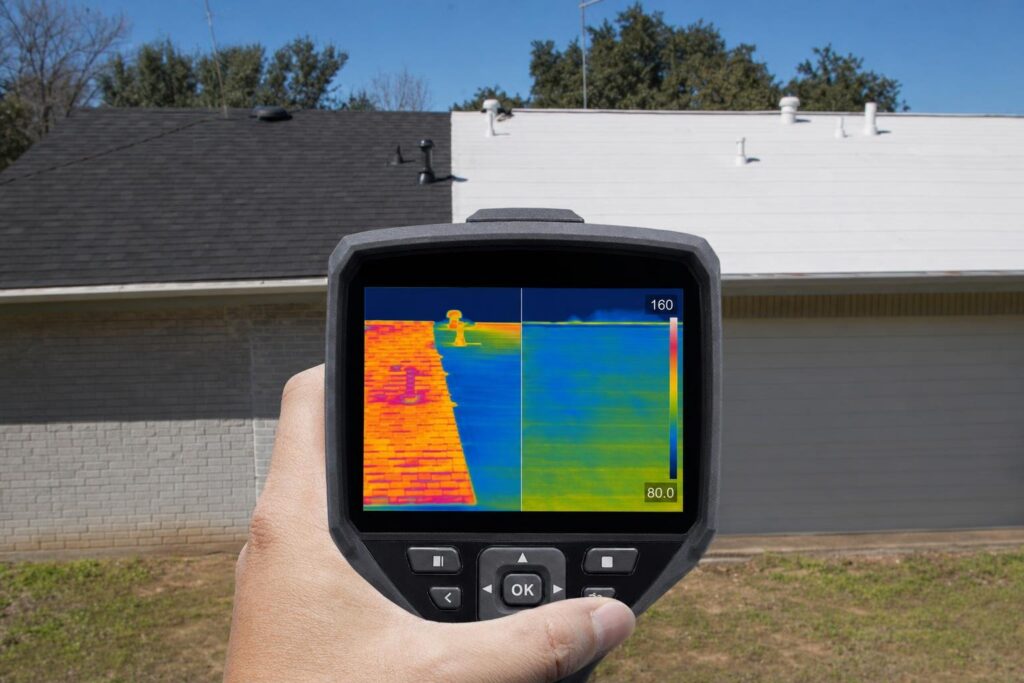
A cool roof is not just a lighter color or a marketing label. It is a roofing system specifically designed to deflect solar energy and release absorbed heat quickly. Two measurable properties define whether a product earns that classification: solar reflectance and thermal emittance.
Solar Reflectance: The Key Number to Know
Solar reflectance, sometimes called albedo, is a number between 0 and 1 that measures how much incoming solar energy a surface bounces back rather than absorbs. A value of 1.0 means perfect reflection. A value of 0 means the surface absorbs everything.
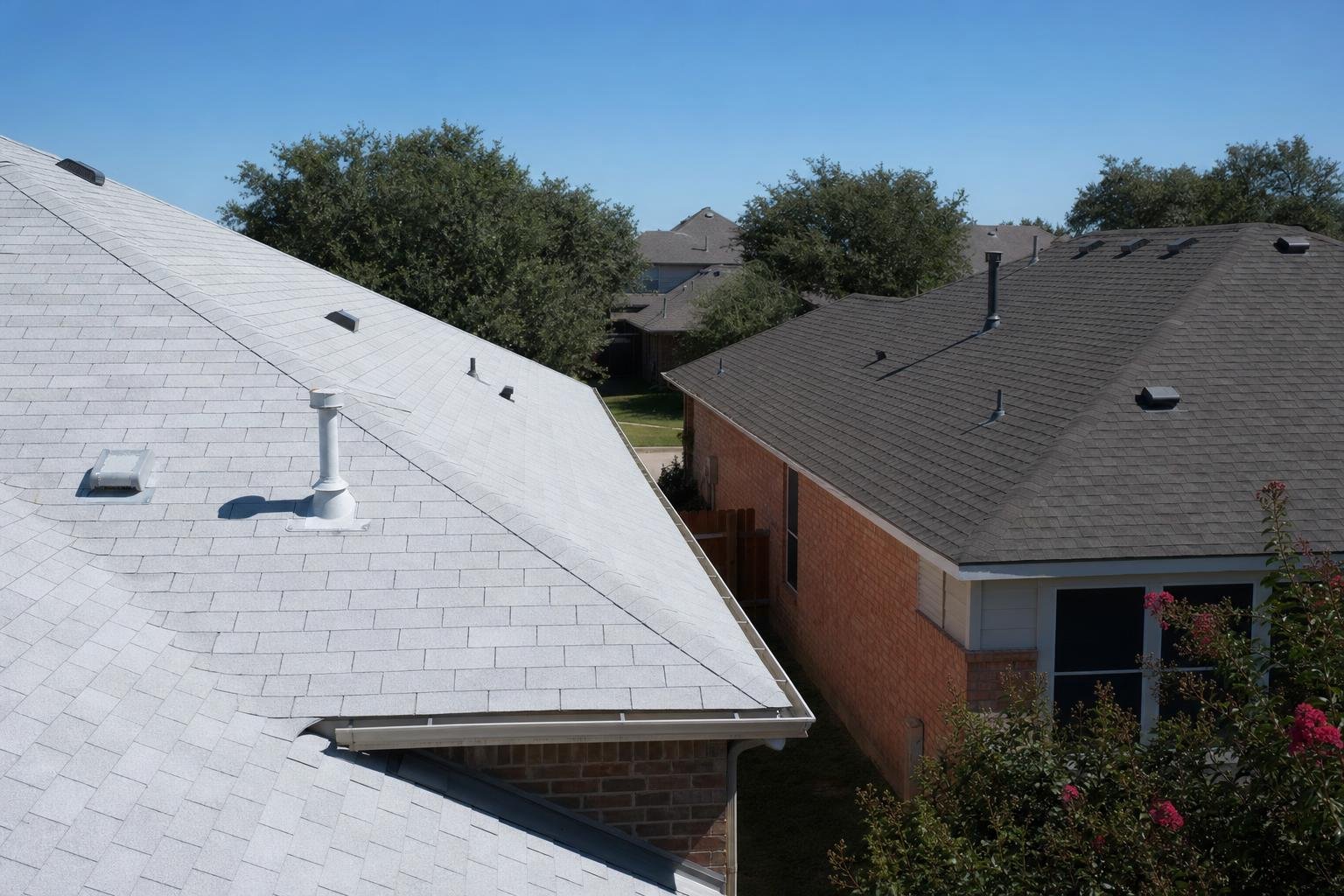
Standard dark asphalt shingles have a solar reflectance of only 0.05 to 0.15. That means up to 95% of the sun’s energy hitting your roof converts directly to heat.
On a July afternoon in the Frisco and Allen area, when air temperatures hit 100°F, a dark shingle roof surface can reach 165°F. A certified cool roof surface under the same sun stays closer to 115°F. That 50-degree difference is what drives up your HVAC load every single summer day. ENERGY STAR requires a minimum solar reflectance of 0.25 for steep-slope products. Many certified cool-roof shingles and coatings hit 0.40 or higher.
Thermal Emittance: The Other Half of the Equation
Thermal emittance also runs from 0 to 1. It measures how quickly a surface releases the heat it does absorb back into the atmosphere rather than transferring it into your attic. A higher number means the roof sheds heat faster.
Standard asphalt shingles actually perform reasonably well here, with emittance around 0.90. The problem is that their low reflectance means they absorb so much heat to begin with that high emittance alone cannot keep up. Think of it this way: emittance helps a roof cool down, but reflectance stops the heat from building up in the first place. You need both numbers working together.
Metal roofing with factory-applied cool-color coatings pairs high emittance at 0.85 or above with high reflectance, making it the strongest-performing category for reflective roofing in Texas heat.
How the Cool Roof Rating Council Grades Materials
The Cool Roof Rating Council, known as the CRRC, is the independent organization that tests and certifies roofing products. Their publicly searchable directory at coolroofs.org lists verified reflectance and emittance values for thousands of products. Before you buy anything marketed as a cool roof, look the product up there first.
Here is what the CRRC and ENERGY STAR thresholds look like for steep-slope roofs:
- Minimum solar reflectance for ENERGY STAR certification: 0.25
- Minimum three-year aged reflectance for ENERGY STAR: 0.15
- High-performing cool roof shingles and coatings: 0.40 or above
- Metal roofing with cool-color coatings: reflectance often 0.50 to 0.70
As a GAF Master Elite contractor and 3-Star President’s Club Award winner, we have access to GAF’s full line of ENERGY STAR-rated cool roofing products. That means you are choosing from materials that have already cleared the CRRC and ENERGY STAR thresholds, not guessing at a home improvement store.
Cool Roof Materials: Which Options Work Best for Allen Homes?
Most homes in the Allen area were built between the 1990s and 2010s with standard architectural shingles on a 6:12 to 8:12 pitched roof. That housing profile makes the material choice straightforward for most homeowners. Let’s explore which cool roof option matches your specific house type.
Cool Roof Asphalt Shingles: The Low-Disruption Upgrade
Cool-roof shingles look nearly identical to standard architectural shingles from the street. The difference is in the granules. Manufacturers coat them with ceramic or infrared-reflective materials that strongly reflect near-infrared sunlight instead of converting it to heat. GAF’s Timberline Cool Series is an ENERGY STAR-certified example of this technology.
The cost premium over standard shingles is modest, typically $0.10 to $0.30 per square foot. For most homeowners, the practical move is to upgrade at your next replacement cycle rather than tear off a functioning roof early. If you are already considering asphalt shingle roofing in Allen, requesting a cool-rated product adds very little to the total project cost.
- Solar reflectance on cool shingles: roughly 0.25 to 0.35 (standard dark shingles sit around 0.05 to 0.10)
- Appearance: same profiles and color ranges as conventional shingles
- Best fit: standard pitched roofs on composition shingle homes throughout the area
Metal Roofing: The Highest-Performing Cool Roof Option
Standing seam metal roofs with PVDF or Kynar factory-applied cool-color coatings reach solar reflectance of 0.60 to 0.70. No asphalt shingle comes close to that number. Metal also lasts 40 to 70 years compared to 20 to 30 years for architectural shingles, so the lifetime cost often favors metal despite higher upfront pricing.
One detail that matters here: metal roofing’s thermal performance depends heavily on attic airflow. Without proper ventilation, heat can still build up in the attic cavity and offset your savings. Read our complete guide to roof ventilation for Texas homes before making a final decision. If you want to dig deeper into materials and pricing, our page on metal roofing options in Allen covers the full picture.
Reflective Coatings and Flat Roof Membranes
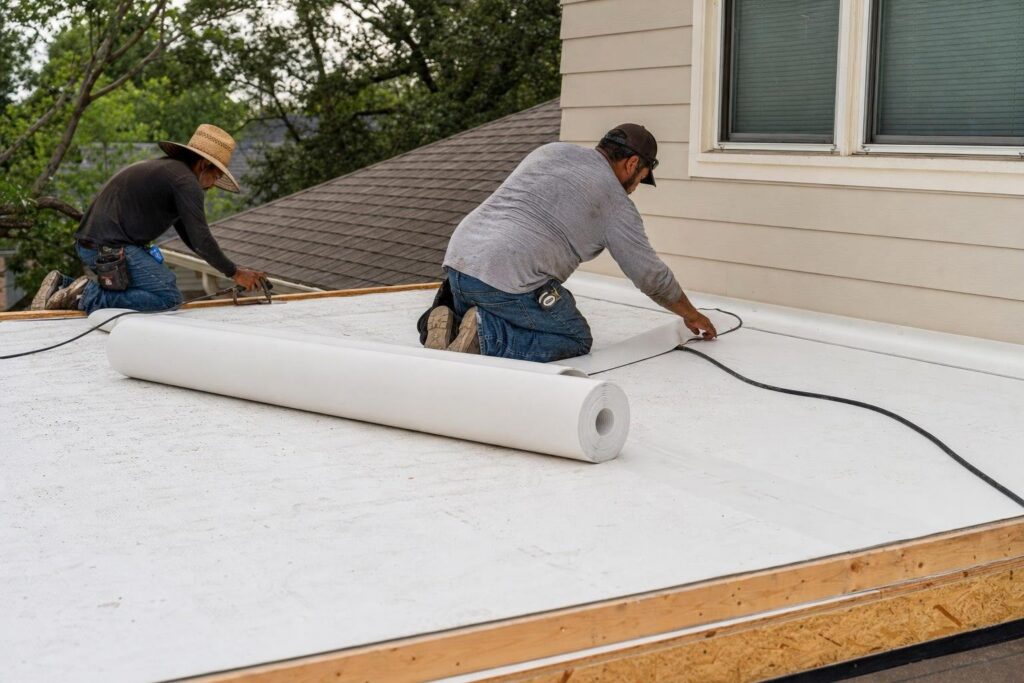
Ranch-style homes and properties with sunroom or back-addition sections often have low-slope or flat roof sections. These areas need a different approach entirely. TPO (thermoplastic polyolefin) membranes deliver solar reflectance of 0.72 or higher straight from the factory. White EPDM (ethylene propylene diene monomer) is another proven option in this category.
If your flat section already has a built-up roof or modified bitumen system, elastomeric coatings such as silicone or acrylic can convert it into a cool roof without a full tear-off. Installed cost for coatings runs $1.50 to $3.00 per square foot. Full TPO membrane replacement ranges from $5.00 to $10.00 per square foot depending on deck condition. Our page on flat roofing systems breaks down both paths in more detail.
Ready to find out which cool roof system fits your home? Call Pickle Roofing Solutions at (469) 247-8310 or request a free inspection online. Our team serves Allen, Plano, McKinney, Frisco, Garland, Richardson, Wylie, Murphy, Prosper, Fairview, Carrollton, and the greater Dallas area. We will walk your roof, review your current attic conditions, and give you a straight answer on which option makes the most sense for your house and your energy bill.
Frequently Asked Questions
How Much Money Can a Cool Roof Actually Save on Energy Bills in Allen?
Homeowners in Allen with cool roofs typically report reductions in cooling costs ranging from 15 to 25 percent during peak summer months, though exact savings depend on attic insulation, home size, and HVAC efficiency. Pickle Roofing Solutions can assess your current setup and give you a realistic estimate based on homes similar to yours in the area. Over a 10 to 15 year lifespan, those monthly savings often offset the modest price difference between standard and reflective materials.
Does a Cool Roof Still Work If My Attic Is Poorly Insulated?
A cool roof will still reduce the heat load entering your home, but poor attic insulation limits how much of that benefit reaches your living spaces. The two systems work best together, and skipping attic insulation upgrades can cut your potential savings significantly. Pickle Roofing Solutions recommends pairing any cool roof installation with an attic inspection so you get the full return on your investment.
Will a Cool Roof Make My Home Colder or Harder to Heat in Winter?
This is a common concern, but the heating penalty in North Texas climates like Allen is minimal compared to the cooling gains. Studies from the Department of Energy show that in hot and mixed climates, cool roofs save far more in summer than they cost in winter heating. The net annual energy balance for Allen homeowners is almost always favorable.
How Long Does a Cool Roof Installation Take for a Standard Allen Home?
Most residential cool roof installations by Pickle Roofing Solutions are completed in one to three days, depending on roof size, pitch, and the material being installed. Reflective coating applications on flat roofs can sometimes be finished in a single day. Your project timeline will be confirmed during your initial estimate so you can plan accordingly.
Do Cool Roofs Require Special Maintenance Compared to Standard Roofs?
Cool roofs do not require a significantly different maintenance routine, but keeping the surface clean matters more because dirt and algae buildup can reduce reflectivity over time. Periodic rinsing and an annual inspection are usually enough to maintain peak performance. Pickle Roofing Solutions offers maintenance checks that include a reflectivity assessment to catch any degradation early.
Can I Get a Tax Credit or Utility Rebate for Installing a Cool Roof in Allen?
Certain cool roof products that meet Energy Star standards may qualify for federal tax credits under the Inflation Reduction Act, and some Texas utility providers offer rebates for energy efficient upgrades. Availability and amounts vary by year and provider, so it is worth checking with your utility company and a tax professional before your installation. Pickle Roofing Solutions can provide product documentation and Energy Star certifications to support any rebate or credit application.
Is a Cool Roof a Good Idea If I Plan to Sell My Home in the Next Few Years?
A cool roof can be a meaningful selling point in the Allen real estate market, where buyers are increasingly aware of long term energy costs. Homes with documented energy efficient upgrades often appraise higher and attract more serious offers. Even if you sell within a few years, the upfront cost is typically recovered through lower utility bills and increased resale value.
Ready to Get Started with Pickle Roofing Solutions?
Call (469) 247-8310 to speak with our team directly. We’re ready to answer your questions, walk you through your options, and help you find the right solution for your needs. Whether you’re just starting to plan or ready to move forward, we’ll make the process simple and stress-free. Reach out today and let’s talk about how we can help.