

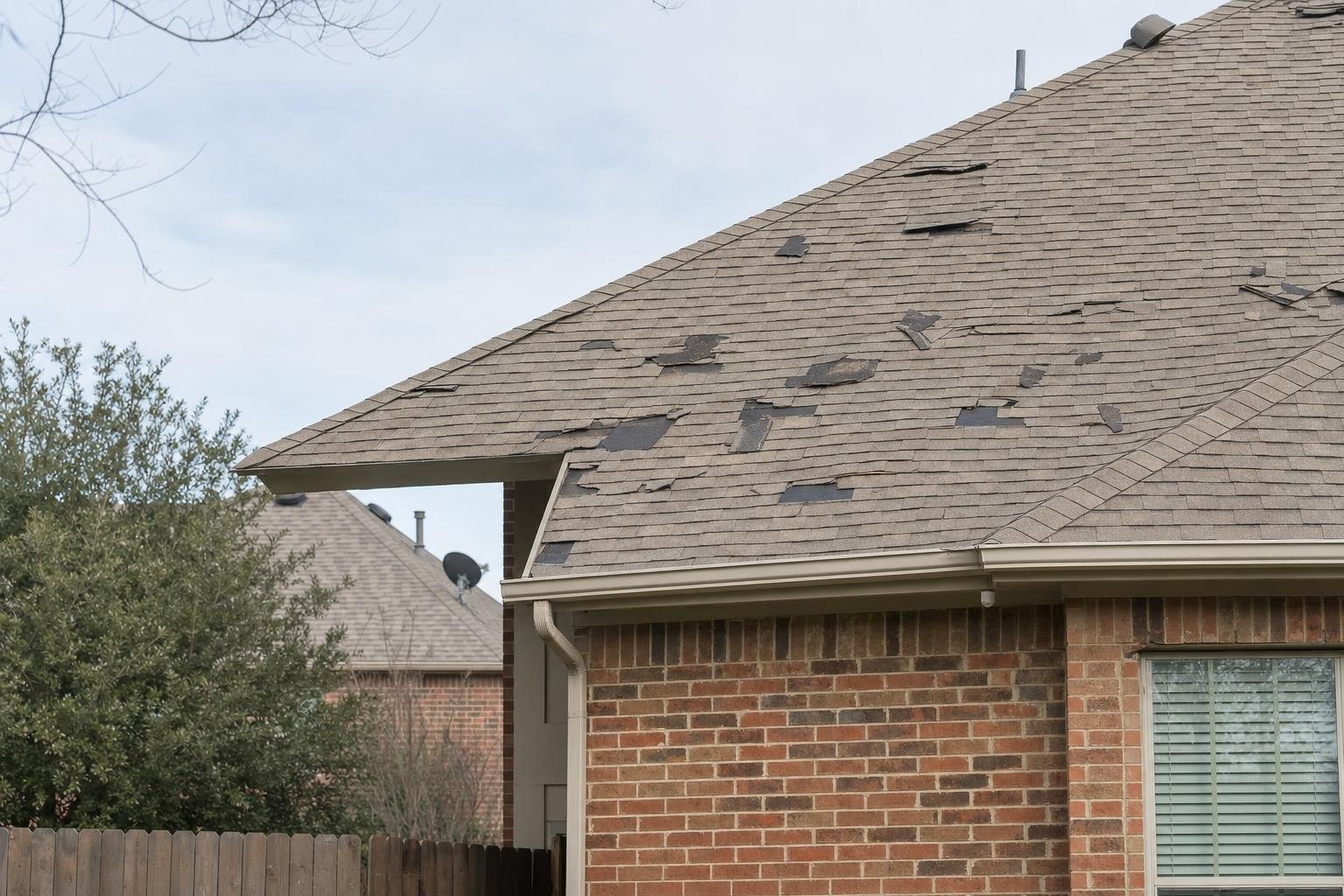
A severe storm can compromise your roof in hours, and the decisions you make in the first 24 hours after it hits determine how much damage you end up paying for out of pocket. Delayed action means hidden leaks, structural rot, and insurance claims that fall apart. At Pickle Roofing Solutions, we have handled storm damage roof repair across Allen and the surrounding DFW area since 2012, and we work directly with your insurance adjuster to help document every bit of damage correctly. This guide walks you through exactly what to do, step by step.
Storm damage doesn’t wait. Call us at (469) 247-8310 to schedule a free storm damage inspection today.
Key Takeaways
- Acting within 24 hours of a storm is critical to preventing secondary water and structural damage to your home.
- Storm damage roof repair involves a clear 8-step process, from safety checks to final inspection.
- Documenting damage with photos before any cleanup strengthens your insurance claim significantly.
- Working with a GAF Master Elite certified contractor helps ensure repairs meet manufacturer and insurer standards.
- Texas homeowners have specific rights under state law when filing storm-related roofing insurance claims.
Storm Damage Roof Repair in Allen, TX: 8 Steps to Take After a Storm
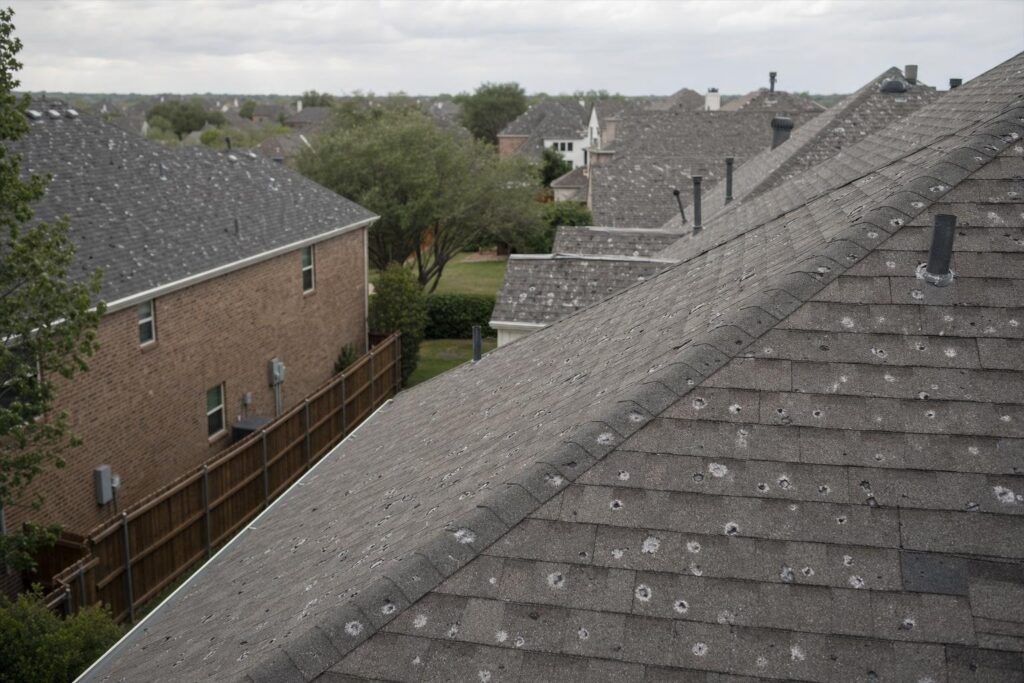
A spring hailstorm can move through Allen in under 20 minutes and leave behind thousands of dollars in roof damage. If you wait even a few days to act, water intrusion through cracked shingles or lifted flashing can reach your roof decking and insulation within 48 hours. That small repair window closes fast. At Pickle Roofing Solutions, we have worked with Allen homeowners since 2012, and we have walked hundreds of roofs in zip codes 75002 and 75013 after major storm events.
Allen sits directly inside one of the highest hail frequency corridors in the country. Collin County records multiple insured hail loss events every year. Straight-line winds from spring supercell storms here regularly exceed 60 mph, tearing off ridge caps and forcing water under shingles before you even know the damage is there.
This guide walks you through 8 clear steps, from post-storm safety checks to final insurance sign-off. Let’s dive in.
Why Allen, TX Roofs Take a Beating Every Storm Season
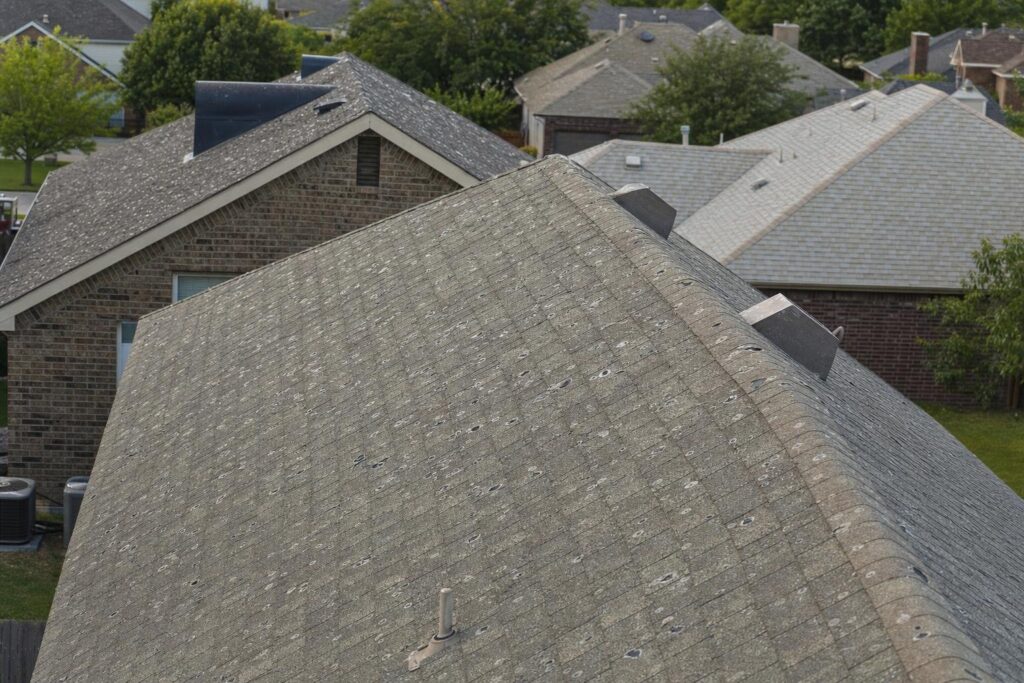
Allen sits in one of the most storm-punished roofing markets in the country. Collin County records hail events at rates most of the country never sees, and our open-prairie geography north of Dallas funnels brutal wind into subdivisions that were built fast during the suburban boom of the 1990s and early 2000s. Many of those roofs are now 25 to 30 years old and sitting near the end of their lifespan. A single storm can push a marginal roof from “needs repairs” to a full replacement candidate.
Hail Frequency in Collin County
Collin County sits inside what meteorologists call Hail Alley, a corridor running from West Texas northeast through the Dallas metro within one of the highest hail-frequency regions in the country. Zip codes 75002 and 75013 see repeated hail events most storm seasons, not just occasionally.
Size matters more than most homeowners expect. Golf-ball-size hail at 1.75 inches can fracture granules on asphalt shingles, the small mineral coating that protects the mat underneath, crack clay or concrete tile outright, and dent metal panels in a single strike. That is why Class 4 impact-resistant materials rated under UL 2218 testing, a standard that simulates steel ball drops on roofing surfaces, are widely specified for hail damage roof repair in Allen, TX.
Wind Events and Tornado Proximity
Wind damage roof repair is a regular part of what our team handles after supercell storms roll through. Allen’s open-prairie exposure means southeast-to-northwest wind channels during these events regularly produce straight-line winds of 60 to 80 mph.
That kind of force lifts shingle tabs, the flat portions of shingles that overlap the course below, and destroys ridge caps, the row of shingles sealing the peak of the roof. It also tears flashing, the metal strips that seal transitions between the roof deck and vertical features like chimneys and walls. Wind damage often looks cleaner than hail damage but is just as serious.
How Our Climate Compounds the Damage
Roof damage after a storm is rarely just about that one storm. Our summers push sustained heat above 100 degrees for weeks at a time, accelerating UV degradation of asphalt shingles and causing granule loss that leaves older roofs far more vulnerable to impact.
North Texas winters add another problem. Freeze-thaw cycles expand existing micro-cracks in shingles and tile. A roof that looked borderline before a storm frequently fails a post-storm inspection because those hidden cracks opened up. Age and climate together mean storm damage in Allen hits harder than the storm statistics alone suggest.
The 8 Steps: What to Do After Storm Damage Hits Your Roof
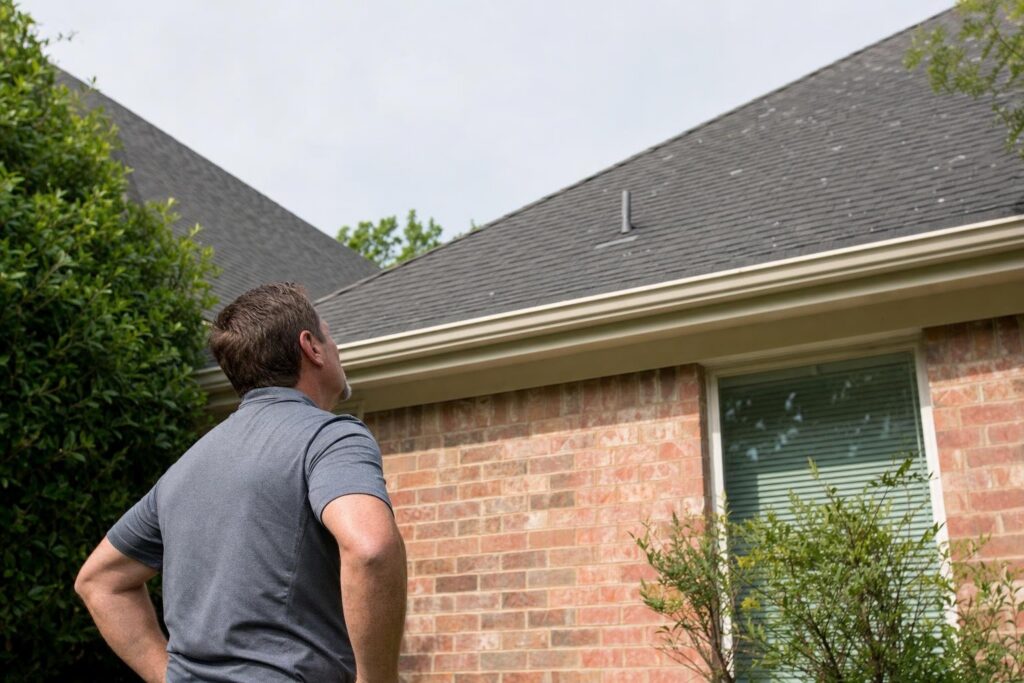
The hour after a hailstorm hits your Allen home is the most critical window for protecting your property and your insurance claim. Most mistakes happen fast: homeowners rush outside too soon, skip documentation, or call their insurer before getting an independent contractor on-site. Follow these eight steps in order and you will be in the strongest possible position.
Step 1: Wait for the Storm to Fully Pass
Do not go outside during active lightning. The rule is simple: wait at least 30 minutes after the last thunder before stepping out. Post-storm adrenaline is real. It pushes people onto wet, debris-covered driveways and sloped surfaces before the danger has actually cleared.
Step 2: Do a Ground-Level Walk of Your Property
Walk the perimeter of your home with your feet on the ground. You are looking for missing or displaced shingles, granule buildup in your gutters (granules are the small mineral particles embedded in the asphalt mat that protect it from UV damage), dented gutters and downspouts, dents on metal flashing or roof vents, cracked ridge caps, and any tree branches resting on the roof surface. Do not climb onto the roof.
Step 3: Document Everything Before Touching Anything
Photograph every damaged area visible from the ground or an upper-story window. Then record a slow, steady video of the full roofline. Note the exact date and time, because insurance adjusters cross-reference photo metadata when reviewing claims. Go inside and photograph any ceiling stains, bulging drywall, or water marks in the attic as well.
Step 4: Apply Emergency Tarping If There Is an Active Leak
A tarp is a temporary protective measure, not a repair. If you have an active leak, secure a heavy-duty poly tarp over the affected area using furring strips nailed at the edges to hold it against wind. Our team offers 24/7 emergency roof repair in Allen for situations where a leak cannot wait. Call us and we will get someone out fast.
Step 5: Call a Licensed Roofing Contractor Before Your Insurer
This is the step most Allen homeowners get backwards. Insurance adjusters work for the insurance company, not for you. A licensed contractor with claims experience can identify all the damage, including hidden damage an adjuster might overlook, and document it properly before anyone else arrives on-site. Schedule a professional storm damage inspection with our team and get a written preliminary damage report in hand before you file.
Our GAF Master Elite certification and 3-Star President’s Club Award are credentials insurers recognize. That matters when you need your damage report taken seriously.
Step 6: File Your Insurance Claim Promptly
Texas homeowner policies typically allow two years from the storm date to file a roof storm damage insurance claim, though some policies set shorter windows. Make sure to review your specific policy for deadlines as Texas policies commonly allow one to two years from the storm date to file a claim. File as soon as possible with your policy number, storm date, and full photo documentation attached. Include the preliminary damage report your contractor provided. That document significantly strengthens your claim from the start.
Step 7: Be Present During the Adjuster’s Inspection
Show up or have your contractor present when the adjuster walks your property. If they are moving past damage your contractor already documented, point it out before they leave. Texas law gives homeowners the right to request a re-inspection or hire a public adjuster if the initial assessment seems low or incomplete. Our page on Texas roofing laws and homeowner rights covers what protections apply to you.
Step 8: Review the Written Scope of Work Before Any Work Begins
Before roof damage after a storm gets repaired, get a written scope of work in your hands. It should itemize roofing materials by brand, product line, and color; the full labor process; warranty terms; and the project timeline. Confirm that proposed materials match exactly what the insurer approved. Watch for contractors who substitute a lower-grade shingle than what was originally installed. That substitution can void your manufacturer warranty and hurt your home’s resale value.
How to Tell Hail Damage from Wind Damage (and Why It Matters for Your Claim)
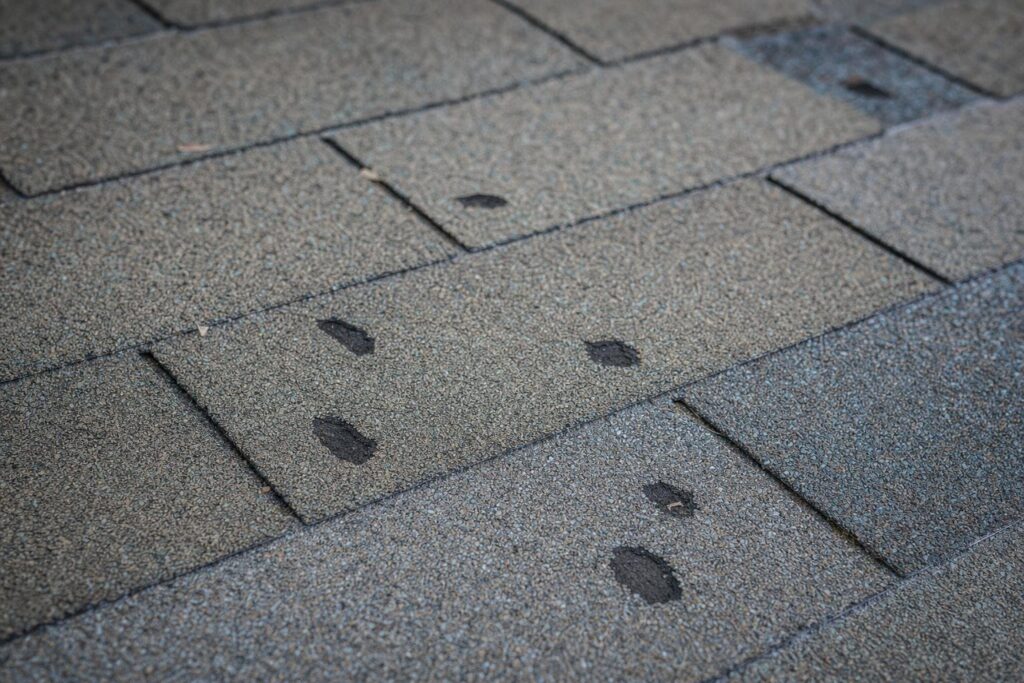
Hail damage and wind damage can happen in the same storm cell, but they leave completely different evidence on your roof. Misidentifying one as the other can cost you money. Your insurance adjuster may not catch every damage type, and if your contractor doesn’t document both, your payout gets calculated on incomplete information.
What Hail Damage Looks Like on Different Roofing Materials
Every roofing material reacts differently to hail impact. Knowing what to look for on your specific roof type matters. Our team has assessed hail damage across Plano, McKinney, Frisco, and the wider Collin County area, and the same patterns repeat after every spring storm season.
- Asphalt shingles: Look for circular bruises where granules have been knocked loose, exposing the black asphalt mat beneath. The pattern is random across the surface. Confirm by checking your gutters, downspouts, and vents for corresponding spatter marks.
- Metal roofing: Hail leaves circular dents or dings on panel faces. Metal holds up better than asphalt overall, but most Texas homeowner policies will still cover the cosmetic damage.
- Clay or concrete tile: Impact causes cracking or fracturing, often with spiderweb cracking radiating outward from the strike point. A cracked tile creates a direct path for water entry with no secondary protection underneath.
- Slate and clay barrel tile: Both are brittle. Hail as small as one inch can chip or cleanly fracture either material.
Wind Damage Signs That Are Easy to Miss
Wind damage is more directional than hail damage. It follows the path of the wind, so the pattern on your roof is not random. Straight-line wind events, which are common in Collin County spring storms, can strip roofs without leaving the obvious debris that a tornado would.
- Lifted or missing shingle tabs: The exposed lower portion of an asphalt shingle peels back when high wind breaks the factory seal strip bond.
- Lifted ridge caps: The ridge cap covers the peak of the roof. Wind gets underneath and separates it from the roof deck.
- Torn or bent flashing: Check chimney bases and valley intersections where two roof planes meet. Flashing, the thin metal strips that seal those joints, bends or separates under wind load.
- Directional granule loss: Granule loss skewed heavily toward one side of the roof points to wind, not hail.
Why the Distinction Affects Your Insurance Payout
Texas homeowner policies typically cover both hail and wind under the same peril clause. However, many policies carry a separate hail and wind deductible expressed as a percentage of your dwelling coverage, not a flat dollar amount. That percentage deductible can be significantly higher than a standard deductible. A thorough contractor documents both damage types so nothing gets miscategorized and your payout reflects the full scope of the loss.
Texas also has specific rules governing how roofing contractors can behave during the claims process. Contractors are prohibited from paying or waiving your deductible as an incentive. Understanding those rules protects you from bad actors. You can review the full Texas roofing contractor regulations that apply during insurance claims before signing anything.
Your roof took the hit. Do not let the claim process hit you just as hard. Call Pickle Roofing Solutions at (469) 247-8310 to schedule a post-storm inspection. Our team is available 24/7 for emergency situations, and we work directly with your insurer so nothing gets missed. Visit us at 1333 W McDermott Dr #200, Allen, TX 75013, or reach us online at pickleroofing.com to get started.
Frequently Asked Questions
How Long Does Storm Damage Roof Repair Typically Take in Allen, TX?
Most storm damage roof repairs completed by Pickle Roofing Solutions take anywhere from one day to one week, depending on the extent of the damage and the materials required. A straightforward shingle replacement on a standard residential roof can often be finished in a single day, while more extensive structural repairs may require additional time. Supply availability after a widespread storm event in Collin County can also affect scheduling, so contacting a contractor quickly gives you a better spot in the queue.
Will My Homeowners Insurance Cover the Full Cost of Storm Damage Repairs?
Coverage depends on your specific policy, your deductible, and whether the damage meets your insurer’s threshold for a covered loss. Most standard homeowners policies in Texas cover hail and wind damage, but depreciation calculations can reduce the initial payout significantly. Pickle Roofing Solutions works with homeowners to provide detailed documentation that supports a full and accurate claim, which can help close the gap between what the insurer initially offers and the actual repair cost.
Can I Stay in My Home During the Roof Repair Process?
In most cases, yes. Repairs to isolated sections of a roof do not require you to vacate your home, and Pickle Roofing Solutions takes care to protect interior spaces with tarps and drop cloths during the work. If the structural damage is severe enough to compromise the ceiling or interior walls, a contractor may recommend temporary relocation for safety reasons. Your project manager will give you a clear picture of what to expect before work begins.
How Soon After a Storm Should I Get a Roof Inspection?
You should schedule a professional inspection within 48 to 72 hours of a significant storm if possible. Texas insurance policies often include a one-year deadline to file a storm damage claim, but waiting too long makes it harder to prove that damage is storm-related rather than the result of wear and tear. An early inspection by Pickle Roofing Solutions creates a timestamped record that strengthens your position with the insurance adjuster.
Is It Safe to Go on My Roof to Check for Damage Myself?
Climbing onto a storm-damaged roof carries real risks, including unstable decking, slippery surfaces, and hidden weak points that are not visible from the outside. Even experienced homeowners can misjudge structural integrity after a severe hail or wind event. Pickle Roofing Solutions recommends keeping your feet on the ground and letting a licensed roofing professional conduct a proper inspection using the right safety equipment.
What Happens If a Second Storm Hits Before My Repairs Are Complete?
If emergency tarping was applied correctly after the first storm, it provides meaningful protection against additional water intrusion during subsequent rain events. Pickle Roofing Solutions uses commercial-grade tarping materials secured to minimize wind uplift, which reduces the risk of secondary damage. If a second storm does cause additional damage before permanent repairs are finished, that event may constitute a separate insurance claim, so documenting conditions before and after is important.
Does the Age of My Roof Affect What Storm Damage Repairs Will Cost Me Out of Pocket?
Yes, roof age directly affects how an insurance company calculates depreciation on your claim. An older roof may receive an actual cash value payout rather than a replacement cost value payout, meaning the insurer subtracts depreciation and you absorb a larger portion of the cost. Some homeowners carry endorsements that recover depreciation after repairs are complete, so reviewing your policy details with your agent before filing is worth the time. Pickle Roofing Solutions can help you understand how the scope of work aligns with whatever settlement your insurer provides.
Ready to Get Started with Pickle Roofing Solutions?
Call (469) 247-8310 to speak with our team directly. We’re ready to answer your questions, walk you through your options, and help you find the right solution for your needs. Whether you’re just starting to plan or ready to move forward, we’ll make the process simple and stress-free. Reach out today and let’s talk about how we can help.