

Solar roofing has generated significant interest across the Dallas-Fort Worth area, and for good reason. Allen, TX receives roughly 5.3 peak sun hours per day, Collin County electricity rates make energy production financially meaningful, and the appeal of a roof that pays back over time is real. But whether solar roofing is the right choice for a specific Allen homeowner depends on factors that the marketing rarely addresses directly: upfront costs in 2026, the expiration of the federal tax credit, hail risk in North Texas, and how solar options compare to a well-chosen traditional roof system.
This post covers what each option actually costs in this market, what the Allen-specific incentive landscape looks like right now, where solar makes sense, and where traditional roofing remains the stronger financial and structural decision.
Two Different Decisions Under One Name
“Solar roofing” describes two fundamentally different products that are often discussed as if they were one option. Understanding the distinction is the starting point for any honest comparison.
Integrated solar roofing replaces your roof’s shingle layer entirely with solar tiles or shingles that function as both the roofing material and the power generation system. Tesla Solar Roof and GAF Timberline Solar are the most recognized examples. These systems require a full roof tear off and replacement. You are not adding solar to your existing roof. You are buying a new roof that also generates electricity.
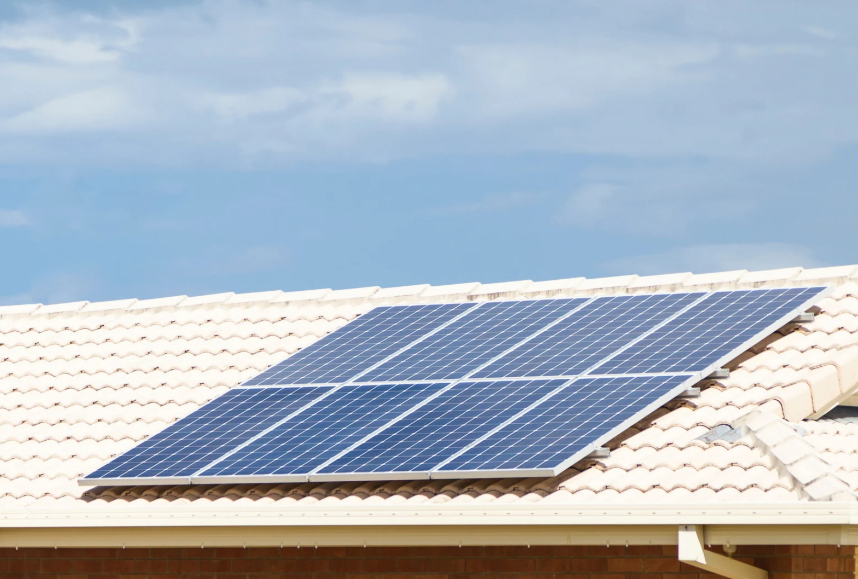
Traditional solar panels (rack-mounted systems) bolt onto your existing or new roof using aluminum railing systems. The panels sit a few inches above the roof surface, allowing airflow underneath. They leave your existing roofing material in place and add power generation capacity on top of it. This is how the large majority of residential solar installations in North Texas are structured.
The comparison that matters most for Allen homeowners is not solar versus no solar. It is: given my roof’s current condition, my budget, and the North Texas climate, which path, if any, produces a reasonable return?
What Solar Roofing Costs in Allen, TX in 2026
Integrated solar roofing (Tesla Solar Roof / GAF Timberline Solar)
A Tesla Solar Roof installation runs approximately $75,000 or more for a typical Collin County home depending on roof complexity, system size, and energy needs. GAF Timberline Solar comes in lower, at roughly $15 to $18 per square foot installed, which translates to $30,000 to $50,000 for a typical Allen home. Both figures represent the full cost of the roofing system plus power generation.
Rack-mounted solar panels
Traditional solar panel systems in Allen and Collin County run approximately $2.05 to $2.45 per watt installed in 2026. A 10 kW system, which is sufficient for most Allen-area single-family homes, costs roughly $20,000 to $25,000 before incentives. This price assumes the existing roof has adequate remaining lifespan to justify the installation. If the roof needs replacement first, that cost is separate.
A critical 2026 update: the federal tax credit expired
The federal residential solar tax credit (Section 25D) expired on December 31, 2025. Allen homeowners who purchase a solar system outright with cash or a loan receive no federal tax credit in 2026. This meaningfully changes the payback math compared to what was available to buyers in prior years. Some third-party ownership structures may still access commercial tax incentives through programs like Propel Solar, but the direct homeowner credit that previously reduced installation cost by 30 percent is no longer available.
What remains available in Allen, TX
Even without the federal credit, Allen homeowners have access to meaningful local incentives. Oncor offers rebates of up to $9,000 for solar combined with battery storage. Texas provides a 100 percent property tax exemption on added home value from solar installations, which at Collin County’s 2.04 percent tax rate represents approximately $7,800 in property tax savings on a $22,500 system over 25 years.
TXU Energy’s retail-match buyback plan in Oncor territory provides effective 1-to-1 net metering, crediting excess solar production at full retail rate. For Allen HOA-governed neighborhoods including Twin Creeks, Watters Creek, and Montgomery Farm, Texas Property Code Section 202.010 prohibits HOAs from blocking solar panel installation entirely, though aesthetic guidelines on panel placement remain permissible.
Traditional Roofing Costs in Allen, TX

A standard shingle roofing replacement for a typical Allen-area home runs between $8,000 and $18,000 depending on square footage, pitch complexity, and material tier. Premium architectural shingles at the higher end of that range carry 30-year manufacturer warranties and perform well under Collin County weather conditions when properly ventilated and installed.
Metal roofing installations run higher, typically $18,000 to $35,000 or more depending on system type, but offer lifespans of 40 to 70 years and stronger hail resistance ratings. For homeowners planning a long-term hold on their Allen property, the lifetime cost per year of a metal roof often compares favorably to repeated asphalt shingle replacements.
Traditional roofing does not generate energy, which is the core argument for solar. But it also does not carry the installation complexity, specialist labor requirements, or the technology obsolescence risk that comes with integrated solar systems.
The Honest Cost Comparison
| Scenario | Upfront Cost | Incentives Available | Net Cost | Payback Period |
|---|---|---|---|---|
| Traditional shingle roof | $8,000–$18,000 | None | $8,000–$18,000 | N/A (expense only) |
| Traditional roof + rack solar (10 kW) | $28,000–$43,000 | Oncor rebate up to $9,000 + property tax exemption | $19,000–$36,000 | 12–18 years |
| GAF Timberline Solar | $30,000–$50,000 | Oncor rebate + property tax exemption | $21,000–$41,000 | 15–22 years |
| Tesla Solar Roof | $75,000+ | Oncor rebate + property tax exemption | $66,000+ | 25+ years |
Payback periods above assume 5.3 peak sun hours per day, TXU retail-match buyback, and typical Allen residential electricity consumption. They do not account for future utility rate increases, which would improve the payback calculation, or future repair costs on solar components, which would extend it.
For most Allen homeowners evaluating solar on financial terms alone, traditional rack-mounted panels on a sound roof deliver better ROI than integrated solar roofing. The integrated systems, particularly Tesla Solar Roof, make the most financial sense when a full roof replacement is already necessary. Combining the two projects into one scope reduces the cost gap considerably, since you are no longer paying separately for a new roof and solar installation.
The North Texas Hail Problem for Solar
This is the factor most solar sales presentations in the Allen area underemphasize. Collin County sits within what NOAA designates as Hail Alley. Standard UL 61730 testing for solar panels uses 1-inch ice balls at 52 mph. North Texas regularly produces hail that exceeds that specification. The 2024 hail season alone caused over $2.4 billion in DFW property insurance claims.
Solar panels can and do sustain hail damage in North Texas. Cracked or microcracked panels reduce power output and may require full replacement depending on severity. Rack-mounted panels on railing systems are more vulnerable to large hail than shingles specifically rated for impact resistance because the panel glass has no equivalent to a Class 4 impact-resistant shingle rating.
For Allen homeowners installing traditional rack-mounted solar, the practical steps are:
Select panels with enhanced hail ratings. Hail-rated panels add approximately $0.10 to $0.20 per watt to system cost, which translates to roughly $1,000 to $2,000 on a 10 kW installation. That premium is worth carrying in Collin County.
Confirm your homeowner’s insurance covers solar panels as part of the dwelling structure at replacement cost value, not actual cash value. An ACV policy pays the depreciated value of panels at claim time, which may fall well short of replacement cost after several years of use.
Understand that hail damage to solar panels is an insurance claim, not a warranty claim. The distinction matters for how you respond after a storm.
Integrated solar roofing, including Tesla Solar Roof and GAF Timberline Solar, uses glass tiles or shingles that are generally rated to withstand higher impact thresholds than standard rack-mounted panel glass. This is one area where integrated systems carry a specific durability advantage in the North Texas market.
When Solar Roofing Makes Sense for an Allen Home
Solar roofing, whether integrated or rack-mounted, earns its cost most clearly in these specific situations:
Your roof needs full replacement anyway. If your existing shingles are at or near end of life, combining a roof replacement with a solar installation closes the cost gap significantly. You are not adding the full solar cost on top of a functional roof. You are replacing two major expenses with one coordinated project.
You plan to stay in the home long term. The financial return on any solar investment is time-dependent. Homeowners who expect to sell within five to seven years will not reach payback under current Allen market conditions and should evaluate whether the installed value addition justifies the cost differential.
Your roof orientation and shade profile are favorable. South-facing and west-facing roof sections in Allen generate the most energy given the sun’s path. Significant shade from mature trees, a complex roofline with multiple valleys, or predominantly north-facing usable area reduces production estimates and extends payback periods.
Your electricity consumption is high. A 10 kW system produces approximately 15,000 to 16,000 kWh annually in Allen’s climate. Homes with large HVAC loads, electric vehicles, or whole-home battery backup needs can absorb that production efficiently and see faster payback than homes with lower baseline consumption.
When Traditional Roofing Remains the Better Choice
For Allen homeowners whose roof still has meaningful remaining life, installing rack-mounted solar panels on a sound traditional roof is nearly always more cost-effective than integrated solar roofing. You preserve the existing roof’s remaining value, add energy production at a lower per-watt cost, and retain the flexibility to replace, upgrade, or remove the panel system independently from the roof structure.
For homeowners not ready for solar at all, a quality traditional roof replacement using premium architectural shingles or a metal roofing system is a straightforward decision. It protects the home, resets the warranty clock, and does not carry the complexity of a system that combines roofing and electrical contracting in a single scope.
A thorough roof inspection is the right first step before any decision. It establishes how much remaining life your current roof has, which directly determines whether combining solar with a replacement makes financial sense now or whether adding panels to the existing roof is the more appropriate path.
What to Ask Before Committing to Solar Roofing in Allen, TX
Before signing any solar contract in Collin County, these questions protect your investment:
What is the roof’s current condition? Installers who do not assess roof health before proposing a panel installation are a concern. Panels installed on a roof with five years of remaining life will need to be removed and reinstalled during roof replacement, adding significant cost.
What hail rating do the panels or tiles carry? Anything installed in Allen should be rated above the standard UL 61730 specification. Confirm the specific impact resistance rating in writing before installation.
How does the installer handle Oncor’s rebate application process? The Oncor rebate for solar plus battery storage requires specific documentation and system configuration. Confirm the installer has completed this process for other Allen homeowners and handles the application on your behalf.
What warranty covers power production, not just the physical product? Solar shingle and panel warranties typically include a production warranty guaranteeing a minimum output level over 25 years. Confirm the specific degradation terms and who is responsible if production falls below them.
Does installation require lifting any shingles, and how is that handled? Rack-mounted panel installation that lifts the bottom shingle course improperly can compromise the water barrier at the roof edge. A qualified GAF-certified Master Elite roofing contractor who handles both roofing and solar understands how to coordinate these systems without creating vulnerabilities.
Talk to an Allen, TX Roofing and Solar Specialist Today
Whether you are replacing an aging roof, evaluating solar for the first time, or considering a full integrated solar roofing system, the first step is a professional assessment. Call Pickle Roofing Solutions at (469) 247-8310 or visit our contact page to schedule your consultation in Allen, TX.
Frequently Asked Questions
Is the federal solar tax credit still available in 2026?
No. The Section 25D residential solar tax credit expired on December 31, 2025. Allen homeowners purchasing solar systems with cash or a loan in 2026 do not receive a federal tax credit. Local incentives including the Oncor rebate and Texas property tax exemption on solar-added home value remain available.
How much does a 10 kW solar system cost in Allen, TX in 2026?
Approximately $20,000 to $25,000 installed before the Oncor rebate. After an Oncor solar plus battery rebate of up to $9,000, the net cost for a qualifying system can come down to $11,000 to $16,000 depending on system configuration.
Can my Allen HOA prevent me from installing solar panels?
No. Texas Property Code Section 202.010 prohibits HOAs from banning solar panel installations on residential properties. HOAs in communities such as Twin Creeks, Watters Creek, and Montgomery Farm can set reasonable aesthetic guidelines covering panel placement, but they cannot deny a solar application outright.
Is Tesla Solar Roof worth it for an Allen home?
For most Allen homeowners evaluating the decision on financial terms, Tesla Solar Roof does not deliver competitive ROI compared to traditional rack-mounted panels. The system carries the highest upfront cost and the longest payback period. It makes the most sense for homeowners who need a full roof replacement, have a premium aesthetic preference, and plan a long-term hold on the property.
Do solar panels perform well in North Texas heat?
Solar panels generate electricity from light, not heat. High temperatures actually reduce panel efficiency slightly. However, Allen’s 5.3 peak sun hours per day provides excellent annual production. The primary North Texas weather concern for solar is hail, not heat. Selecting panels with enhanced impact ratings addresses the hail risk at modest additional cost.
What happens to solar panels during a North Texas hail storm?
Standard panels can sustain damage from large hail. Panels with enhanced hail ratings perform significantly better. Most Allen homeowner’s insurance policies cover solar panels as part of the dwelling structure, but confirming replacement cost versus actual cash value coverage is important before installation. Hail damage is an insurance matter, not a warranty claim.
How long does a solar panel system last in Allen, TX?
Most quality rack-mounted systems carry 25-year production warranties. The panels themselves often continue producing above threshold for 30 years or more at modest efficiency decline. Inverters typically require replacement at 10 to 15 years at an additional cost. Integrated solar roofing systems carry comparable 25-year production warranties alongside the roofing warranty.
About Pickle Roofing Solutions
Pickle Roofing Solutions is a GAF Master Elite certified roofing company and authorized roofing contractor in Allen, TX serving the greater Dallas-Fort Worth area. They install and service traditional roofing systems alongside Tesla Solar Roof and GAF solar products, which means every recommendation they make accounts for both the roofing performance and the solar production outcome. For Allen homeowners weighing these options, the team can assess your current roof condition, sun exposure, and budget to identify which path makes the most sense for your specific home.