

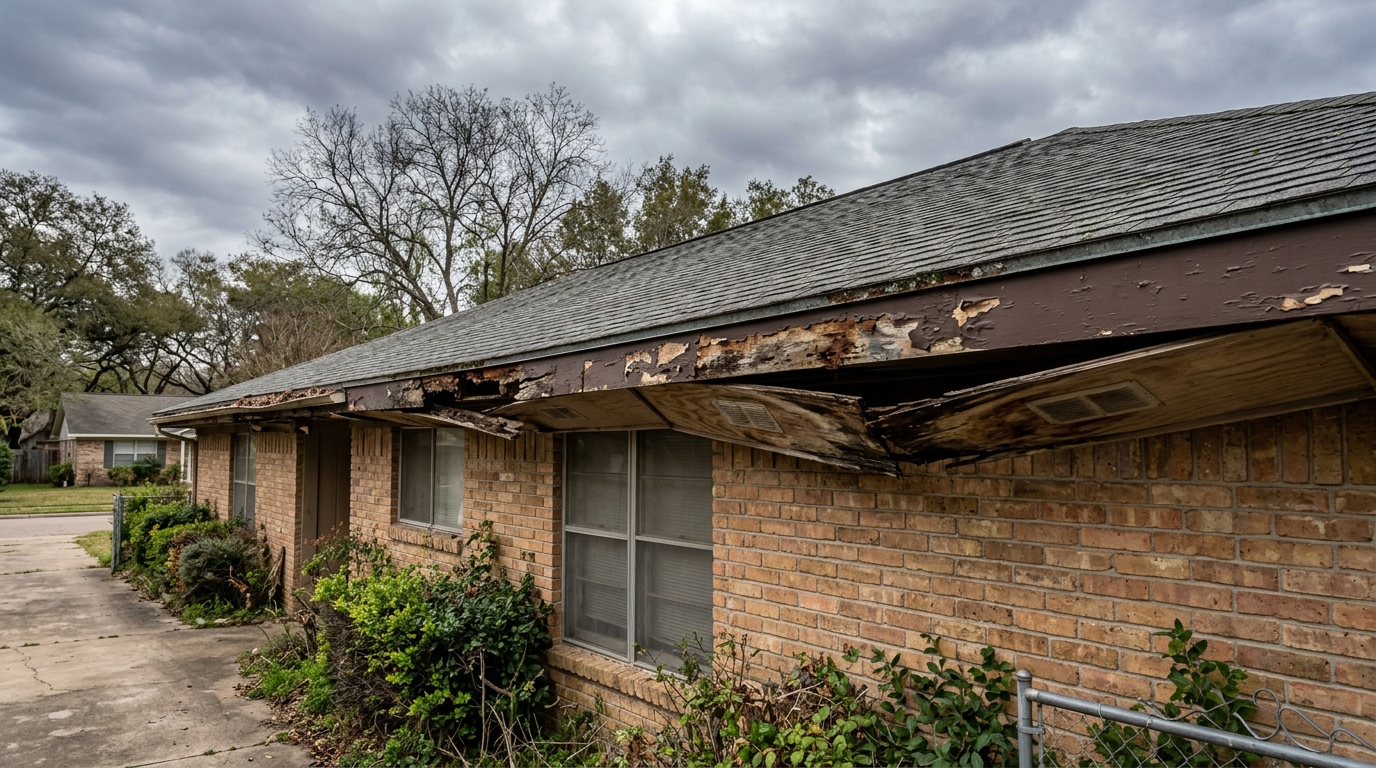
Most homeowners never think about soffit and fascia until something goes wrong. These components sit at the edge of your roofline, quietly protecting your home from moisture, pests, and ventilation problems. When they fail, the consequences spread far beyond a cosmetic issue at the roofline.
Damaged soffit and fascia create cascading problems. Water infiltrates your attic and wall cavities. Pests find entry points into your home. Your roof loses the ventilation it needs to function properly. Your gutters pull away from the structure. Left unaddressed, what starts as peeling paint or a small crack becomes rotted framing, mold growth, and repairs costing thousands more than catching the problem early.
This guide explains what soffit and fascia do, how to recognize damage before it spreads, and why these components deserve attention from every Allen homeowner. Understanding the warning signs now can save you significant expense and protect your entire roofing system.
What Are Soffit and Fascia
Before discussing damage, it helps to understand what these components are and why they matter.
Soffit refers to the horizontal panels covering the underside of your roof overhang, also called the eaves. When you stand next to your house and look up at the roof edge, the soffit is the surface you see beneath the overhang. Most soffits include ventilation openings, either as perforated panels or dedicated vent strips, that allow air to flow into your attic space.
Fascia is the vertical board running along the lower edge of your roof where your gutters attach. It creates a finished appearance at the roofline while sealing the ends of your rafters and roof structure from weather exposure. The fascia acts as the mounting surface for your entire gutter system.
Together, soffit and fascia work as a protective system. They seal the gap between your roof and walls, prevent moisture from reaching your roof deck and framing, block pests from entering your attic, and enable the ventilation your roof needs to function properly. Common materials include wood, vinyl, aluminum, and fiber cement, each with different durability and maintenance requirements. Understanding these components is essential before any roof installation or repair project.
Why Soffit and Fascia Matter More Than You Think
These components perform several critical functions that affect your roof, attic, energy bills, and home’s structural integrity.
Attic ventilation depends on properly functioning soffit. The vents in your soffit allow fresh air to enter your attic at the lowest point of the roof. This air rises as it warms and exits through ridge vents or other exhaust vents at the peak. This continuous airflow cycle is essential for removing heat and moisture from your attic space. Proper soffit ventilation can reduce attic temperatures by 20 to 30 degrees during summer months. For more on how this system works, see our guide to roof ventilation systems.
Moisture control throughout your roof system relies on this ventilation. Without adequate airflow, humidity builds up in your attic. That moisture condenses on cooler surfaces, leading to mold growth, wood rot in your roof deck, and damaged insulation that loses its effectiveness. Humid attics also create conditions that accelerate shingle deterioration from below.
Pest exclusion is another critical function. Intact soffit seals the gap between your roof and walls where animals and insects would otherwise enter. Squirrels, birds, bats, wasps, carpenter bees, and rodents all exploit damaged or missing soffit sections. Once inside, these pests nest in your insulation, chew through wiring, and cause damage that spreads far beyond the original entry point.
Your gutter system depends entirely on sound fascia boards. Gutters mount directly to the fascia, and when fascia weakens from rot or damage, gutters begin to sag, pull away from the house, or fail to drain properly. Failing gutters dump water directly against your foundation rather than channeling it away, creating erosion and potential moisture infiltration into your basement or slab.
Energy efficiency suffers when soffit ventilation is blocked or damaged. Without proper airflow, attic temperatures soar in Texas summers, forcing your air conditioning to work constantly. Studies show that poor attic ventilation can increase cooling costs by up to 30 percent. Your attic services and soffit condition directly affect your monthly energy bills.
Warning Signs of Damaged Soffit and Fascia
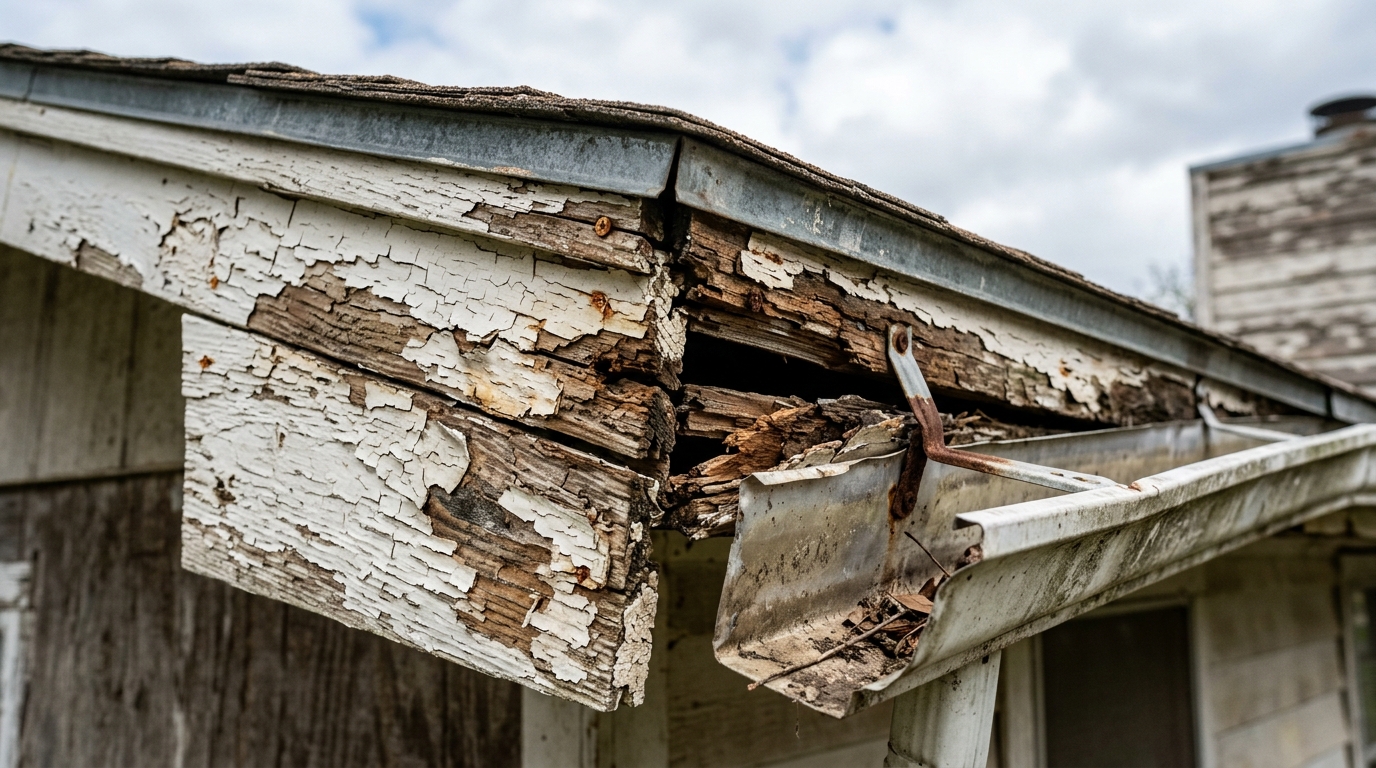
Catching damage early prevents small problems from becoming major repairs. Here are the warning signs every homeowner should recognize.
Peeling or Bubbling Paint
Paint failure on soffit or fascia is often the first visible sign of trouble. Peeling, bubbling, or flaking paint indicates moisture penetration behind the surface. This moisture may come from roof leaks, gutter overflow, or condensation from poor ventilation. Once paint fails, the underlying wood is exposed to further moisture damage, accelerating deterioration.
Visible Cracks, Holes, or Missing Sections
Cracks develop from weathering, thermal expansion and contraction cycles, and impact damage from hail or debris. Small cracks become larger as water enters and freezes during rare Texas cold snaps. Pests often widen existing cracks and holes to create entry points. Missing sections are obvious problems that require immediate attention, as they leave your roof structure and attic completely exposed.
Soft or Spongy Wood
If you can safely reach your soffit or fascia, press gently on the surface. Wood that gives, feels spongy, or crumbles indicates rot has developed. Rot spreads to adjacent framing and structural members if not addressed promptly. What starts as a small rotted section can compromise entire sections of your roofline within a season or two.
Sagging or Warping
Soffit or fascia that appears to sag, bow, or warp indicates structural integrity has been compromised. This can result from prolonged water damage, the weight of clogged gutters pulling on fascia, or improper installation that is finally failing. Sagging sections often worsen quickly once the deformation begins.
Gutters Pulling Away
When gutters separate from your house, tilt outward, or no longer drain properly, the fascia behind them is often the culprit. Rotting fascia cannot hold gutter fasteners securely. The damage is frequently hidden behind the gutter itself until the gutter begins to fail visibly. If your gutters are pulling away, inspect the fascia before simply reattaching them.
Evidence of Pests
Scratching or scurrying sounds in your attic often mean animals have found their way inside through damaged soffit. Visible nests along your roofline, small holes chewed into soffit panels, or wasps and bees entering and exiting the eaves all indicate your soffit barrier has been breached. Pest damage compounds quickly because animals enlarge existing openings to improve access.
Water Stains or Discoloration
Stains on your soffit panels indicate water is getting behind the fascia and running along the underside of your eaves. Discoloration on exterior walls directly below the roofline is another red flag. After heavy rain, walk the perimeter of your house and look for water running down walls or dripping from places other than your gutters.
Poor Attic Ventilation Symptoms
If your upper floors feel unusually hot in summer despite adequate air conditioning, blocked or damaged soffit vents may be the cause. Musty odors in your attic indicate moisture buildup from inadequate ventilation. During rare Texas ice events, ice dams forming at roof edges can signal that warm attic air is not properly venting, though this is less common in our climate than in northern states.
What Happens When You Ignore Soffit and Fascia Damage
Delaying repairs allows damage to spread. Understanding the consequences helps explain why prompt attention matters.
Water infiltration is the most damaging consequence. Once moisture gets behind your soffit and fascia, it seeps into wall cavities, saturates insulation, and reaches your roof deck. Rot develops in framing members. Mold grows in damp, dark spaces. Structural damage accumulates until repair costs multiply far beyond what addressing the original problem would have required.
Pest infestations escalate from nuisance to serious damage. Rodents chew through electrical wiring, creating fire hazards. Birds and squirrels destroy insulation. Carpenter bees and termites compromise wood framing. The longer pests have access to your attic, the more extensive the damage becomes. Addressing the infestation without fixing the entry point only invites the next round of visitors.
Gutter failure leads to foundation problems. When fascia cannot support gutters properly, water pours directly against your foundation during every rain. This concentrated water causes soil erosion, foundation settling, and moisture infiltration into your basement or through your slab. Foundation repairs cost far more than replacing fascia boards. Schedule roof repairs before small issues create larger structural problems.
Roof damage accelerates without proper ventilation. Moisture trapped in your attic rots the roof deck from below while excessive heat bakes your shingles from above. The combination shortens roof lifespan significantly. You may face early roof replacement that could have been prevented by maintaining functional soffit ventilation.
Property value and curb appeal suffer. A neglected roofline is visible from the street. Potential buyers and home inspectors notice damaged soffit and fascia immediately. These issues raise questions about overall home maintenance and can reduce your home’s market value or complicate sales.
How Texas Weather Damages Soffit and Fascia
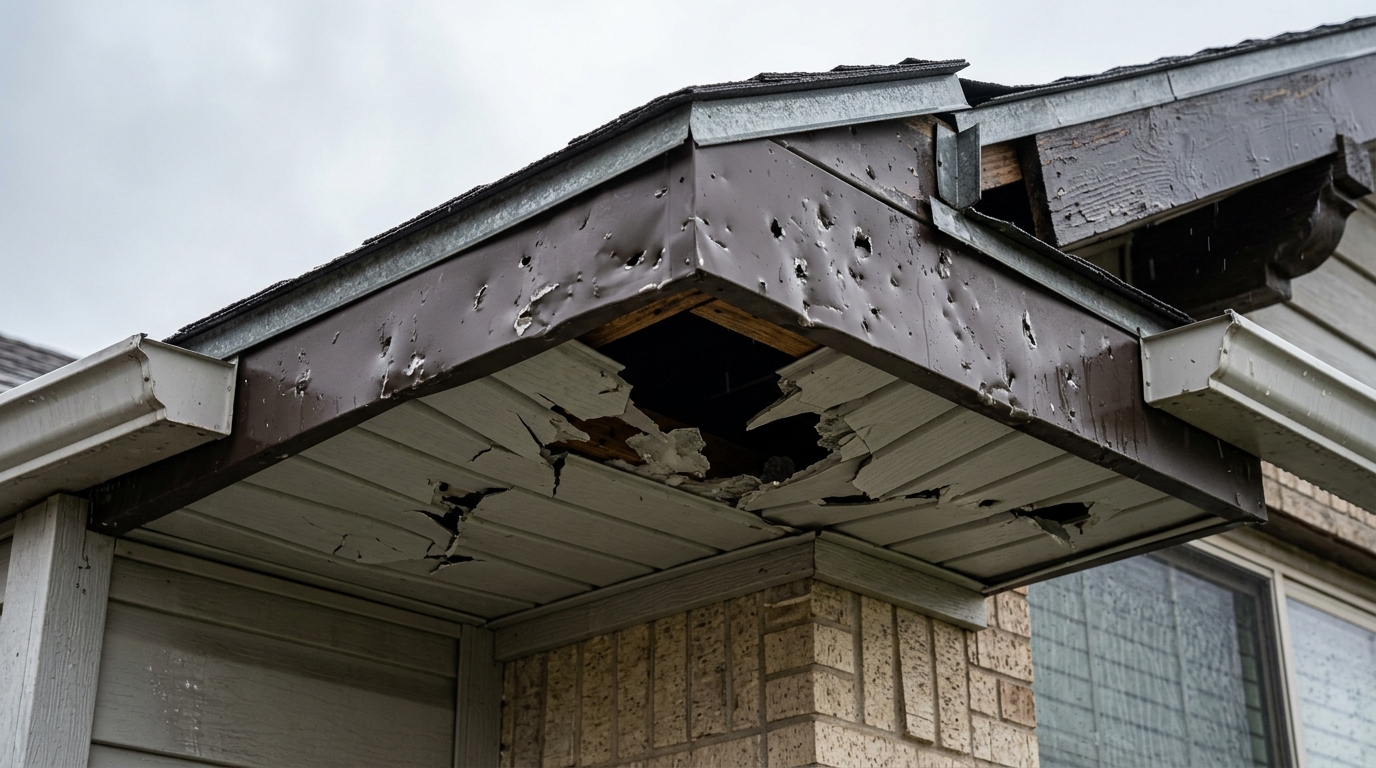
Allen’s climate creates specific stresses on soffit and fascia that homeowners should understand.
Temperature extremes cause materials to expand and contract repeatedly. Texas can swing from freezing to 100 degrees within days, and these thermal cycles stress wood, vinyl, and metal differently. Gaps open at joints and seams. Fasteners loosen. Seals fail. Over years of seasonal extremes, these small movements accumulate into visible damage.
Intense UV radiation during our long summers degrades paint, dries out wood, and causes vinyl to become brittle over time. South and west facing sections of your home receive the most punishment and typically show damage first.
Spring hailstorms can crack or puncture soffit panels and dent metal fascia. Even if damage is not immediately obvious, hail impacts create weak points that fail during subsequent weather events.
Heavy rain events test your gutter capacity. When gutters overflow from heavy downpours or clogs, water cascades over the fascia, saturating wood that may already have minor cracks or paint failure. Texas has over 280 native tree species, many of which are heavy shedders. Leaves and debris clog gutters quickly during fall, making regular gutter services essential for protecting your fascia.
Summer humidity accelerates rot in any wood that has been compromised. A small crack that admits moisture becomes a soft spot within weeks during humid months. The combination of heat and humidity makes Texas particularly hard on wood soffit and fascia compared to drier climates.
Repair vs. Replace: Making the Right Call
Not every problem requires full replacement. Understanding when repair makes sense versus when replacement is the better investment helps you make informed decisions.
Minor damage limited to small areas is typically repairable. A crack in one section, localized rot in a single fascia board, or one or two damaged soffit panels can be addressed without replacing your entire system. The key is identifying and fixing the root cause, whether a gutter problem, ventilation issue, or pest entry, so the repair lasts.
Widespread damage usually calls for replacement. If rot has spread to multiple sections, if you find sagging throughout your roofline, or if damage appears on more than 30 percent of your soffit or fascia, patching individual areas becomes more expensive than comprehensive replacement. Piecemeal repairs also create mismatched appearances and varying lifespans across your roofline.
Replacement offers an opportunity to upgrade materials. If your home has wood soffit and fascia that require constant maintenance, switching to vinyl or aluminum during replacement eliminates painting and provides better resistance to Texas humidity. Many Allen homeowners make this upgrade during roof replacement projects. Fiber cement offers premium durability for those seeking maximum longevity.
What to Expect from Professional Soffit and Fascia Repair
Professional repair involves more than replacing visible damaged sections. A thorough approach addresses the full scope of the problem.
Inspection identifies all damage, including rot hidden behind gutters or inside the soffit cavity. Professionals look for moisture sources, pest entry points, and ventilation problems that contributed to the damage. This assessment determines whether repair or replacement makes sense for your situation. Schedule a roof inspection to evaluate your soffit and fascia condition along with your overall roofing system.
Damaged sections are removed carefully to avoid harming surrounding materials. Installers check roof framing and reinforce any compromised structural members before mounting new fascia. Each board is sealed at joints and edges to prevent moisture infiltration that caused the original damage.
Ventilation requirements are verified during soffit work. Building codes require approximately one square foot of net free ventilation area for every 150 square feet of attic space, split between intake at the soffits and exhaust at the ridge. Older homes often have inadequate ventilation by current standards. Proper soffit installation maintains this airflow while sealing pest entry points.
Color-matched materials and attention to architectural details ensure repairs blend seamlessly with your home’s existing appearance. The result should be invisible from the street, with the roofline looking uniform and well maintained.
Cost Factors for Soffit and Fascia Repair
Several factors influence what you will pay for soffit and fascia work.
Material selection significantly affects cost. Wood is the least expensive material at roughly one to three dollars per linear foot but requires regular painting and is most susceptible to rot. Vinyl runs four to six dollars per linear foot and offers good durability with minimal maintenance. Aluminum costs six to ten dollars per linear foot and provides excellent longevity. Fiber cement is the premium option, offering superior durability and fire resistance at the highest price point.
Labor typically runs six to twenty dollars per linear foot depending on accessibility, roof height, and complexity of your roofline. Multi-story homes, steep roof pitches, and intricate architectural details all increase labor costs. Additional work such as gutter removal and reinstallation, decking repair, or addressing pest damage adds to the total.
For a typical single-story home with 150 to 250 linear feet of soffit and fascia, expect minor repairs to run $600 to $1,500 and complete replacement to cost $1,500 to $5,000. These costs are modest compared to the roof damage, pest remediation, foundation repair, and mold remediation that can result from neglected soffit and fascia problems.
Schedule a Soffit and Fascia Inspection Now!
Have you noticed peeling paint along your roofline, gutters pulling away, or pests around your eaves? These warning signs deserve professional attention before small problems become expensive repairs. Contact Pickle Roofing Solutions for a thorough inspection of your soffit, fascia, and complete roofing system. Call (469) 247-8310 or visit our contact page to schedule your free evaluation today.
Frequently Asked Questions
How do I know if my soffit needs repair?
Look for peeling paint, visible cracks or holes, soft or spongy spots when pressed, sagging sections, water stains, or evidence of pests. From inside your attic, check for daylight showing through the soffit or signs of animal activity. An unusually hot attic despite adequate insulation may indicate blocked soffit vents. Any of these signs warrant professional evaluation.
What causes fascia boards to rot?
Water exposure is the primary cause. Clogged or overflowing gutters saturate fascia boards repeatedly. Failed paint or sealant allows moisture to penetrate wood. Ice backup during freezes can force water behind the fascia. Once moisture enters wood, Texas humidity accelerates rot development. Regular gutter maintenance and prompt attention to paint failure prevents most fascia rot.
Can I repair soffit and fascia myself?
Minor repairs are possible for handy homeowners comfortable working on ladders. However, proper soffit and fascia work requires maintaining correct ventilation ratios, sealing against pests while preserving airflow, and ensuring weather-tight installation. Improper installation can void roofing warranties and create problems worse than the original damage. Professional installation is recommended for most situations.
How long do soffit and fascia last?
Lifespan depends heavily on material and maintenance. Wood soffit and fascia can last 20 to 30 years with regular painting and prompt repair of any damage. Vinyl typically lasts 30 to 40 years with minimal maintenance. Aluminum can exceed 40 years. Fiber cement offers the longest lifespan at 50 years or more. Harsh Texas sun and humidity reduce these lifespans compared to milder climates.
Should soffit and fascia be replaced during roof replacement?
Not automatically, but this is an ideal time to evaluate their condition. Roofers already have equipment in place and can inspect soffit and fascia thoroughly during the project. If your soffit and fascia are older than 15 years or showing any signs of damage, replacement during roof work is often more cost effective than a separate project later. Sound boards less than 10 years old with good paint typically do not need replacement.
Do damaged soffit and fascia affect my roof warranty?
They can. Most roofing warranties require proper ventilation to remain valid. If blocked or damaged soffits prevent adequate attic ventilation, resulting roof damage may not be covered. Additionally, water damage from failed fascia that allows moisture into the roof structure could void warranty coverage. Maintaining functional soffit and fascia helps protect your warranty investment.
About Pickle Roofing Solutions
Pickle Roofing Solutions is a trusted roofing contractor in Allen serving homeowners throughout the Dallas-Fort Worth metroplex. We provide comprehensive roof inspections that include evaluation of soffit, fascia, ventilation, and gutter systems. Our team identifies problems early, provides honest recommendations, and delivers quality repairs that protect your home for years to come.