
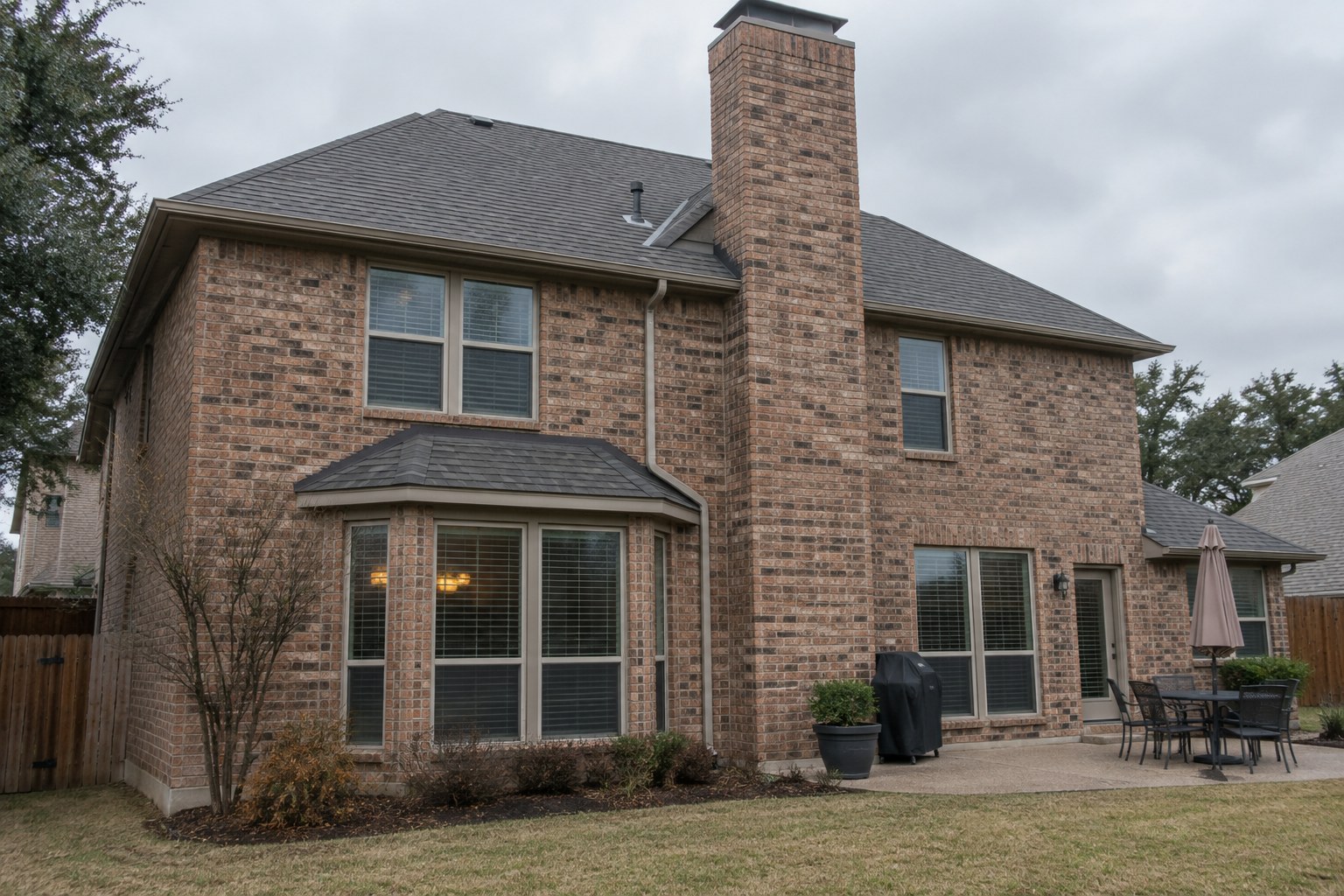
A roof cricket is a small peaked structure built on the uphill side of a chimney so rainwater splits and flows around it instead of piling up against the brick. If your Allen home has a wide chimney, a leak stain near the fireplace, or debris that collects behind the chimney after every storm, the area may be missing a cricket or may have one that is too small.
Pickle Roofing Solutions is a family-owned roofer in Allen, founded in 2012, and we look at chimney water paths on many North Texas roofs. Below, you will learn what a cricket is, when building code calls for one, what it is made of, and how to tell if water is collecting where it should not.
Wondering whether the back of your chimney is shedding water the way it should? We can take a look.
Key Takeaways
- A cricket, also called a saddle, is a small ridge built behind a chimney or other wide obstruction that diverts water around it.
- The International Residential Code calls for a cricket on the ridge side of any chimney or penetration more than 30 inches wide, measured perpendicular to the slope.
- Code allows cricket coverings of sheet metal or the same material as the roof covering, and local adoption should be confirmed with your city.
- Stains on the ceiling near a fireplace, rotted decking behind the chimney, and debris buildup are common signs that water is collecting in that spot.
- A roof replacement is often the most practical time to add or rebuild a cricket because the area is already open.
- Crickets also help on low-slope commercial and residential roofs behind HVAC curbs and other large rooftop units.
What Is a Roof Cricket and How Does It Work?
Picture rain running down your roof toward the back of a chimney. Without anything to redirect it, that water hits a flat wall of brick or siding and has nowhere to go. It slows down, spreads out, and sits in the corner where the roof meets the chimney.
A cricket fixes that by giving water a new path. It is a small framed ridge, shaped a bit like a tiny roof of its own, that sits behind the chimney. Its peak points uphill. Water that reaches it splits to the left and right and flows down the sides of the chimney instead of stalling.
Cricket vs. Saddle: Is There a Difference?
For most homeowners, no. Roofers and building codes use the two words together, and the IRC section that covers them is titled "Crickets and saddles." Some people use "saddle" for a simple two-sided shape and "cricket" for a more complex one, but in practice you will hear both terms describe the same job.
How a Cricket Is Built
A cricket is usually framed with lumber and covered with roof decking, the same base layer used on the rest of the roof. From there it gets underlayment and a finished surface. The size and pitch depend on the width of the chimney and the slope of the main roof.
Where the cricket meets the chimney, it needs flashing to seal the joint. That flashing is its own detailed topic, and we explain warning signs in our post on signs your chimney and wall flashing is failing. The short version: a cricket moves water, and flashing seals the seams around it. Both have to work together.
Why It Matters in North Texas
Collin County storms can drop a lot of rain fast, often with wind pushing it sideways and hail adding broken leaves and granules to the mix. All of that runs downhill and lands behind the chimney. Without a cricket, the spot can act like a small dam, holding wet debris against the roof for days after the sky clears.
When Does Code Require a Cricket?
The International Residential Code, which many Texas cities adopt with local amendments, addresses this in Section R903.2.2. The language says a cricket or saddle shall be installed on the ridge side of any chimney or penetration more than 30 inches wide as measured perpendicular to the slope.
In plain terms, measure the chimney side that faces uphill, across the roof, not up and down. If it is wider than 30 inches, code calls for a cricket. Many fireplace chimneys on brick homes around Allen, Plano, and McKinney are wider than that, especially chases built to look substantial from the street.
What About Smaller Chimneys?
A chimney 30 inches wide or narrower may not require a cricket under the base IRC language. That does not mean water will never collect there. Low roof pitch, heavy debris from nearby trees, or a chimney placed in a valley can still cause trouble, and some roofers add a cricket anyway when conditions point to it.
Local Codes and HOAs
Cities adopt specific code editions on their own schedules, sometimes with amendments. Before any project, it is wise to confirm the current rules with the City of Allen or your own city's building department. A licensed roofer pulling a permit should know which edition applies. HOAs rarely restrict crickets since they sit behind the chimney, but some do review roofing colors and materials, which affects the cricket covering too.
Older Homes May Predate the Rule
Some older homes in Allen were built before current code language was adopted locally, or were roofed by crews that skipped the detail. If a home has gone through one or more reroofs without a cricket, that missing piece may have been carried forward each time.
If you are not sure whether your chimney is wide enough to need one, a quick conversation can help.
What Materials Are Crickets Made Of?
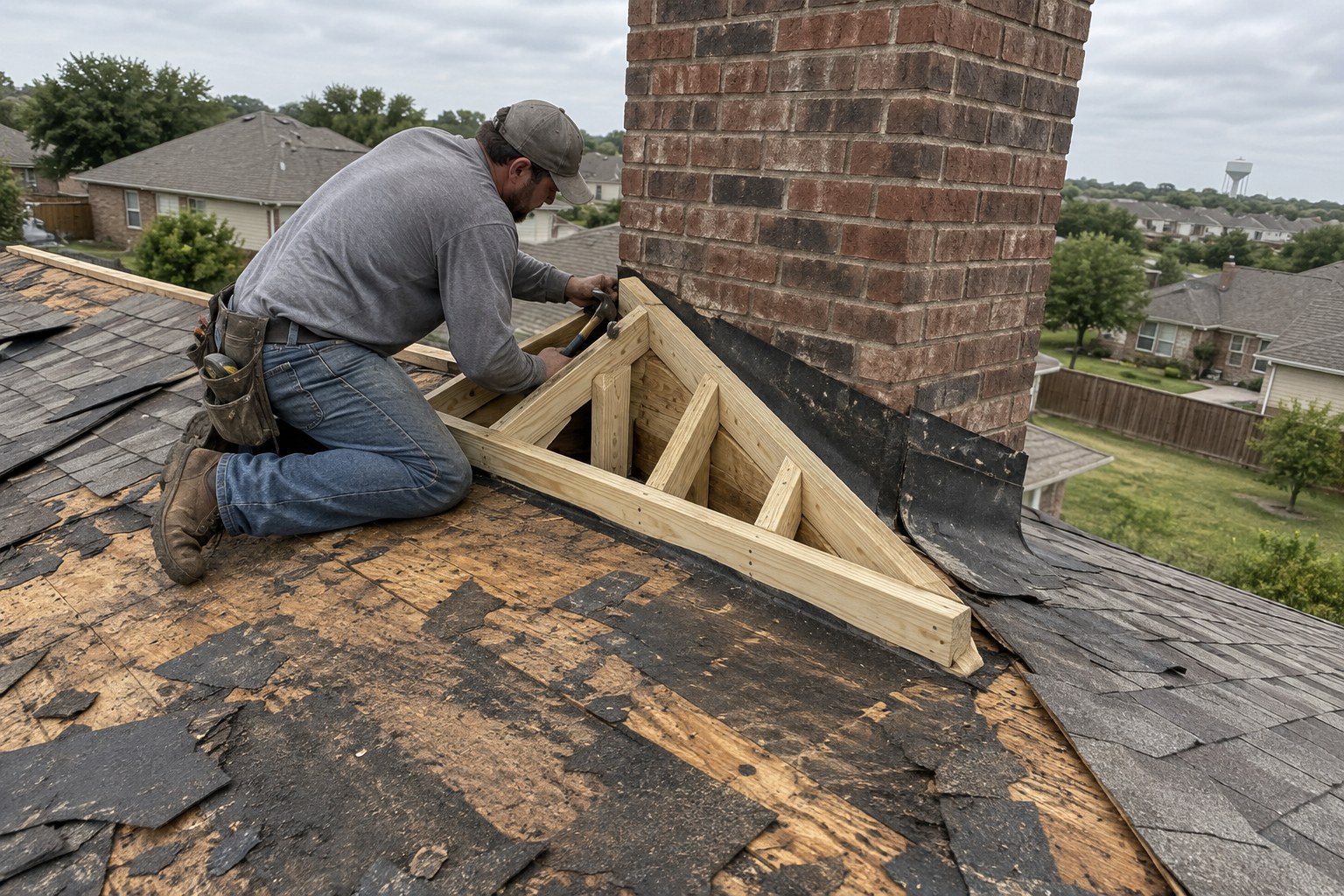
Code language says cricket or saddle coverings shall be sheet metal or of the same material as the roof covering. The framing underneath is typically wood. What goes on top depends on your roof, the cricket size, and the look you want.
| Cricket Covering | Typical Use | Things to Consider |
|---|---|---|
| Asphalt shingles matching the roof | Common on shingle homes with moderate-size crickets | Blends in visually; small, steep crickets can be tricky to shingle cleanly |
| Sheet metal (often painted or prefinished) | Small crickets, steep transitions, or where a clean metal look is wanted | Sheds water well; color and fastening details matter for appearance and durability |
| Metal roofing panels matching the roof | Homes with standing seam or other metal roofs | Needs careful trim and seam layout around the chimney |
| Tile matching the roof | Concrete or clay tile homes | Often paired with metal pans or flashing under tile at the transition |
| Low-slope membrane (TPO, modified bitumen) | Crickets on flat or low-slope roofs behind curbs and parapets | Built with tapered insulation or framing, then covered with matching membrane |
What Goes Underneath
The layers below the covering matter just as much. A cricket is a spot where water changes direction, so it benefits from solid decking and good underlayment. Many roofers use self-adhered ice and water membrane in valleys and around chimneys for added protection. You can read more about those layers in our post on why roof underlayment matters for Allen homes.
Matching Your Roof Style
On a typical Allen two-story with architectural shingles, a shingled cricket usually disappears into the roofline from the street. On metal or tile homes, the choice may lean toward metal for a cleaner transition. Either way, the goal is the same: water moves around the chimney instead of sitting behind it.
Signs Water Is Pooling Behind Your Chimney
You do not need to climb onto your roof to spot trouble. In fact, please do not. Roofs are steep and slippery, and the back of a chimney is one of the hardest spots to reach safely. Most warning signs show up from the ground or inside the house.
From the Ground
- Leaves, pine needles, or shingle granules piled up behind the chimney, visible with binoculars from the yard or a neighbor's driveway.
- Dark staining or moss-like discoloration on the uphill side of the chimney or the roof just behind it.
- Shingles behind the chimney that look curled, lifted, or a different color from the rest of the roof.
- Efflorescence, a white chalky residue, on the chimney brick, which can point to water getting into the masonry.
From Inside the House
- Water stains on the ceiling or wall near the fireplace, especially after a heavy or wind-driven rain.
- Peeling paint or bubbling drywall around the chimney chase.
- A musty smell near the fireplace.
From the Attic
If you can safely reach your attic with a flashlight, look at the underside of the decking near where the chimney passes through. Dark stains, soft spots, or rusted nail tips can suggest moisture is getting in. Stay on the framing and avoid stepping between joists. If anything looks off, a roofer can take it from there. Our post on what professional roofers look for during an inspection explains how chimney areas get checked.
Why It Can Be Hard to Pin Down
Chimney leaks are tricky. Water can enter through the brick, the crown, the flashing, or the roof behind the chimney, and it may travel along framing before showing up inside. A missing or undersized cricket is one possible cause, but not the only one. That is why a hands-on look matters more than guessing from a stain.
Adding a Cricket During Replacement
If your chimney needs a cricket and does not have one, the most practical time to add it is usually during a reroof. The old shingles and underlayment around the chimney are already coming off, the decking is exposed, and framing a cricket fits naturally into the work.
What the Process Usually Looks Like
- The crew removes old roofing around the chimney and checks the decking for rot or soft spots.
- Damaged decking is replaced as needed.
- The cricket is framed to fit the chimney width and roof pitch, then sheathed.
- Underlayment, often including self-adhered membrane, goes over the cricket and surrounding area.
- Flashing is installed where the cricket and roof meet the chimney.
- The finished covering goes on, matched to the roof or in metal.
Can a Cricket Be Added Without a Full Reroof?
Sometimes. A cricket can be retrofitted on an existing roof by removing the roofing around the chimney and tying the new work into the old. Whether that makes sense depends on the age and condition of the surrounding shingles, how well they can be matched, and what else is going on with the roof. If your roof is already older or storm-worn, it may be worth weighing that work against a full roof replacement in Allen.
Questions to Ask Your Roofer
- Is my chimney wide enough that code calls for a cricket?
- Will the cricket be shingled or covered in metal?
- Will you replace the chimney flashing at the same time?
- Is this detail included in the written estimate?
Getting those answers in writing helps you compare estimates on equal terms. Pickle Roofing Solutions provides free inspections and written estimates, and we are a GAF Master Elite certified contractor.
Crickets Behind HVAC Curbs on Low-Slope Roofs
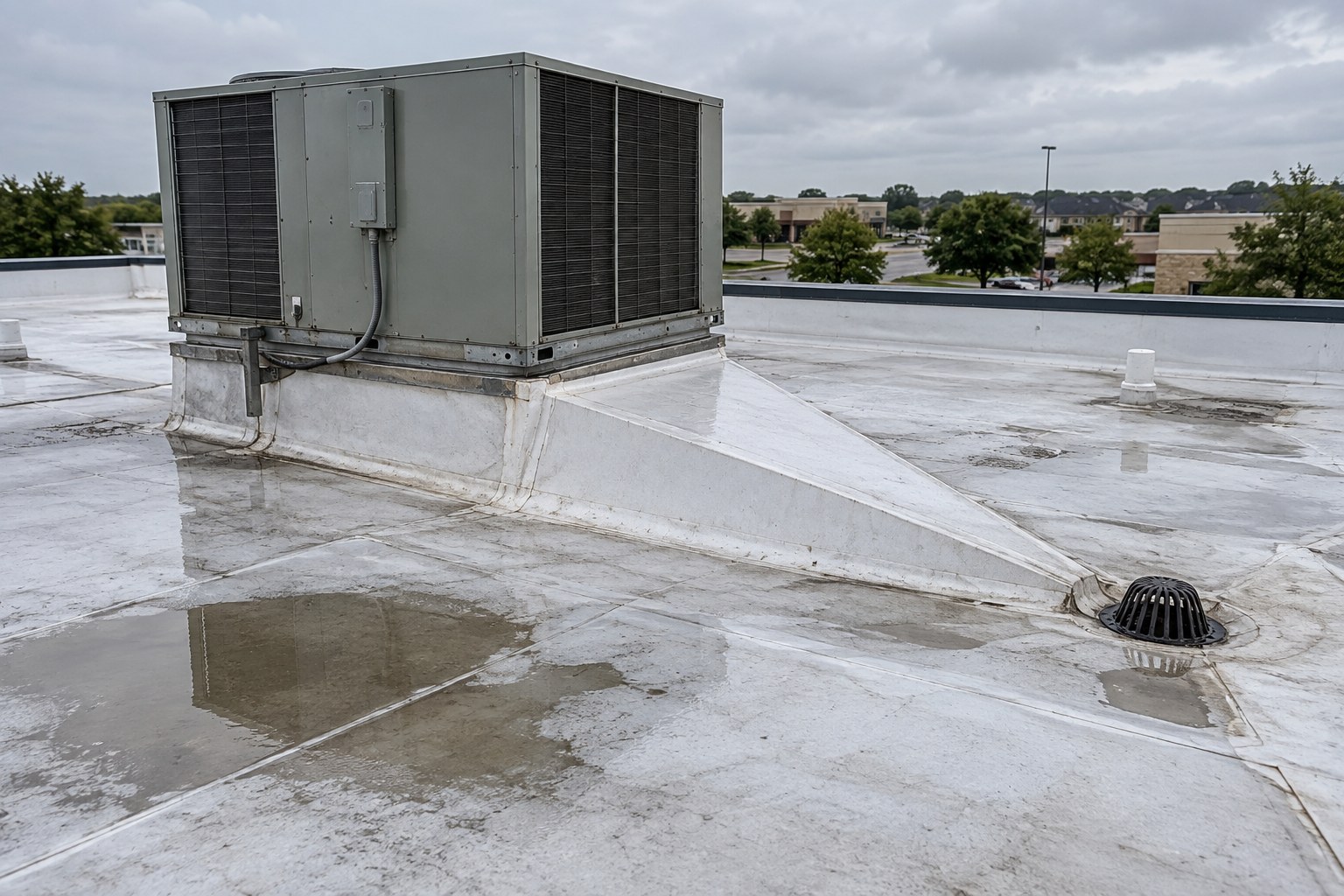
Chimneys are not the only spot where water gets trapped. On flat and low-slope roofs, which you see on many commercial buildings and some home additions, porches, and patios around Allen and Frisco, large rooftop HVAC units sit on raised frames called curbs. Water flowing toward a wide curb can pond on its uphill side.
Why Ponding Matters on Low-Slope Roofs
Low-slope roofs drain slowly to begin with. When a curb blocks the flow, water can stand for long periods. Standing water may add weight, speed up wear on the membrane, and find its way into small seams. The IRC cricket language covers "any chimney or penetration more than 30 inches wide," and many HVAC curbs fall into that range.
How Low-Slope Crickets Differ
On a flat roof, crickets are usually built with tapered insulation or framing that creates a gentle slope away from the curb toward drains or scuppers. They are then covered with the same membrane as the rest of the roof. Our post comparing flat roof materials for Allen homes covers the membranes often used, and our flat roofing service in Allen handles low-slope systems for homes and businesses.
Other Spots That May Benefit
- Behind skylights or wide roof hatches on low-slope sections.
- Where a lower roof meets a taller wall and water collects at the joint.
- Between parapet walls and drains on commercial buildings.
Every roof is different, so the right approach depends on the slope, drainage, and what sits on top. If you have a chimney, curb, or wall that seems to hold water, a professional look is the next step.
Frequently Asked Questions
What is a roof cricket?
A roof cricket is a small peaked structure built on the uphill side of a chimney or other wide roof obstruction. Its ridge points up the roof, so water that flows toward the chimney splits and runs down both sides instead of collecting behind it. It is framed with lumber, sheathed, and covered with shingles, metal, or a matching material.
Is a cricket the same thing as a saddle?
For practical purposes, yes. Roofers and building codes use the terms together, and the International Residential Code section covering them is titled "Crickets and saddles." Some people reserve saddle for a simple two-sided shape, but in everyday roofing work both words describe a structure that diverts water around a chimney or other wide obstruction on the roof.
How wide does a chimney have to be to need a cricket?
Under IRC Section R903.2.2, a cricket is called for on the ridge side of any chimney or penetration more than 30 inches wide, measured perpendicular to the slope. That means measuring across the roof, not up and down. Local adoption and amendments vary, so confirm the current rules with your city's building department or a licensed roofer.
Can I add a cricket without replacing my whole roof?
Often, yes. A roofer can remove roofing around the chimney, frame and sheathe a cricket, add underlayment and flashing, then tie the new covering into the existing roof. How well that works depends on the age and condition of your shingles and how closely they can be matched. On an older roof, adding it during replacement may make more sense.
What are signs my chimney needs a cricket?
Common signs include debris piling up behind the chimney, staining on the uphill side of the brick, worn or discolored shingles behind the chimney, and ceiling or wall stains near the fireplace after heavy rain. These clues can also come from flashing or masonry problems, so a professional inspection is the best way to confirm the actual cause.
Do flat roofs need crickets too?
They can. On flat and low-slope roofs, water may pond behind large HVAC curbs, skylights, or roof hatches. Crickets built with tapered insulation or framing help push that water toward drains or scuppers. The IRC cricket language covers any penetration more than 30 inches wide, and many rooftop curbs fall into that range on homes and commercial buildings.
Ready to Talk With Pickle Roofing Solutions?
If you suspect water is collecting behind your chimney, or you want to know whether your home needs a cricket before your next reroof, Pickle Roofing Solutions can help. Call (972) 954-7186 to schedule a free inspection. We serve Allen, Plano, McKinney, Frisco, Prosper, Fairview, Murphy, Wylie, Richardson, Garland, Carrollton, Dallas, and Little Elm from our office at 1333 W McDermott Dr, Ste 200, Allen, TX 75013.