


A roof valley is the inward channel where two sloped roof planes meet, and on many Allen homes it handles more water than almost any other part of the roof. Every time a Collin County thunderstorm rolls through, rain from two directions funnels into that one narrow line and races toward the gutters.
That concentration of water, leaves, and grit is exactly why valleys deserve a closer look. At Pickle Roofing Solutions, we see valleys as one of the details that can quietly decide how well a roof holds up. Below, you will learn how valleys are built, which styles are out there, and what warning signs you can spot safely from the ground or the attic.
Not sure what shape your valleys are in? A trained set of eyes can tell you quickly.
Key Takeaways
- A valley collects runoff from two roof planes, so it typically carries a heavier load of water and debris than open field areas of the roof.
- The three main valley styles on shingle roofs are open, closed-cut, and woven, and each one is built and lined differently.
- Shingle manufacturers set their own valley rules, so the right valley style depends on the shingle on your roof.
- Leaves from live oaks and other mature trees can pile up in valleys, hold moisture, and slow drainage after North Texas storms.
- You can watch for valley trouble from the ground with binoculars or from inside the attic, without ever climbing onto the roof.
What a Roof Valley Is and Why It Matters
Picture your roof from above. Wherever two slopes come together and form a V-shaped trough, you have a valley. Wherever they come together and form a peak, you have a ridge or a hip. Valleys point down. Ridges point up.
Simple ranch homes with one long gable may have no valleys at all. Many newer two-story homes around Twin Creeks, Watters Crossing, and the neighborhoods off Stacy Rd have several, because garages, front gables, bay sections, and porch roofs all tie into the main roof. Each of those intersections creates another valley that has to shed water correctly.
How Water Moves Through a Valley
On a flat section of roof, rain spreads out and runs straight down the shingles. In a valley, water from both sides heads toward the center line and then travels along it. That means the valley sees a greater volume of water, moving faster, for a longer stretch of roof than the field shingles beside it.
During a hard spring downpour, that flow can be dramatic. If anything slows it down, such as a clump of leaves, a raised shingle edge, or a low spot in the decking, water can back up and look for a path sideways under the shingles.
Why Valleys Are a Natural Weak Point
Valleys are where roofing materials have to be cut, overlapped, or lined instead of laid in straight courses. Every cut and overlap is a spot where workmanship matters. Valleys also sit at the junction of two framing members, so if the structure below settles or shifts over time, the valley is often where you notice it first.
None of that means valleys are destined to fail. It means they reward careful installation and occasional attention more than most other parts of the roof.
Open, Closed-Cut, and Woven Valleys Compared
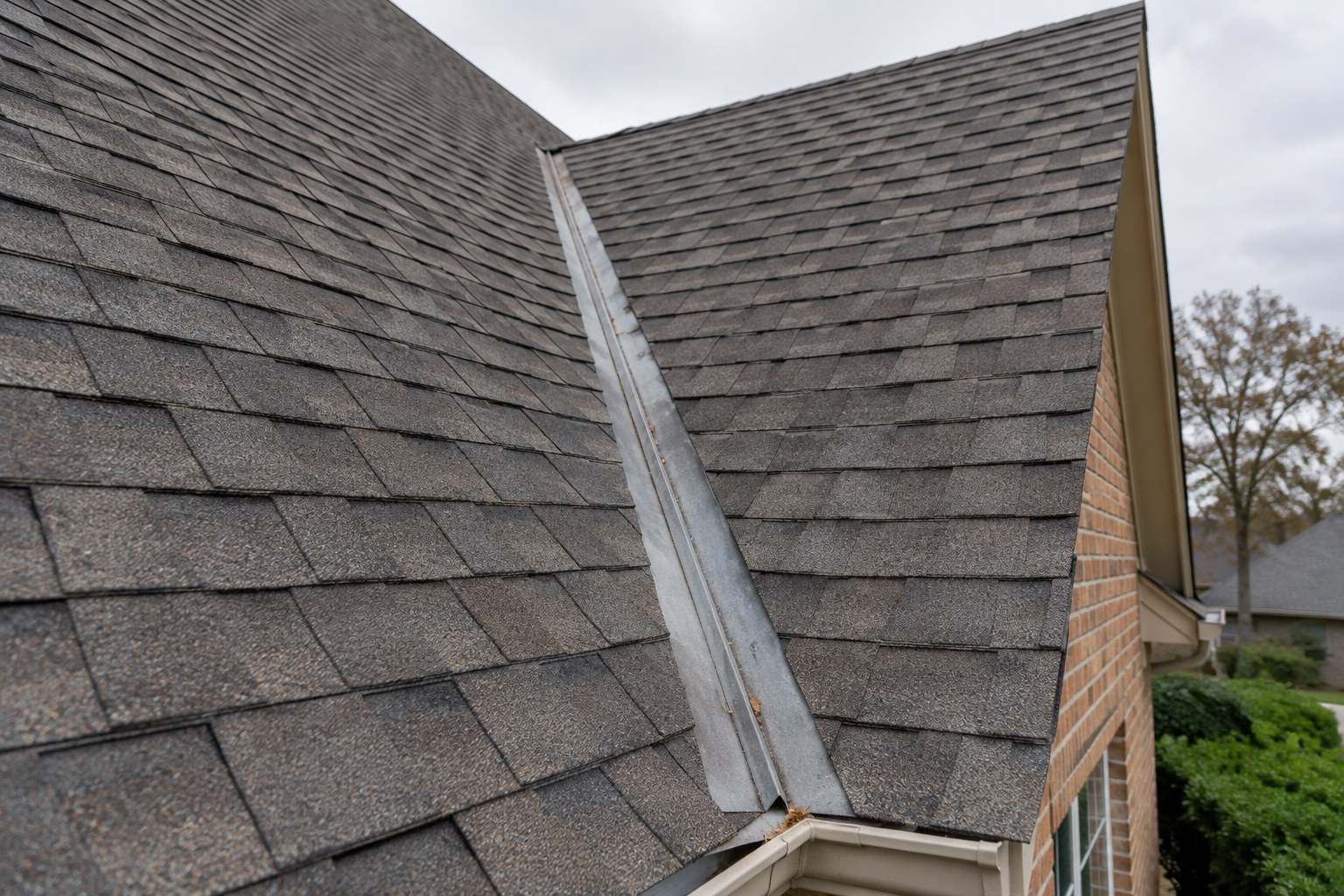
When roofers talk about valley types, they are usually describing how the shingles meet the center of the valley. Whatever the style, the building code expects a valley lining to be installed under the shingles according to the manufacturer's instructions before the shingles go on. That lining is the backup layer if water ever gets past the surface.
Open Valleys
In an open valley, the shingles on both sides stop short of the center, leaving a strip of lining exposed. That exposed strip is usually metal, often painted or prefinished to blend with the roof. Water runs down the smooth metal channel instead of across shingle edges.
Open valleys can handle heavy flow well and are easy to see during an inspection. They also give the roof a sharper, more defined look that some homeowners like and others do not. Metal valley liners must be installed carefully so fasteners stay away from the channel where water travels.
Closed-Cut Valleys
In a closed-cut valley, shingles from one roof plane are run all the way across the valley and up the opposite side. Shingles from the second plane are then laid over them and trimmed in a straight line a short distance from the center. The result is a clean, shingled look with no exposed metal.
Closed-cut valleys are a popular choice on architectural shingle roofs across Collin County. They rely on a good underlayment or valley lining below and careful trimming and sealing along the cut line.
Woven Valleys
In a woven valley, shingles from both planes are interlaced across the valley, alternating course by course. This method was more common with older, flat 3 tab style shingles. Thick laminated shingles do not bend and weave as easily, and some manufacturers restrict it.
Valley Types at a Glance
| Valley Type | How It Looks | Typical Lining | Things to Know |
|---|---|---|---|
| Open | Exposed metal channel down the center | Metal valley liner over underlayment | Handles heavy runoff well; fastener placement matters |
| Closed-Cut | Shingles cover the valley with a straight cut line on one side | Valley underlayment or roll lining below shingles | Clean look; cut line must be trimmed and sealed carefully |
| Woven | Shingles from both sides interlace across the center | Valley underlayment below shingles | Mostly seen with thinner shingles; not allowed with some laminated products |
If you want a deeper look at what sits beneath every valley, our post on why roof underlayment matters for your Allen TX home explains the layers in more detail.
Have a question about which valley style is on your house right now? We are happy to talk it through.
Why Water and Debris Concentrate in Valleys
Valleys act like the drainage ditches of your roof. Anything that lands on the upper slopes and gets washed down tends to end up there. Over a few seasons, that can add up.
Leaves From Live Oaks and Other Mature Trees
Many established Allen and Plano streets have mature live oaks, red oaks, cedar elms, and pecans shading the roof. Live oaks are a special case because they tend to drop a large share of their leaves in late winter and early spring, right as new growth pushes old leaves off. That timing overlaps with the start of storm season in North Texas.
When leaves settle in a valley, they form small dams. Water slows down, spreads sideways, and sits against shingle edges. Wet leaf mats can also hold moisture against the roof for days after the rain stops, which may encourage algae or speed up granule wear. If you see dark streaks on your shingles, our post on problems algae on a roof can cause covers what that staining may mean.
Granules, Twigs, and Storm Debris
Shingle granules naturally loosen over time and wash into valleys and gutters. After a strong thunderstorm, you may also find twigs, acorns, and small branches lodged there. A little debris is normal. A steady build up that never clears on its own is worth watching.
Gutters at the Bottom of the Valley
The spot where a valley empties into the gutter takes a pounding. If the gutter is clogged, undersized, or pulling away, water can overshoot it and spill onto walkways, flowerbeds, and the foundation. In our area, with expansive clay soil, repeated soaking near the foundation is something most homeowners want to avoid. Our team handles gutter services in Allen TX when the problem starts at the bottom edge, and the post comparing gutter guards vs regular gutters may help if leaves are a recurring headache.
How North Texas Storms Affect Valleys
Collin County weather is hard on every part of a roof, but valleys feel certain kinds of stress more than others.
Heavy Rain and Wind Driven Water
Spring and fall storms can dump a lot of rain in a short window. Valleys have to move that water quickly. Strong gusts can also push rain sideways and up under shingle edges, especially along the cut line of a closed-cut valley or along the edges of an open metal channel.
Hail and Impact Wear
Hail does not aim for valleys, but valleys can show wear from impacts because the water that follows a storm keeps scrubbing loosened granules away. If a storm just came through your neighborhood off Exchange Pkwy or Bethany Dr, the steps in our post on how Allen homeowners should handle storm damage roof repair walk through what to do next. We will not repeat hail identification or insurance details here.
Heat, Expansion, and House Movement
Long Texas summers heat the roof deck and shingles day after day. Materials expand and contract, sealant can dry out, and metal valley liners can move slightly with temperature swings. On top of that, clay soil movement under a foundation can contribute to minor shifts in framing over the years. Valleys, sitting where two framing sections meet, are a common place for small gaps or uneven lines to show up.
Signs of Roof Valley Trouble You Can Spot Safely
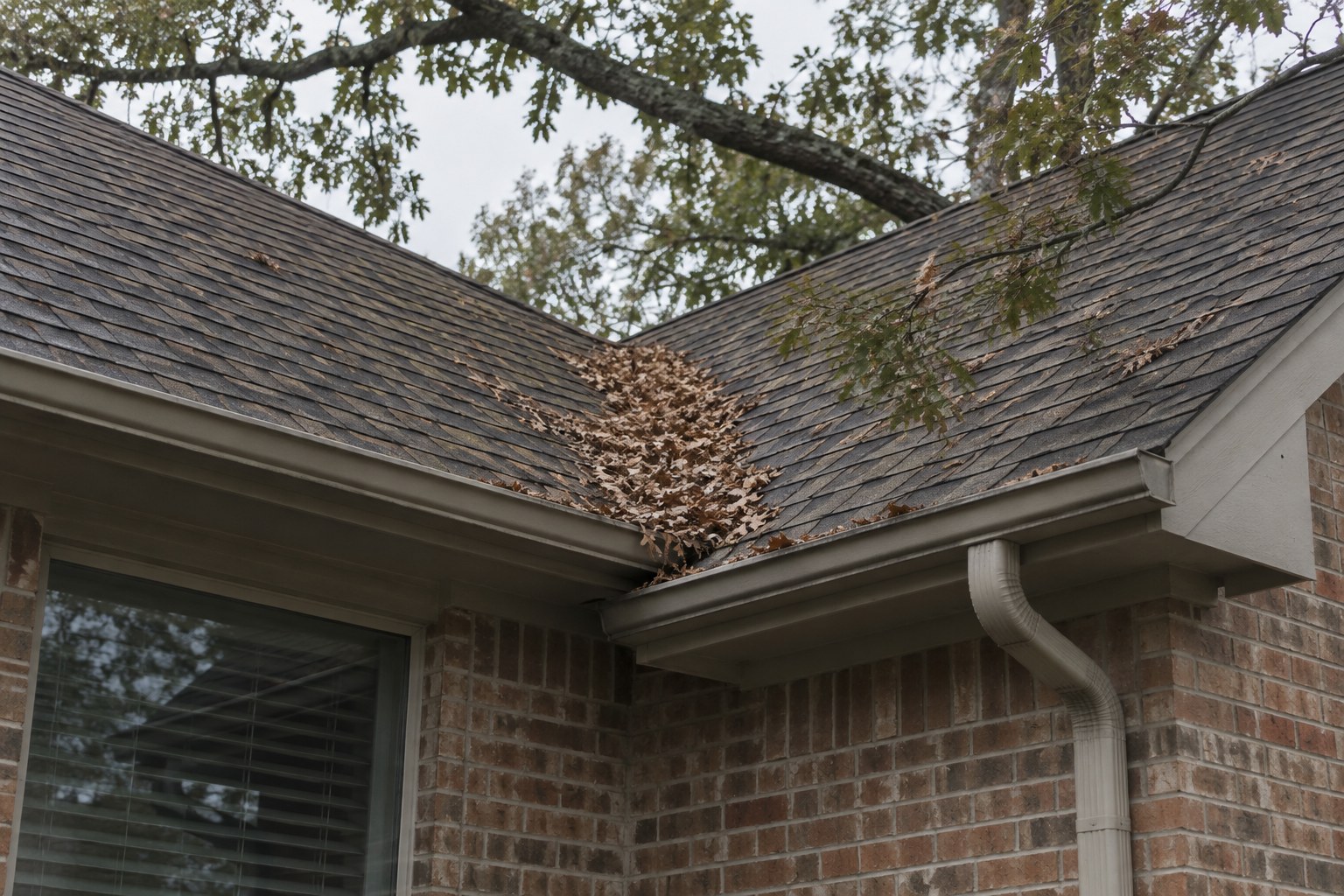
You do not need to climb a ladder to keep tabs on your valleys. In fact, please do not. Roofs are steep, valleys are slick, and falls are a real risk. A pair of binoculars and a flashlight will tell you a lot.
From the Ground
Walk around the house on a dry, bright day and look at each valley from a few angles. Watch for:
- Piles of leaves, twigs, or granules that stay put in the same spot week after week.
- Shingles along the valley that look curled, lifted, cracked, or missing.
- A cut line that looks ragged or wavy instead of straight.
- Exposed metal in an open valley that looks rusted, bent, or loose.
- Dark streaks or moss like growth running down the valley line.
- A valley that looks sunken or wavy compared with the roof planes beside it.
- Water spilling over the gutter right where a valley empties during rain.
From the Attic
If you can safely reach your attic, take a flashlight and look at the underside of the roof deck directly below each valley. Stay on the joists or walkway boards. Look for:
- Water stains, dark rings, or damp spots on the decking along the valley line.
- Daylight showing through near the valley.
- Wet or matted insulation below the valley area.
- A musty smell that is stronger in one corner of the attic.
Inside the Living Space
Ceiling stains often show up a few feet away from the actual leak, because water can run along framing before it drips. If you notice a stain in a room under a valley, especially after heavy rain, it is worth having the roof above it checked. Our post on what professional roofers actually look for during an inspection explains how a roofer traces leaks back to the source.
A valley that leaks can involve several layers at once, including the shingles, the lining, and sometimes the deck. Wall intersections near valleys are often a flashing issue rather than a valley issue, and that topic has its own separate discussion on our blog.
How Roofers Address Valleys During Installs and Repairs
Valleys get special attention whenever a roof is built or fixed. The details below are general. Exact methods depend on the shingle manufacturer, the roof pitch, and local code.
During a New Roof or Replacement
On a full tear off, the old valley materials come off down to the deck. The roofer can then check the decking in the valley for soft spots and replace damaged boards. A valley lining goes in next, followed by the shingles or metal channel in the chosen valley style. Following the manufacturer's valley instructions is also part of keeping a shingle warranty in good standing.
If you are planning new construction or a full replacement, you can read how our roof installation service in Allen TX approaches these details, and ask which valley style fits your shingle choice and HOA rules.
During a Targeted Repair
Sometimes a valley problem is limited to a small section, such as a few damaged shingles, a poor cut line, or a loose piece of metal. In those cases, a roofer may be able to remove and replace that section and reseal it. Whether that makes sense depends on the age and condition of the rest of the roof. Our roof repair team in Allen TX can look at the specifics.
Keeping Valleys Clear Between Visits
Trimming branches that hang over the roof cuts down on leaf build up. Keeping gutters clean helps valleys drain all the way to the downspout. If debris collects in a valley, have a professional clear it rather than going up yourself. A routine look after big storms and once or twice a year can help you catch small issues early.
Want a professional set of eyes on your valleys before the next storm season? Let us know and we will set up a visit.
Frequently Asked Questions
What is a roof valley?
It is the V-shaped channel formed where two downward sloping roof planes meet. It collects rain from both sides and guides it toward the gutters. Because it carries more water and debris than other areas, the valley is usually lined with extra protective material under the shingles, and it is a spot roofers pay close attention to.
Which valley type is best for an Allen home?
There is no single best choice for every home. Open valleys handle heavy runoff well and are easy to inspect. Closed-cut valleys offer a clean shingled look and work with many architectural shingles. Woven valleys are limited by some manufacturers. The right style depends on your shingle product, roof pitch, appearance goals, and any HOA requirements in your neighborhood.
Can leaves in my valleys cause a leak?
Leaves alone do not usually puncture a roof, but they can create problems. Piles of wet leaves slow drainage, push water sideways under shingle edges, and hold moisture against the surface for days. Over time, that may speed up wear. If your valleys stay packed with leaves after storms, having them cleared by a professional and trimming overhanging branches is a sensible step.
How can I tell if my valley is leaking?
From the ground, look for curled or missing shingles, a ragged cut line, rusted metal, or debris that never clears. In the attic, check the decking under the valley for stains, damp spots, or wet insulation. Inside, watch for ceiling stains in rooms below valleys after heavy rain. Any of these signs is a good reason to schedule a professional look.
Should I climb up and clean my valleys myself?
We recommend against it. Valleys are often on steeper sections of the roof, and leaves, granules, or moisture can make them slippery. Falls from roofs can cause serious injuries. Use binoculars from the ground to keep an eye on debris, and let a roofing professional with proper safety gear handle any cleaning or repair work up top.
Does a valley need to be replaced with the whole roof?
Not always. Small valley issues can sometimes be repaired on their own if the rest of the roof is in good condition. When a roof is being fully replaced, though, the valleys are normally rebuilt along with everything else so the new lining, shingles, and metal match the new system. A roofer can explain which approach fits your situation.
Ready to Talk With Pickle Roofing Solutions?
Your roof valley works hard every time it rains, and a little attention can go a long way toward keeping water where it belongs. Pickle Roofing Solutions is a family-owned, GAF Master Elite certified contractor offering free inspections and written estimates. Call us at (972) 954-7186 or stop by our office at 1333 W McDermott Dr, Ste 200, Allen, TX 75013. We serve Allen, Plano, McKinney, Frisco, Prosper, Fairview, Murphy, Wylie, Richardson, Garland, Carrollton, Dallas, and Little Elm.