

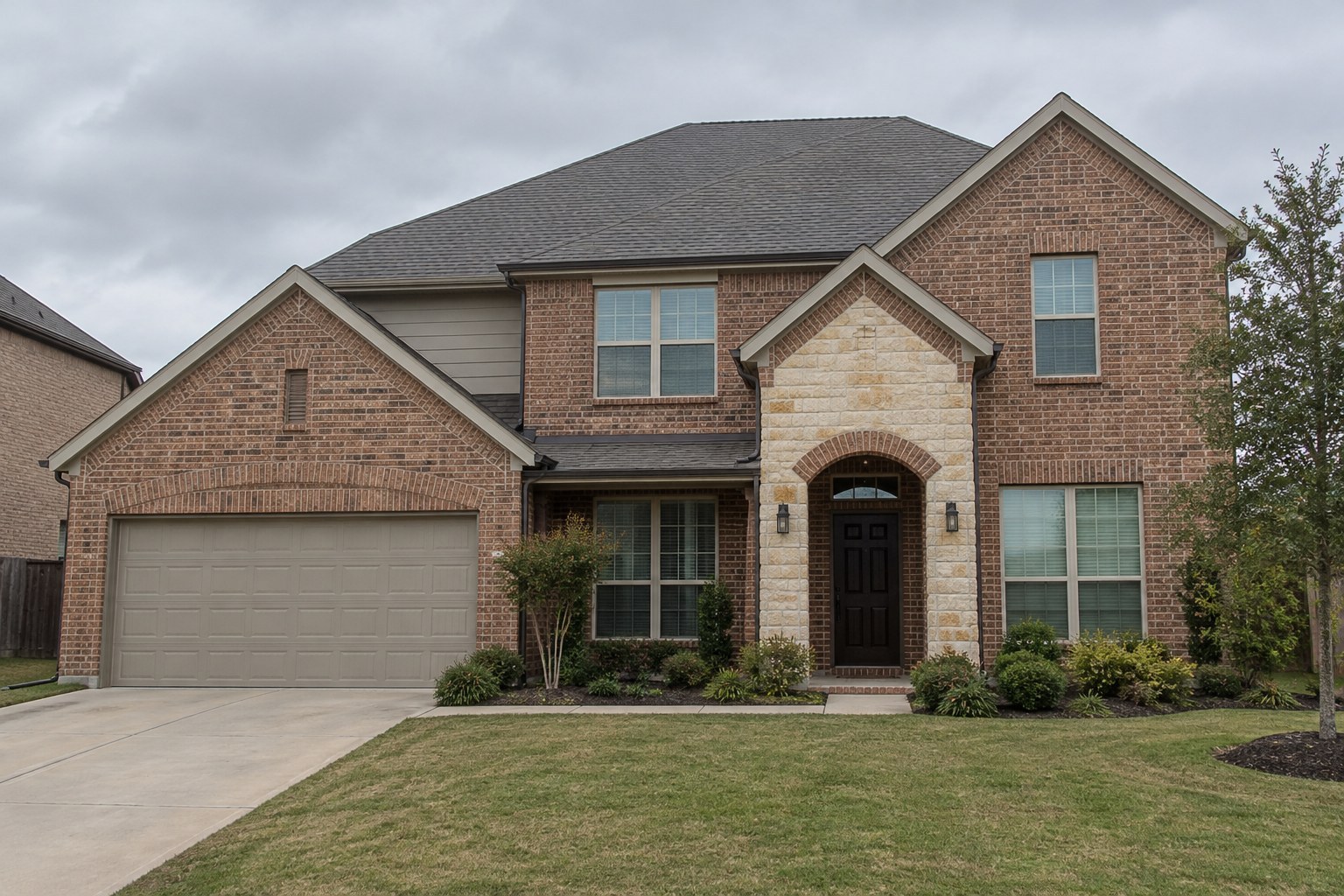
Ridge cap shingles are the folded row of shingles that runs along the very top of your roof, covering the seam where two roof planes meet. On Allen homes, that peak line takes the first hit from wind, sun, and hail, yet it rarely gets a second thought until something goes wrong.
At Pickle Roofing Solutions, we think of the ridge as the roof's crown. It seals the highest joint on the house, it often sits over a ridge vent, and it is one of the most visible lines from the street. Below, you will learn what ridge caps are made of, how dedicated caps compare with the older practice of cutting 3-tab shingles, why North Texas weather is tough on them, and which warning signs you can safely spot from the ground.
Wondering whether the top of your roof is holding up? A quick professional look can answer that.
Key Takeaways
- Ridge caps seal the peak and hip lines of a shingle roof, which are joints the field shingles cannot cover on their own.
- Dedicated hip and ridge products are typically thicker and pre-shaped, while cut 3-tab pieces are thinner and can be more prone to cracking at the fold.
- The ridge is often the most wind-exposed part of the roof, so loose or missing caps are a common sign of storm stress.
- On many homes the cap sits over a ridge vent, so the cap and vent need to be installed as a matched system.
- You can watch for lifted, cracked, or missing caps from the ground with binoculars, without ever climbing a ladder.
- Matching the cap product to the shingle line can matter for appearance and, in some cases, for manufacturer warranty terms.
What Are Ridge Cap Shingles and What Do They Do?
Every pitched roof has at least one ridge, the horizontal line where two slopes meet at the top. Many Allen homes also have hips, the sloped outside corners where roof planes meet on a hip roof. If you are not sure which style you have, our comparison of different residential roof shapes can help you picture it.
The regular shingles on each slope, called field shingles, stop short of that peak. They cannot bend over it cleanly, and if they did, the fold would leave a weak spot. That leaves an open seam that has to be covered by something else.
The Basic Job of a Ridge Cap
Ridge caps are bent over the peak and lapped one over the next, usually starting at the end of the ridge facing away from prevailing wind and working toward the other end. Each piece covers the fasteners of the one before it, so nails stay hidden from weather.
In plain terms, the caps do three things:
- They shed water off the highest joint of the roof so rain cannot run straight into the seam.
- They protect the top edge of the field shingles and the underlayment beneath them.
- They give the roof a finished, straight line that ties the look together from the curb.
Where Ridge Caps Fit in the Larger Roof System
Ridge caps are the last layer on top, but they rely on what is beneath them. The decking, underlayment, and field shingles all need to be in good shape for the cap to do its job. If you want to understand those lower layers, read about why roof underlayment matters on Allen homes.
Dedicated Ridge Cap Shingles vs Cut 3-Tab Pieces
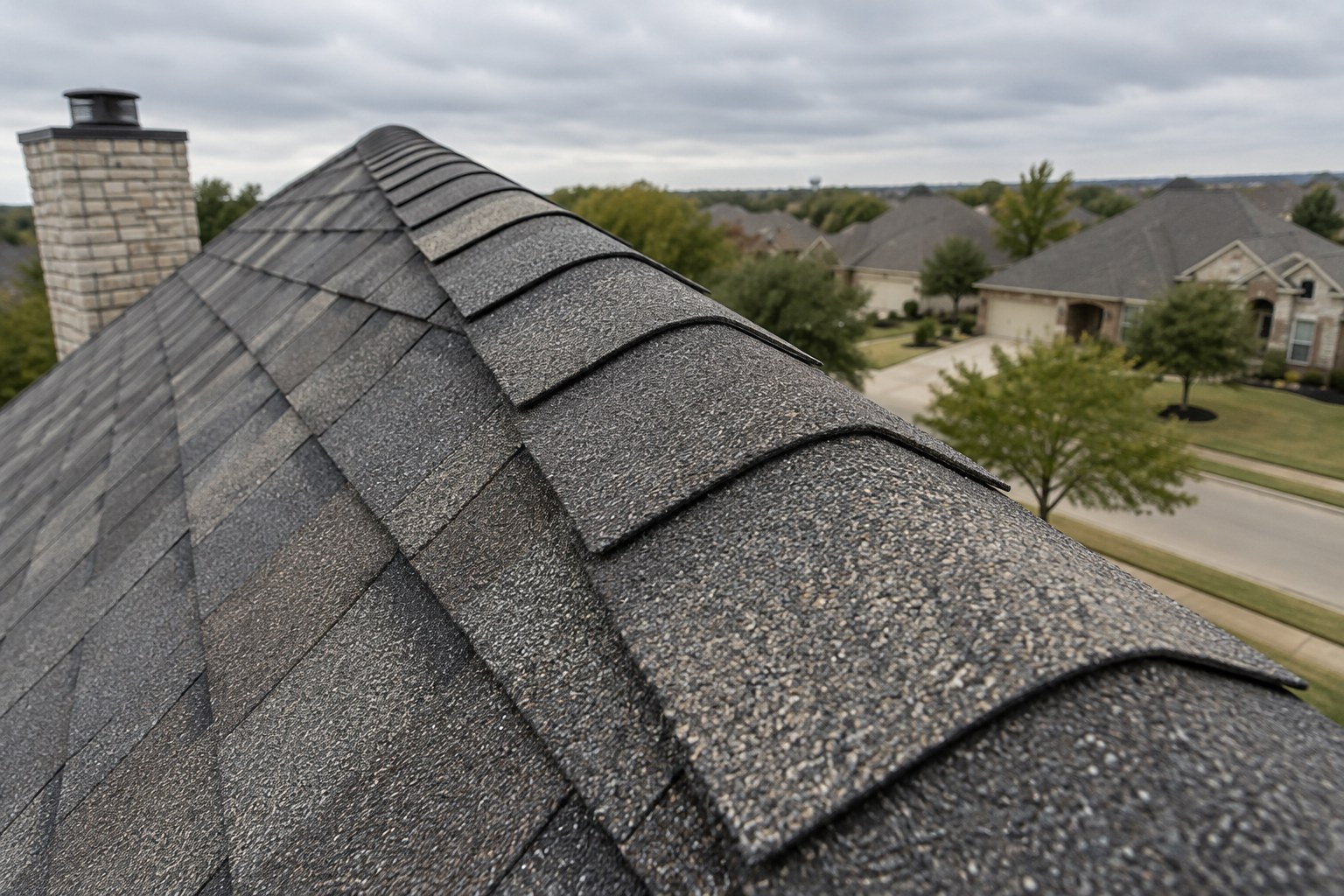
For many years, a common way to cap a roof was to take standard 3-tab shingles, cut them into thirds along the tab lines, and fold each piece over the ridge. Plenty of older Collin County homes were capped that way, and some still are.
Today, shingle manufacturers, including GAF, sell purpose-made hip and ridge products designed to go with their architectural shingle lines. These are generally thicker, often pre-bent or scored to fold cleanly, and styled to complement the dimensional look of laminated shingles.
Why the Difference Can Matter
A cut 3-tab piece is a single thin layer folded sharply over the peak. In the summer heat that bakes North Texas roofs, and during the occasional hard freeze, that tight bend can be a stress point. Over time, the fold may crack, and the cap can lose granules faster than the rest of the roof.
Dedicated caps are designed for that bend. Their thicker profile can stand up better at the fold, and they tend to sit more evenly along the ridge line. They also give a laminated roof a more consistent, layered appearance than flat cut pieces.
Side-by-Side Comparison
| Feature | Cut 3-Tab Ridge Pieces | Dedicated Hip and Ridge Caps |
|---|---|---|
| Thickness | Single thin layer | Typically thicker, often laminated |
| Fold over the peak | Bent on site, can crack at the bend | Pre-bent or scored to fold cleanly |
| Appearance on architectural roofs | Flat look that can stand out | Designed to complement dimensional shingles |
| Color matching | Matches 3-tab field shingles | Made to pair with a manufacturer's shingle colors |
| Fit with ridge vents | Possible, but thin pieces can sit unevenly | Commonly used over shingle-over ridge vents |
| Warranty considerations | May not qualify for some enhanced manufacturer warranties | Often part of a manufacturer's full system |
A Note on Manufacturer Systems
Many shingle makers promote a full system approach, where the starter strip, underlayment, shingles, ventilation, and ridge caps all come from the same brand. Enhanced warranty eligibility can depend on which components are used, and the terms vary by manufacturer and program. If warranty coverage matters to you, ask your contractor which products are required and get the details in writing. Our article on choosing a roofing warranty that protects you explains what to look for.
As a GAF Master Elite certified contractor, Pickle Roofing Solutions is familiar with how those system requirements work and can walk you through them before any project begins.
Have a question about the caps on your roof right now? Our team is happy to talk it through.
How Ridge Caps Work With Ridge Vents
On many newer Allen homes, the ridge is not a solid line. Instead, there is a narrow slot cut through the roof decking along the peak, covered by a ridge vent, and the caps are nailed over the top of that vent. From the street, you may not even notice the vent is there.
Ventilation design itself is a bigger subject, and we cover it in depth in our roof ventilation systems overview for Texas homes. Here, the focus is simply on how the cap and vent work together.
The Cap Is Part of the Vent Assembly
With a shingle-over ridge vent, the cap is the outer weather layer of the vent. The vent provides the airflow path and baffling, and the caps cover it so it blends in with the roof. That means:
- Fasteners need to be long enough to pass through the cap and vent into the decking, per the vent maker's instructions.
- Overdriving nails can crush the vent and restrict airflow.
- Thin or uneven caps may not seat flat on the vent, leaving gaps where wind-driven rain could enter.
When Caps Are Replaced, the Vent Gets a Look Too
Because the two are fastened together, replacing damaged caps usually means checking the vent below. A brittle or crushed vent may need to be swapped at the same time. A roofer should also confirm the slot is still open and that the vent is not blocked by debris or old material.
Solid Ridges Without a Vent
Some homes, especially those vented with box vents or turbines, have a solid ridge with no vent beneath the caps. In those cases, the caps are nailed straight over the shingles and underlayment at the peak. The installation details differ, but the job of shedding water off the highest joint stays the same.
Why the Ridge Takes a Beating in North Texas
The peak of your roof is the most exposed spot on the house. It sits highest, catches wind from every direction, and gets full sun from sunrise to sunset. In Collin County, that exposure adds up quickly.
Wind Exposure at the Peak
When strong thunderstorm winds move across a roof, the ridge and hips tend to see some of the strongest uplift forces. Caps are smaller pieces with less overlap than field shingles, so if the adhesive seal has weakened or the nails were placed poorly, they can lift or blow off before the rest of the roof shows any trouble.
That is why, after a gusty spring storm rolls through Allen, missing ridge caps are often one of the first things homeowners notice from the driveway. The National Weather Service Fort Worth office posts storm outlooks and warnings for the Allen area, which can help you know when it is worth taking a look afterward.
Hail Hits the Ridge Too
Hail can strike the ridge from more than one angle because the caps face both slopes at once. Impacts on a thin folded cap can crack it at the bend or knock granules loose. Identifying hail bruising takes training, so if you suspect storm damage, our article on handling storm damage roof repair lays out the next steps.
Summer Heat and Sun
Long, hot North Texas summers put steady UV and heat stress on the whole roof, and the ridge gets that exposure all day long. Over the years, asphalt can dry out, granules can thin, and the sealant strips that hold caps down can weaken. Then a sudden cold snap in winter adds expansion and contraction on top of that.
Signs of Ridge Cap Trouble You Can Spot From the Ground
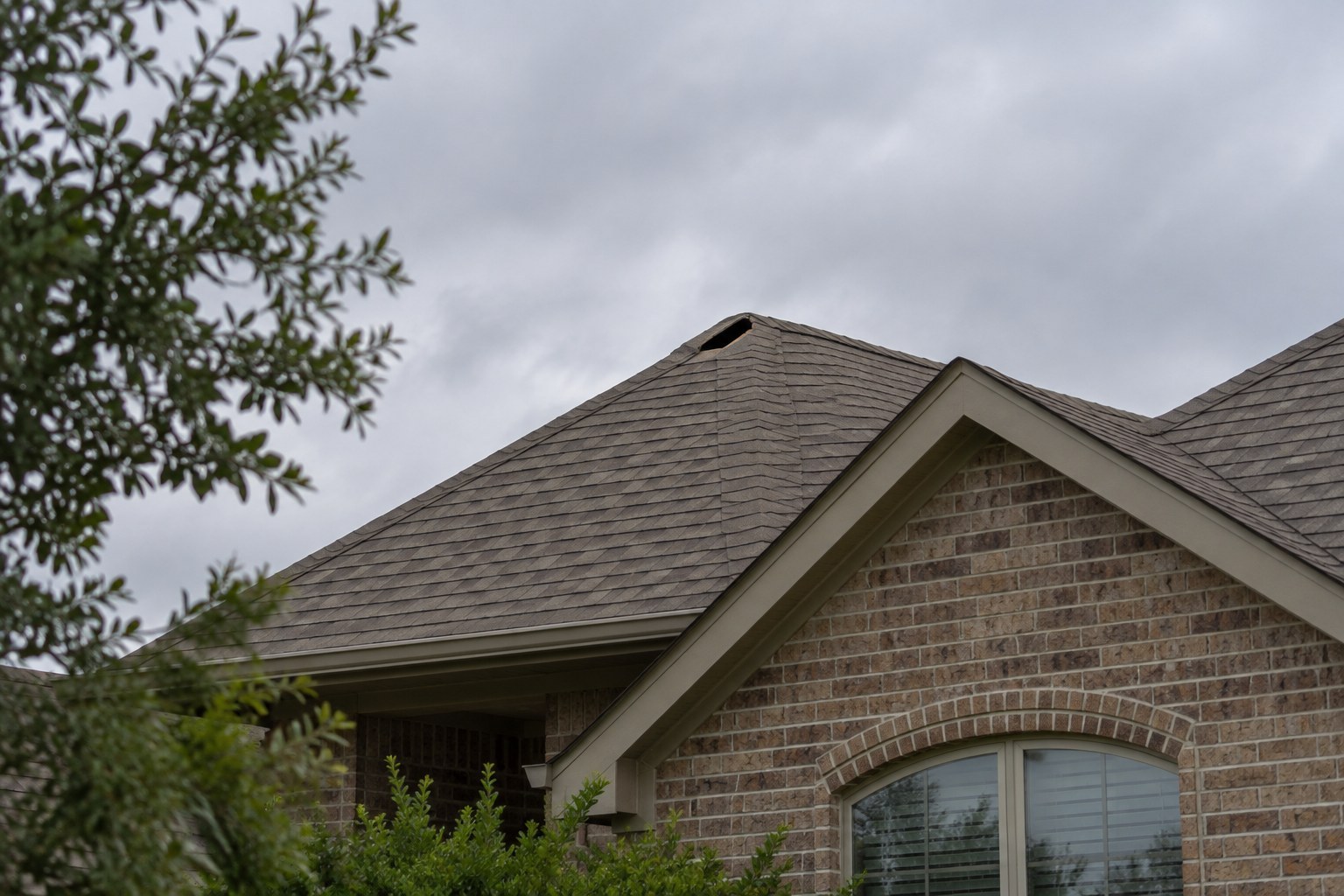
You do not need to climb onto the roof to keep an eye on your ridge. In fact, we strongly recommend you stay off it. Roofs can be steep, slick, and fragile after storms. A pair of binoculars from the yard or across the street is all you need.
What to Look for With Binoculars
- Missing caps: A gap in the ridge line where you can see a different color, often the dark underlayment or the vent underneath.
- Lifted or curled caps: Pieces whose edges stick up or flutter in the wind instead of lying flat.
- Cracks at the fold: Lines across the top of a cap, which tend to show up more on older cut 3-tab pieces.
- Granule loss: Caps that look darker, shiny, or patchy compared with nearby shingles.
- A wavy ridge line: A ridge that dips or sags can point to issues with the decking or framing below, which deserves a professional look.
- Exposed nail heads: Shiny dots along the ridge where fasteners are not covered by the next cap.
Clues Around the Yard
After a windy night, walk the yard and flower beds. Pieces of folded shingle in the grass are a strong hint that ridge caps came loose. Heavy granules collecting at downspout outlets can also point to wear, though that can come from anywhere on the roof.
Clues From the Attic
If you have safe attic access with proper flooring, a flashlight check near the peak after a heavy rain can be revealing. Look for water stains on the decking or rafters right below the ridge, damp insulation, or daylight showing where it should not. Do not walk on ceiling joists or insulation without solid footing.
Ground Check Summary
| What You See | Where to Look | What It May Mean |
|---|---|---|
| Gap in the ridge line | From the yard with binoculars | One or more caps have blown off |
| Edges sticking up | Along ridges and hips | Sealant has failed or nails have loosened |
| Folded shingle pieces on the lawn | Yard and beds after wind | Caps have detached from the peak |
| Stains on decking near the peak | Attic, with safe footing | Water may be getting past the ridge |
| Sagging ridge line | From across the street | Possible decking or framing issue |
If any of these show up, it is worth having a professional take a closer look. Our post on what roofers look for during an inspection explains how the ridge fits into a full roof evaluation.
Choosing and Maintaining Ridge Caps on Your Allen Home
Whether you are planning a new roof or keeping an existing one in shape, a few practical points can help you make good decisions about the ridge.
Match the Cap to the Shingle
If you have architectural shingles, a dedicated hip and ridge product made to pair with that line usually gives the best look and fit. Color matching matters too. Many HOAs around Allen, from neighborhoods off Exchange Pkwy to communities near Stacy Rd, have rules about roof appearance, and a mismatched ridge line can stand out from the street.
Ask About Ridge Details in Your Estimate
When you review a roofing estimate, look for specifics rather than a generic line item. Helpful questions include:
- Which hip and ridge product will be used, and does it match my shingle line?
- Will the existing ridge vent be reused or replaced?
- Does the cap choice affect any manufacturer warranty I am eligible for?
- How will the caps be fastened over the vent?
Our list of questions to ask a roofing contractor covers more ground for any project.
Small Repairs vs Bigger Problems
A few missing caps after a storm can often be addressed as a targeted repair, provided the underlying vent and decking are sound and matching material is available. If the caps are failing across the whole ridge, or the field shingles show similar wear, the issue may be broader. A qualified roofer can tell you which situation you are in.
Upgrading Caps During a Reroof
If your home still has cut 3-tab ridge pieces and you are moving to architectural shingles, a reroof is the natural time to switch to dedicated caps. Pickle Roofing Solutions offers shingle roofing services in Allen and can explain how the ridge fits into the full system.
Want a professional opinion on your ridge caps and the rest of your roof? We offer free inspections and written estimates with same-week scheduling.
Frequently Asked Questions
Are ridge caps different from regular shingles?
Yes. Ridge caps are designed to bend over the peak and hip lines of a roof, while regular field shingles lie flat on each slope. Dedicated cap products are usually thicker and pre-shaped or scored so they fold without cracking. Some older roofs use cut pieces of 3-tab shingles instead, which are thinner and can be more prone to wear at the bend.
Can I use cut 3-tab shingles as ridge caps on an architectural roof?
It is possible, but many roofers and manufacturers favor dedicated hip and ridge products on architectural roofs. Cut 3-tab pieces are thinner, can look flat against dimensional shingles, and may not meet the requirements for some enhanced manufacturer warranties. Ask your contractor which cap product the shingle maker recommends for your specific shingle line before work begins.
Why do ridge caps blow off before other shingles?
The ridge is the highest and most exposed part of the roof, so it often faces strong wind uplift during North Texas thunderstorms. Caps are small pieces with less overlap than field shingles. If the sealant has weakened from years of heat or nails were placed poorly, caps may lift or detach before the rest of the roof shows obvious damage.
Do ridge caps go over a ridge vent?
On many homes, yes. A shingle-over ridge vent sits along an open slot at the peak, and the caps are nailed over it to keep weather out while letting air escape. The caps and vent work as one assembly, so fasteners must be the right length and the caps should sit flat. When caps are replaced, the vent should be checked too.
How can I tell if my ridge caps are damaged without climbing on the roof?
Use binoculars from the yard or across the street. Look for gaps in the ridge line, edges that stick up, cracks across the fold, or patchy granule loss. After windy weather, check the lawn for folded shingle pieces. If you have safe attic access, look for stains near the peak after rain. Please do not climb onto the roof yourself.
Can a few missing ridge caps be repaired, or does the roof need replacing?
Often a few missing caps can be handled as a targeted repair if the vent, decking, and surrounding shingles are in good shape and matching material is available. If caps are failing along the entire ridge or the field shingles show similar wear, the problem may be wider. A professional inspection can help you understand which situation applies to your home.
Ready to Talk With Pickle Roofing Solutions?
Ridge cap shingles protect the highest seam on your house, and keeping them in good shape is a simple way to help your roof stand up to Collin County wind, hail, and heat. If you have spotted lifted or missing caps, or you just want a professional opinion, call Pickle Roofing Solutions at (972) 954-7186. We serve Allen, Plano, McKinney, Frisco, Prosper, Fairview, Murphy, Wylie, Richardson, Garland, Carrollton, Dallas, and Little Elm from our office at 1333 W McDermott Dr, Ste 200, Allen, TX 75013.