

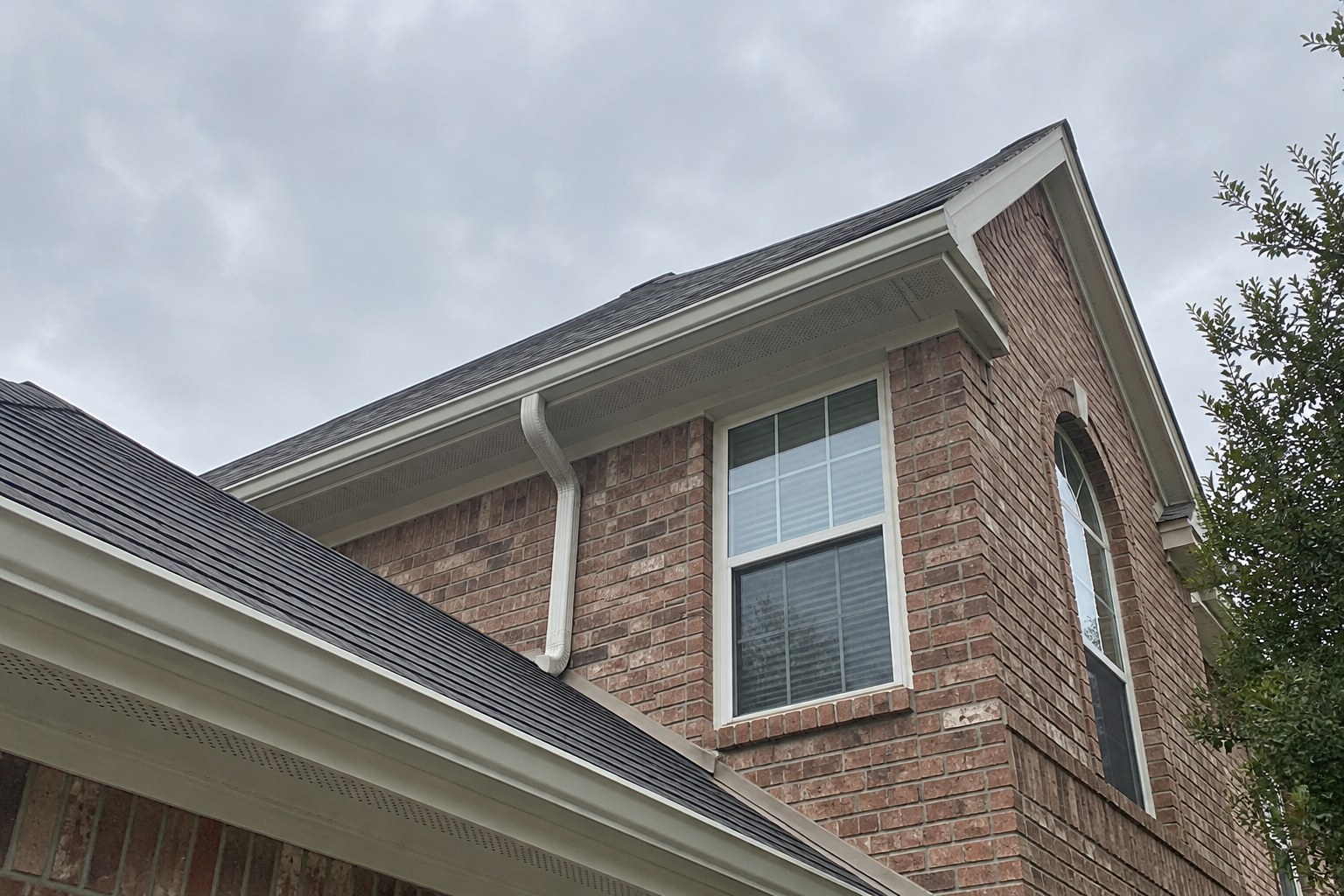
Roof eaves are the lower edges of your roof that hang past the exterior walls, and they do more work than most homeowners realize. They carry rainwater away from your siding, give your gutters a place to attach, and shade windows from the hard Texas sun. When an eave starts to rot or sag, the problem often stays hidden until paint peels, gutters pull loose, or water stains show up inside.
Pickle Roofing Solutions is a family-owned roofer in Allen, founded in 2012 by Randy Pickle. Below, you will learn what eaves are, how they differ from rakes and overhangs, and what warning signs you can check from your own driveway.
Noticed peeling paint, a drooping gutter, or dark stains along the edge of your roof? We can take a closer look.
Key Takeaways
- Eaves are the horizontal, lower edges of a roof that extend past the walls, while rakes are the sloped edges on the gable ends.
- The eave is where nearly all of the water from a roof plane leaves the roof, so it takes more moisture exposure than most other parts of the roof.
- Gutters, drip edge, fascia boards, and soffit vents all connect at or near the eave, so a problem in one piece can spread to the others.
- Many early signs of eave trouble, such as sagging gutters, peeling paint, stains, and wavy shingle edges, can be spotted safely from the ground.
- North Texas storms, summer heat, and clogged gutters can all speed up wear along the eaves of an Allen home.
- Catching eave damage early can help keep a small wood repair from turning into a larger decking or interior problem.
What Are Roof Eaves, and How Are They Different From Rakes and Overhangs?
If you stand in your front yard and look up at the bottom edge of your roof, the line that runs level with the ground is the eave. On most Allen homes, that edge sits right above the gutters. It is the point where the roof stops and water drops off.
Roofers use a few related words that often get mixed up.
Eaves
The eave is the horizontal lower edge of a roof plane. Because it runs level, water flows straight down the roof toward it and then spills off. That is why gutters are mounted along eaves and almost never along the sloped sides of a roof.
Rakes
The rake is the sloped edge of a roof, usually found on the triangular gable ends of a house. Water runs parallel to a rake instead of over it, so rakes see less direct runoff. They still face wind, though, and wind-driven rain can work under shingles along a rake if the edge is not finished well.
Overhangs
Overhang is a general term for any part of the roof that extends beyond the walls. An eave overhang is the portion of the eave that sticks out past the siding or brick. Some homes have deep overhangs that shade a lot of wall, while others have tight edges with very little projection at all.
The table below sums up the differences.
| Roof Edge | Where You Find It | Main Job | Typical Attachments |
|---|---|---|---|
| Eave | Horizontal lower edge of a roof plane | Sheds the bulk of roof runoff away from walls | Gutters, fascia, soffit, drip edge |
| Rake | Sloped edge on gable ends | Finishes the side edge and resists wind | Rake trim, drip edge, fascia |
| Overhang | Any roof section that extends past the wall | Shades walls and windows, moves water outward | Depends on whether it is an eave or rake |
Hip roofs, which are common across Collin County subdivisions, have eaves on all four sides and few or no rakes. Gable roofs have eaves on two sides and rakes on the other two. If you are not sure which style your home has, look for triangular wall sections at the top of the house. Those triangles mark gable ends with rakes above them.
Why Roof Eaves Matter for Drainage and Your Home's Exterior
It is easy to think of the eave as just trim. In practice, the eave is one of the hardest working parts of the whole roof system. Every drop of rain that lands on a roof plane ends up flowing to its eave.
Moving Water Away From Walls and Foundations
A properly built eave pushes water out past the face of your walls. Without that projection, runoff would sheet down your brick or siding, soak window frames, and splash against the base of the house.
That last point matters in Allen. Much of North Texas sits on expansive clay soil that swells when wet and shrinks when dry. Water dumping right next to the slab can add to the moisture swings that homeowners here already watch for. Eaves and gutters work together to keep that water farther from the foundation.
Shading Windows and Walls
Overhangs throw shade on the upper parts of walls and windows. During a long Texas summer, that shade can help reduce how much direct sun hits glass and siding during parts of the day. The effect depends on the depth of the overhang and which way the wall faces, so results vary from house to house.
Protecting the Roof Edge Itself
The bottom row of shingles at the eave is where water is moving fastest and in the largest volume. That is why roofers install starter strips, drip edge, and in many cases extra underlayment protection at the eave. Our post on why every Allen home needs a drip edge explains how that metal edge keeps water from curling back onto the wood.
What Attaches to the Eave
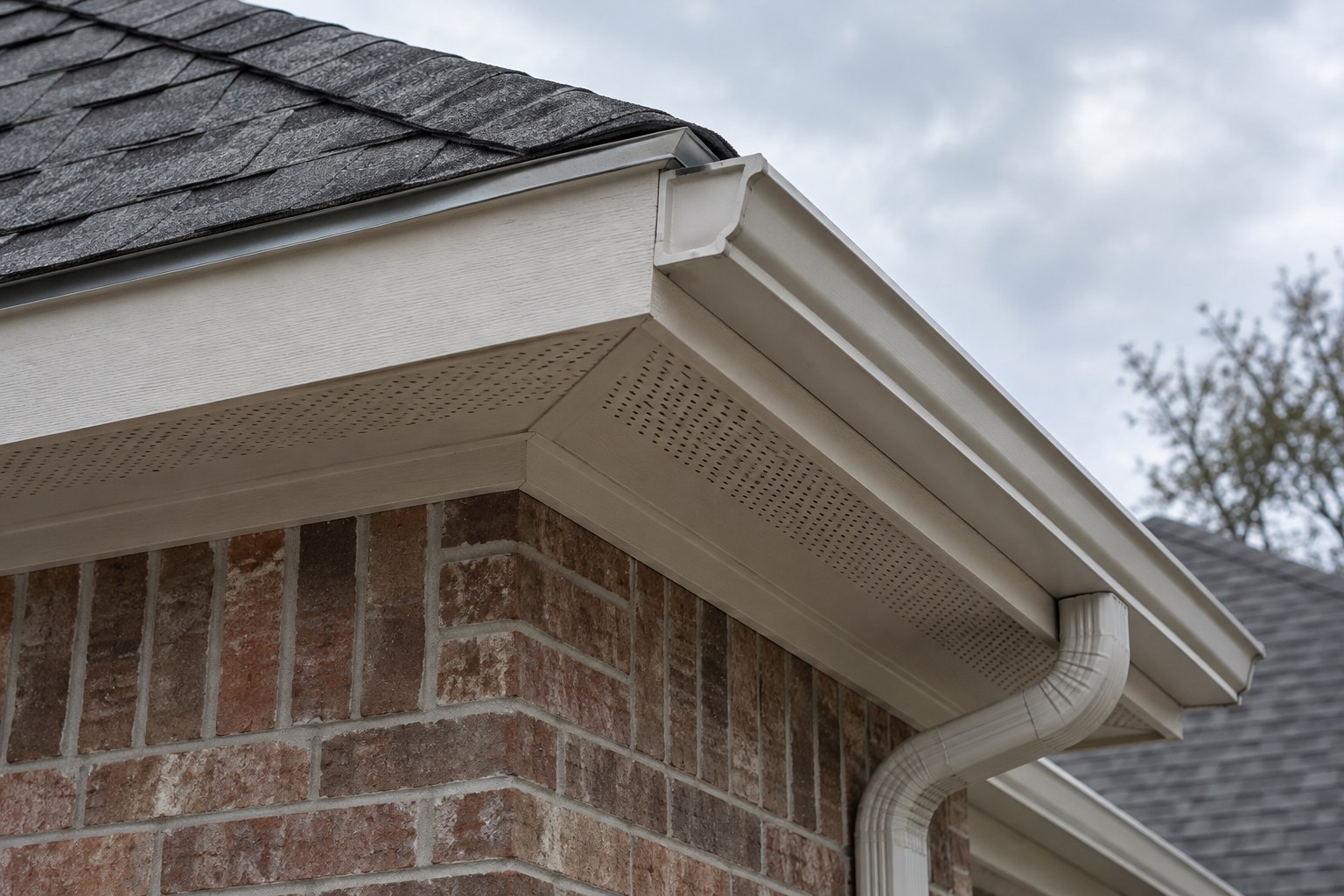
Several parts of your home's exterior meet at the eave. When roofers talk about the "eave assembly," they mean all of these pieces working as one unit. A weak spot in any of them can let water reach the wood behind.
Fascia Boards
Fascia is the vertical board that runs along the front edge of the eave. It caps the ends of the rafters or trusses and gives the gutters a solid surface to mount on. Fascia takes splashes from overflowing gutters and is often the first board to show rot.
Soffits
The soffit is the panel on the underside of the overhang, the part you see when you stand under the eave and look up. Many soffits include vents that let outside air into the attic. We cover soffit and fascia problems in detail in our post on what damaged soffit and fascia really mean, so we will keep it brief here.
Gutters
Gutters hang from the fascia along the eave and collect the runoff before it hits the ground. When gutters clog with leaves from the live oaks and Bradford pears common in Allen neighborhoods, water can back up behind them and soak the fascia and roof deck edge. Professional gutter services in Allen can address loose hangers, poor pitch, and overflow points that keep wetting the eave.
Drip Edge and Starter Shingles
Drip edge is a bent metal strip installed at the roof edge. Starter shingles sit on top of it and create a sealed first course for the rest of the shingles. Together they help water drip cleanly into the gutter instead of wicking under the shingles.
Attic Ventilation at the Eave
On many homes, soffit vents at the eaves serve as the intake side of the attic ventilation system. Air enters low at the eaves and exits high near the ridge. If insulation is pushed against those vents or the vents are painted over, airflow can drop. Our guide on how attic ventilation affects your roof covers that topic in more depth.
Seeing trouble at one of these connection points and not sure where it is coming from? Give us a call and talk it through with our team.
Signs of Eave Damage You Can Spot From the Ground
You do not need to climb a ladder to check your eaves. In fact, we recommend that you stay off the roof entirely. Walking a roof is risky, and it can damage shingles. A slow walk around the house, a pair of binoculars, and a few minutes in the attic will tell you a lot.
Sagging or Pulling Gutters
A gutter that dips in the middle or tilts away from the house may be telling you that the fascia behind it has softened. Gutter fasteners need solid wood to grip. When the wood rots, the hangers loosen and the gutter starts to droop.
Peeling Paint and Stains
Look along the fascia and soffit for bubbling paint, dark streaks, or patches that look wet long after a rain. Repeated peeling in the same spot often points to moisture coming from behind the paint, not just sun wear.
Wavy or Lifted Shingle Edges
From the yard, the bottom edge of the roof should look straight and even. If the first few rows of shingles look wavy, curled, or lifted, the decking underneath may have swollen from moisture, or the edge may have been loosened by wind.
Holes, Gaps, and Animal Activity
Squirrels, birds, and wasps like weakened eaves. Chewed corners, gaps between the soffit and fascia, or nesting material poking out of the overhang are signs that the wood or trim has opened up. Once animals get in, they can move into the attic.
Clues From Inside the Attic
If you can safely reach your attic access, use a flashlight to look toward the low edges of the roof where the rafters meet the walls. Darkened wood, water stains on the underside of the decking, or damp insulation near the eaves can all point to a leak at the roof edge. Stay on the framing or walkboards and do not step between joists.
Interior Ceiling Stains Near Exterior Walls
A brown ring on a ceiling close to an outside wall, especially in an upstairs bedroom, can trace back to a leak along the eave. Water may enter at the edge and travel along framing before it shows up indoors.
What Causes Eaves to Wear Out in North Texas
Eaves on Allen homes face a mix of weather and maintenance issues. Understanding the causes can help you spot trouble before it grows. Homeowners from Bethany Drive to Watters Crossing face similar conditions.
Clogged and Overflowing Gutters
This is one of the most frequent culprits. When gutters fill with leaves, shingle granules, or debris after a storm, water spills over the back edge and soaks the fascia and roof deck. Over many seasons, that repeated soaking can lead to rot.
Storms, Wind, and Hail
Spring storms in Collin County can bring high winds and hail. Wind tends to catch roof edges first, which can lift starter shingles and loosen trim. Hail can dent gutters and metal edges. If a recent storm has you worried, our article on handling storm damage roof repair walks through next steps.
Winter Freezes
Hard freezes are not frequent in Allen, but they do happen. When snow or ice sits on a roof and melts unevenly, water can refreeze at the colder eave and back up under shingles.
Sun and Heat
Long, hot summers break down paint, caulk, and sealants. Once the protective finish on fascia and trim fails, raw wood is open to moisture. South and west facing eaves often weather faster because they get more direct afternoon sun.
Installation Shortcuts
Missing drip edge, short shingle overhang, or gutters mounted too low can all send water where it does not belong. Problems like these may not appear for years, which is one reason an eave issue can surprise a homeowner in a house that looks fine from the street.
When Eaves Need Work and What Repairs Usually Involve
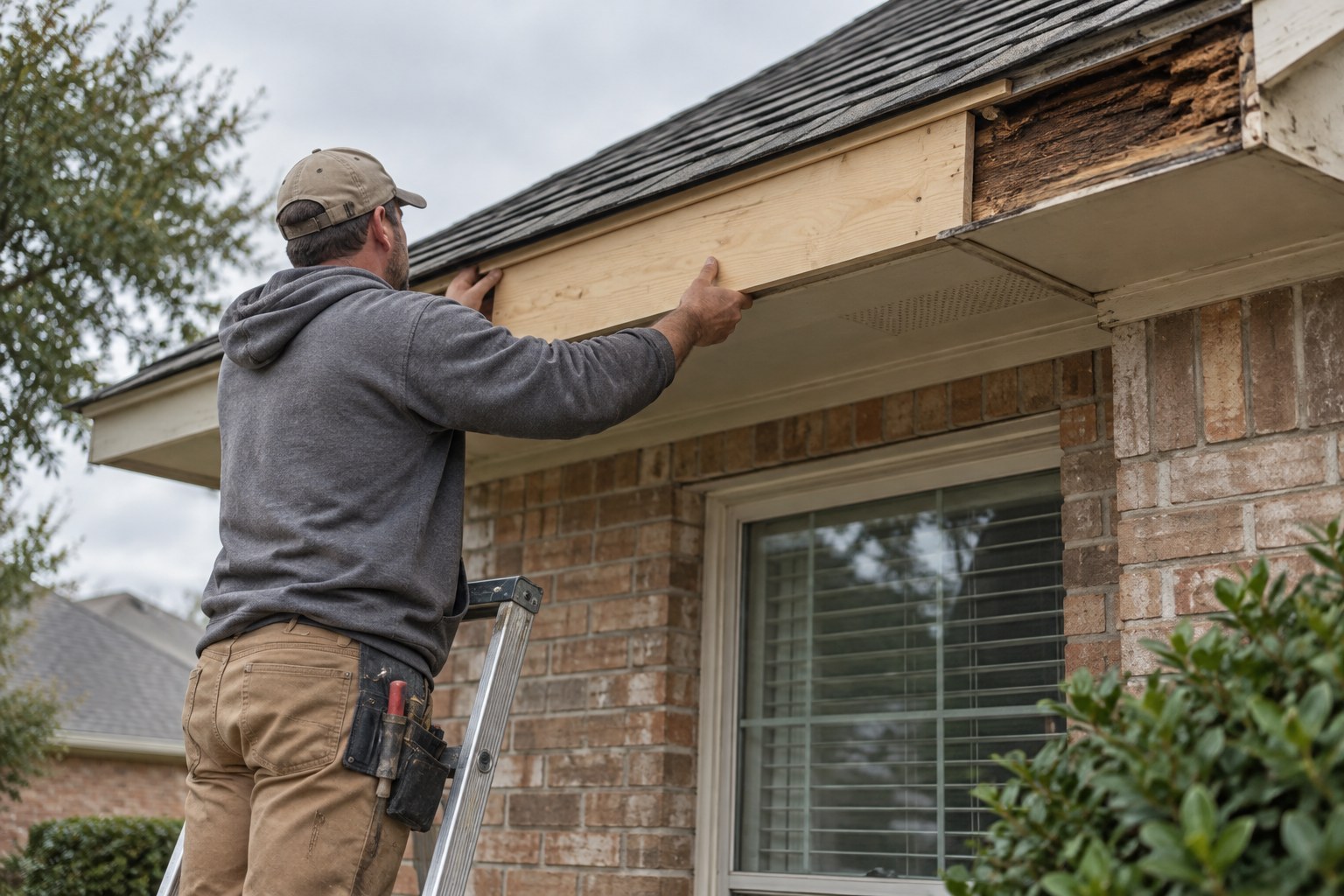
Not every stain means a major project. Some eave problems are cosmetic, while others signal rot that has reached structural wood. The goal is to find out how far the moisture has traveled.
Minor Issues
Small paint failures, a loose piece of trim, or a single gutter hanger pulling free can often be handled with targeted fixes. Repainting and resealing after the wood is confirmed dry may be enough in some cases.
Moderate Issues
When fascia or soffit boards are soft, the damaged sections usually need to be cut out and replaced. Gutters may need to come down and go back up once new wood is in place. A roofer will often check the edge of the roof decking at the same time, since rotted fascia and wet decking tend to show up together.
More Serious Issues
If moisture has reached the roof decking or the rafter tails, the repair grows. Shingles along the edge may need to be removed so damaged decking can be replaced. Our post on why roof decking matters explains what that layer does and why soft spots should not be ignored.
Eave repairs often overlap with general roof repair in Allen, especially when shingles, drip edge, and wood all need attention at once. The right fix depends on what a hands-on inspection finds, so treat any online advice, including ours, as a starting point.
How Eaves Fit Into a Full Roof Replacement
When a home gets a new roof, the eave area usually gets new drip edge, starter strips, and underlayment as part of the job. That is a good time to replace any soft fascia or decking along the edge. If you are already planning a replacement, ask your contractor how they will handle the eaves before work begins.
Questions to Ask Before Eave Work
- Is the damage limited to trim, or has it reached the decking or rafters?
- What is causing the moisture, and how will the repair stop it from coming back?
- Will the gutters need to be removed and reinstalled?
- Does my HOA have rules about trim colors or materials I should know about?
- Will soffit vents stay open so attic airflow is not blocked?
Homeowners in nearby cities face the same issues. We work with families across Collin County, including those who search for a roofing contractor in Plano, as well as McKinney, Frisco, Prosper, and Wylie.
Want a professional set of eyes on your eaves, fascia, and roof edge? Pickle Roofing Solutions offers free inspections and written estimates.
Frequently Asked Questions
What is the difference between eaves and soffits?
The eave is the whole lower edge of the roof that extends past the wall. The soffit is just the panel on the underside of that overhang, the part you see when you look up from below. Think of the soffit as one component of the eave, along with the fascia board, gutters, and drip edge that finish the edge.
Do all houses have eaves?
Nearly every pitched roof has eaves, since there has to be a lower edge where water leaves the roof. What varies is the overhang. Some homes have deep eaves that extend well past the walls, while some modern or older designs have very tight edges. Flat and low slope roofs handle water differently and may use parapets or scuppers instead.
Can I check my eaves without getting on the roof?
Yes, and that is the safest approach. Walk around your home and look for sagging gutters, peeling paint, dark stains, wavy shingle edges, and gaps where animals could get in. Binoculars help with second story eaves. If you can reach your attic safely, use a flashlight to look for water stains near the low edges of the roof.
Why do my gutters keep pulling away from the house?
Gutters that pull away often point to soft fascia boards behind them. Fasteners need solid wood to hold, and repeated overflow from clogged gutters can rot that wood over time. Heavy debris loads and storm winds can also stress hangers. A roofer can check whether the fascia needs replacement before the gutters are reattached.
Are eaves important for attic ventilation?
On many homes, yes. Soffit vents built into the eaves often act as the intake for the attic, letting cooler outside air enter low so warm air can exit near the ridge. If those vents are blocked by insulation, paint, or debris, the attic may not breathe as designed. Not every home uses soffit intake, so ask during an inspection.
How often should I have my eaves looked at?
A quick look from the ground after major storms and a couple of times a year during gutter cleaning is a good habit. A professional roof inspection can check the eave area in more detail, including drip edge, decking edges, and attic signs. If you notice stains, sagging, or animal activity, it is worth scheduling a visit sooner.
Ready to Talk With Pickle Roofing Solutions?
Healthy roof eaves keep water moving away from your walls, support your gutters, and help protect the edge of your roof deck. If you have noticed peeling paint, drooping gutters, or stains near the roof line, call Pickle Roofing Solutions at (972) 954-7186. We serve homeowners in Allen, Plano, McKinney, Frisco, Prosper, Fairview, Murphy, Wylie, Richardson, and nearby communities from our office at 1333 W McDermott Dr, Ste 200, Allen, TX 75013.