
Dry rot is one of the more deceptive problems a roof can develop. Unlike a missing shingle or a visible leak, dry rot works from the inside out, breaking down the wood components of your roof structure long before any external sign appears. By the time most Allen homeowners notice soft spots on their roof deck or sagging sections near the eaves, the damage has often been developing for months or years.
Understanding what dry rot is, what causes it, and how to address it before it spreads can save you from a far more expensive repair down the road.
What Is Dry Rot
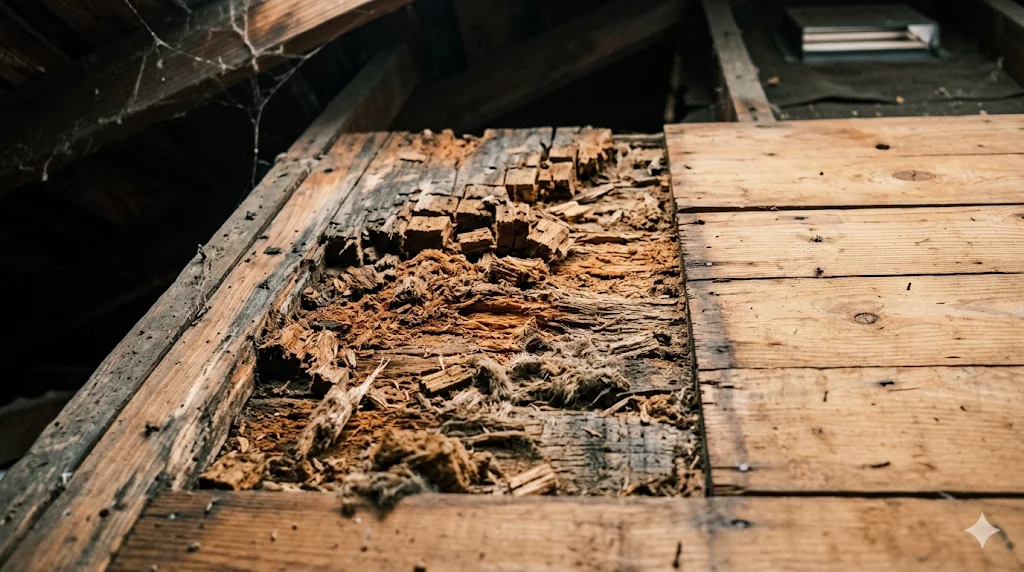
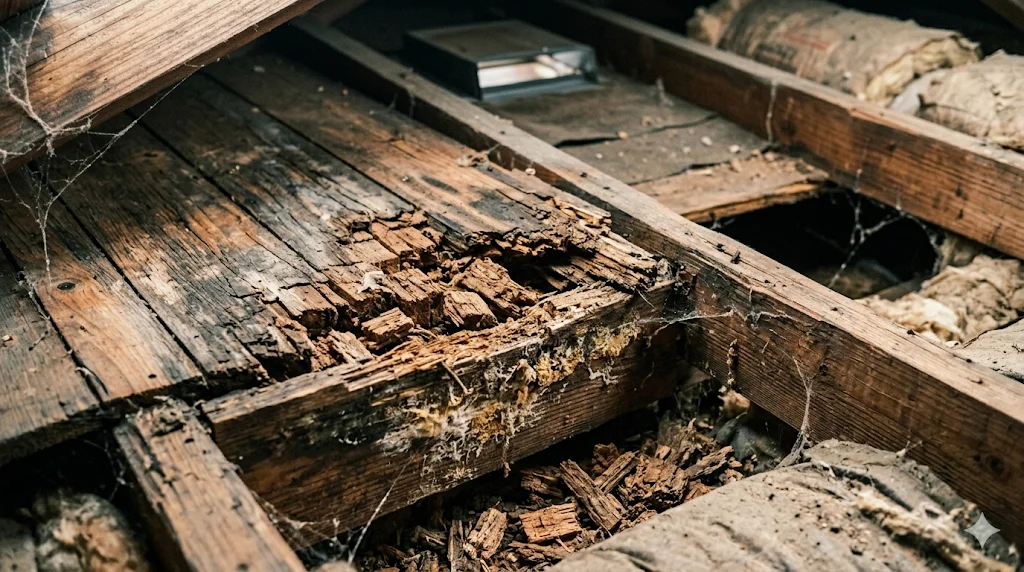
Despite its name, dry rot is not actually caused by dryness. It is a wood decay caused by specific species of fungi that break down the cellulose and lignin in wood fibers. The result is wood that becomes brittle, crumbles, and loses its structural integrity. Over time, wood affected by dry rot turns brown, develops a characteristic cube-like cracking pattern, and crumbles when handled.
In a roofing context, dry rot typically affects the roof deck (the plywood or OSB sheathing beneath your shingles), rafters, fascia boards, and soffits. Any wood component that is regularly exposed to moisture without adequate opportunity to dry out is a potential target.
What Causes Dry Rot in a Roof
Dry rot requires three conditions to thrive: wood, a moisture source, and poor ventilation. In Allen, TX, where summer humidity is persistent and storm season brings regular rainfall, all three conditions can easily converge. The most common causes include:
- Inadequate attic ventilation that traps heat and moisture against the roof deck
- Damaged or missing flashing around chimneys, skylights, or roof penetrations
- Clogged gutters that allow water to back up under the eaves
- Ice damming (less common in Allen but possible during winter storms)
- Age-related wear that allows water infiltration through deteriorated shingles or underlayment
- Condensation buildup in the attic due to inadequate insulation or vapor barriers
Any of these conditions, left unaddressed, creates the moisture environment that dry rot fungi need to establish and spread.
Signs of Dry Rot on a Roof
Dry rot can be difficult to detect without a hands-on inspection because it often develops in areas that are not visible from the ground. That said, there are warning signs that can prompt a closer look.
Soft or Spongy Spots on the Roof Deck
When a roofer walks across an affected area, they will notice sections of the deck that flex or feel soft underfoot. This is one of the clearest indicators of advanced dry rot. A healthy roof deck should feel firm and solid.
Sagging Sections of the Roof
As dry rot compromises the structural integrity of the sheathing or rafters, the roof surface may begin to visibly sag. Sagging is often visible along the ridgeline or between rafters when viewed from the ground.
Crumbling or Discolored Fascia and Soffits
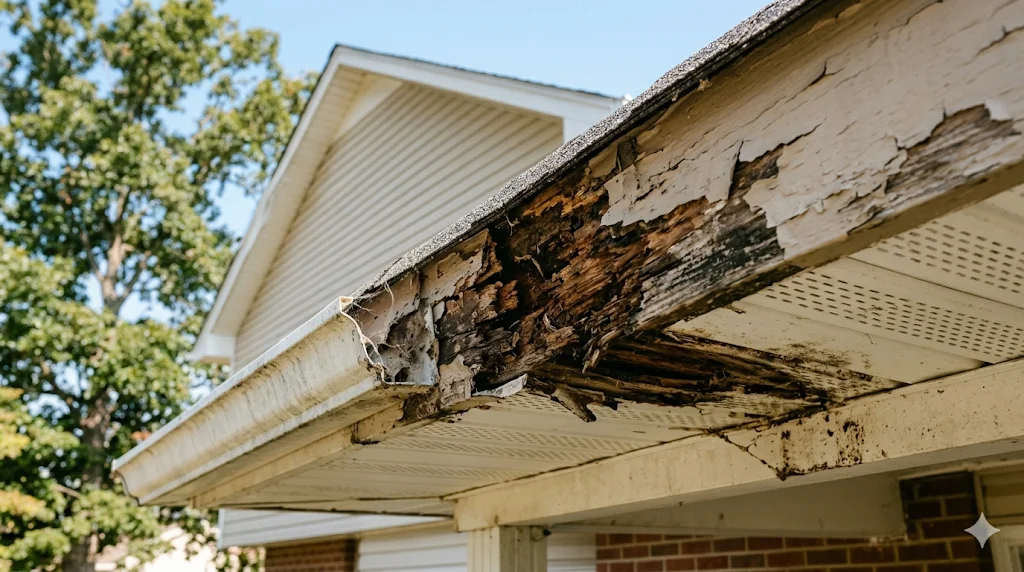
The fascia boards and soffits along your roofline are highly exposed to moisture. Fascia that shows peeling paint, crumbling wood, or discoloration may indicate dry rot that has begun in an accessible area and could be spreading inward.
Interior Water Stains Without Active Leaks
If ceiling stains appear but you cannot identify an obvious leak source, compromised sheathing from dry rot may be allowing moisture to seep through intermittently. This is especially common during periods of high humidity rather than rain.
Musty Odor in the Attic
A persistent musty or earthy smell in your attic is often associated with fungal growth, including the early stages of dry rot. If your attic smells like damp wood or mold, it is worth having a roofer inspect the deck from above.
How Dry Rot Spreads
Dry rot spreads through fungal spores that travel through wood and air. Once established in one section of your roof deck, it can spread to adjacent wood if the moisture source is not eliminated. In a poorly ventilated attic, it can spread rapidly across large sections of sheathing.
This is why early detection matters so much. Addressing a small affected area costs significantly less than replacing an entire roof deck. And unlike surface mold, dry rot cannot be remediated with cleaning products. Affected wood must be removed and replaced.
Dry Rot Repair Options for Allen Homeowners
The appropriate repair depends on how extensive the rot has become and which components are affected.
Partial Deck Replacement
If the rot is confined to a specific area of the sheathing, a contractor can remove and replace just the affected panels. During a re-roof, it is standard practice to inspect the deck and replace any compromised sections before installing new shingles.
Rafter and Structural Repair
If the rot has reached the rafters or structural framing, the repair scope expands significantly. Sistering new lumber alongside rotted rafters is a common approach for localized structural damage. Extensive rafter rot may require partial framing replacement.
Fascia and Soffit Replacement
Rotted fascia and soffit boards are typically replaced rather than repaired. Modern alternatives include fiber cement and vinyl products that resist moisture more effectively than wood and eliminate the risk of future rot in those areas.
Addressing the Root Cause
Replacing rotted wood without fixing the underlying moisture source will only result in the problem recurring. A thorough repair includes identifying and correcting the cause, whether that means improving attic ventilation, replacing damaged flashing, clearing gutters, or upgrading underlayment.
Preventing Dry Rot in Allen Roofs
The best way to manage dry rot is to prevent the conditions that allow it to develop. Practical steps for Allen homeowners include:
- Schedule annual roof inspections to catch moisture intrusion early
- Keep gutters and downspouts clear to prevent water backup at the eaves
- Ensure attic ventilation meets code requirements for your roof area
- Replace damaged or deteriorated flashing promptly
- Address any roof repairs quickly before water intrusion can establish a foothold
- Consider moisture-resistant materials like vinyl soffit and fiber cement fascia on your next replacement
Get Your Roof Inspected for Dry Rot in Allen, TX
If you have noticed any of the warning signs described above, or if your roof is more than 10 years old and has never had a professional inspection, it is worth having a roofer take a close look. Dry rot caught early is a manageable repair. Left alone, it becomes a structural problem that affects the safety and value of your home.
Call Pickle Roofing Solutions at (972) 954-7186 to schedule a free roof inspection. We will assess your deck, attic ventilation, flashing, and all wood components to give you a clear picture of your roof's condition.
Frequently Asked Questions
What is the difference between dry rot and wet rot
Both are wood decay caused by fungi, but they differ in appearance and the conditions they require. Dry rot (Serpula lacrymans) breaks down wood into brittle, cube-shaped pieces and can spread even with lower moisture levels. Wet rot requires higher sustained moisture and tends to stay more localized. In roofing, dry rot is typically the more serious and more widespread concern.
Can dry rot be fixed without replacing the roof
Yes, if caught early. Small areas of affected deck sheathing can be replaced without a full roof replacement. However, if dry rot has spread across a large portion of the deck or reached the structural framing, more extensive work will be needed. An inspection will clarify the scope.
Will homeowners insurance cover dry rot damage
Most standard homeowners insurance policies do not cover dry rot because it is considered a maintenance issue rather than sudden accidental damage. However, if the dry rot was caused by a covered event such as storm damage, some coverage may apply. Check your policy and consult with your contractor.
How long does it take for dry rot to spread on a roof
The rate of spread depends on moisture levels, temperature, and ventilation. In Allen's humid summers, dry rot can establish and spread within a few months if conditions are favorable. Annual inspections are the most reliable way to catch it before it advances.
Is dry rot the same as mold
No. Mold and dry rot are both fungal, but they are different organisms. Mold grows on the surface of materials and can often be remediated with cleaning. Dry rot breaks down the wood fiber itself and requires removal and replacement of affected material.
About Pickle Roofing Solutions
Pickle Roofing Solutions is a licensed roofing contractor in Allen, TX with extensive experience handling dry rot inspections, deck repairs, and full roof replacements. Whether you have noticed warning signs or just want peace of mind, our team provides honest assessments and quality workmanship. Call (972) 954-7186 to schedule your free inspection today.