

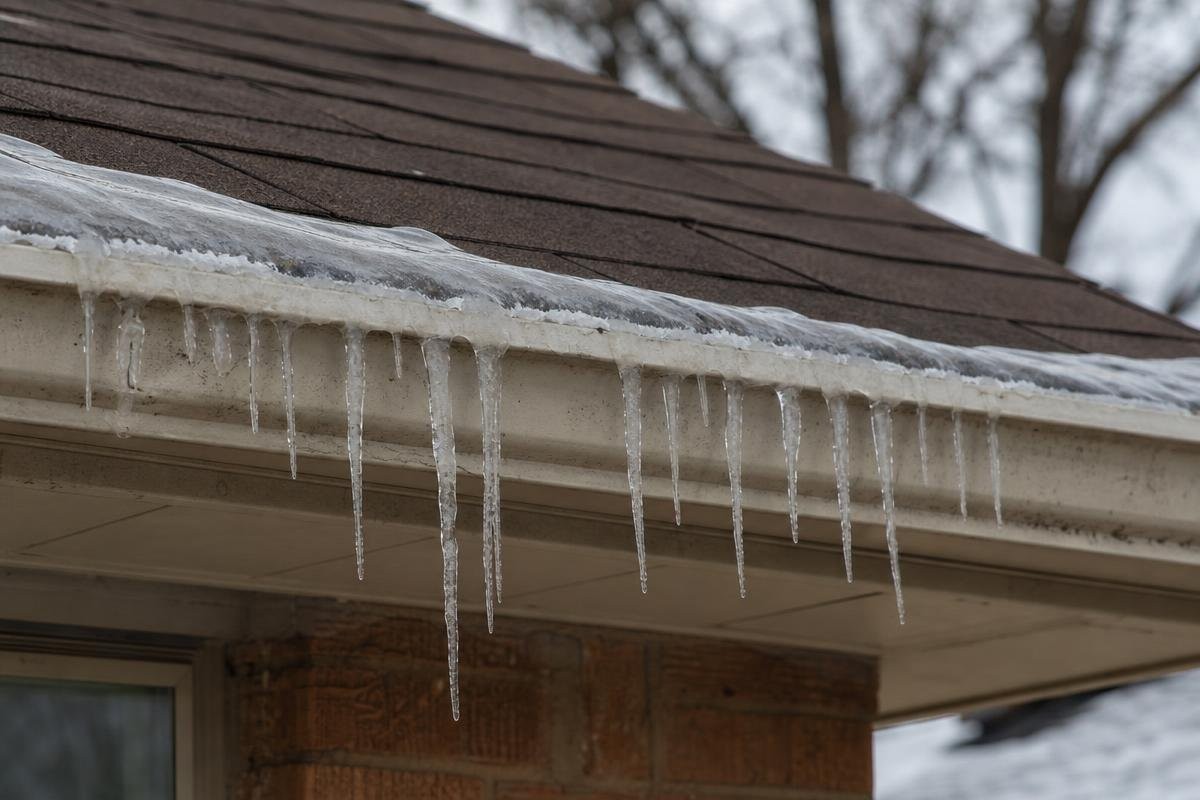
Winter Storm Uri hit Collin County hard in February 2021, and we saw firsthand what a multi-day hard freeze does to roofs in Allen neighborhoods like Twin Creeks and Stacy Ridge. Ice dams formed on homes that had never had a problem before, and the water damage that followed was expensive. We have been helping Allen homeowners protect their roofs since 2012, and as a GAF Master Elite certified contractor, we know what ice dam prevention actually requires here in North Texas, where freezes are rare but brutal when they hit. Got questions about protecting your roof before the next freeze? We're ready to help.
Key Takeaways
- Ice dam prevention in Allen, TX starts with proper attic insulation and ventilation, not just removing snow after a storm.
- Freezes are intermittent in Allen, but rapid freeze-thaw cycles can create ice dam risk in a single storm event.
- A self-adhering rubberized membrane at the eaves is one of the most effective barriers you can install before winter arrives.
- Older Allen homes often lack the attic insulation levels needed to prevent the heat loss that causes ice dams.
- Catching roof and attic issues before a freeze can save you thousands in water damage repairs.
Most winters in this part of North Texas are mild enough that ice dams never cross a homeowner's mind. Then a hard freeze parks over the region for days, temperatures fall into the single digits, and the aftermath shows up on ceilings across town. Water stains. Buckled drywall. Shingles lifted by ice that had nowhere to go.
Pickle Roofing Solutions has been working on roofs in this area since 2012. We are a GAF Master Elite certified contractor based at 1333 W McDermott Dr Ste 200, Allen, TX 75013, and we serve homeowners across Plano, McKinney, Frisco, Prosper, Wylie, and beyond. Attic insulation, air sealing, ventilation, roof design, and weather conditions can all affect ice dam risk.
Ice dams start when heat leaks through the ceiling or attic floor and warms the roof deck. That warmth melts snow or frozen precipitation on the upper roof. The meltwater runs down toward your eaves, which stay cold because they extend past the heated attic space. It refreezes there. The ice ridge builds up and traps more water behind it. That backed-up water finds its way under shingles and into your home.
This article covers the essential steps for ice dam prevention: attic insulation, attic ventilation, protective underlayment, gutter sizing, snow removal, and sealing ceiling air gaps. If you want to know where your roof stands right now, our roof inspection service is a good place to start. Let’s dive in.
What Is an Ice Dam and Why Does It Damage Your Roof?
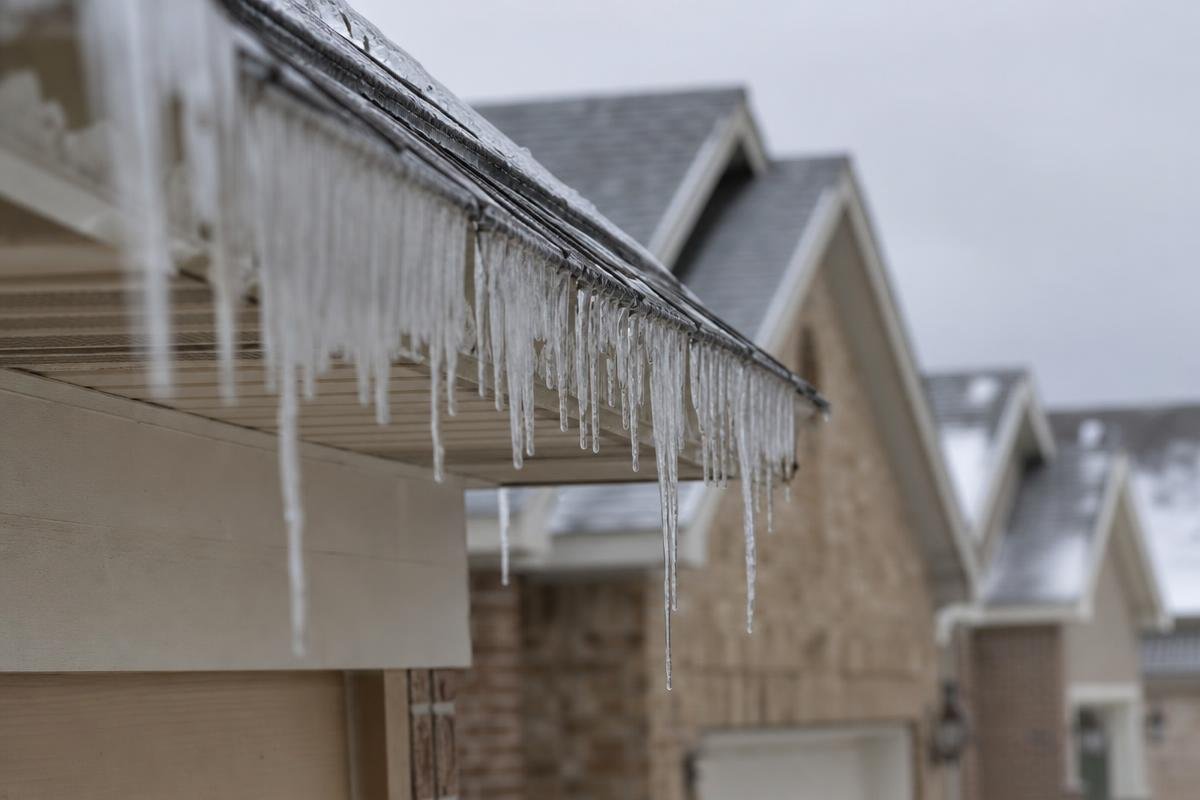
An ice dam is a ridge of ice that builds up along your eaves and prevents meltwater from draining off your roof. It sounds simple. The damage it causes is not.
How Ice Dams Form
Ice dams form when heat escaping through your attic melts snow on the upper roof, which then refreezes at the cold eaves, creating a ridge that traps water. The process happens in three steps. First, heat escapes through your attic floor into the attic space above your living area. That warm air heats the roof deck, which melts snow or frozen precipitation sitting on top. Second, the meltwater runs downhill toward your eaves and gutters, where the roof surface is cold because no heat rises from below. Third, it refreezes there, and the ridge grows a little thicker every cycle.
Here is the part that catches North Texas homeowners off guard. Collin County freeze events are short and intense, not long and gradual. A roof can shed meltwater safely on a Wednesday afternoon and have an active ice dam growing by Thursday morning. That rapid freeze-thaw cycling can create ice dam risk during a single storm event. Freezes are uncommon in the area, but severe events such as Winter Storm Uri can bring prolonged cold conditions.
The Real Damage Ice Dams Cause
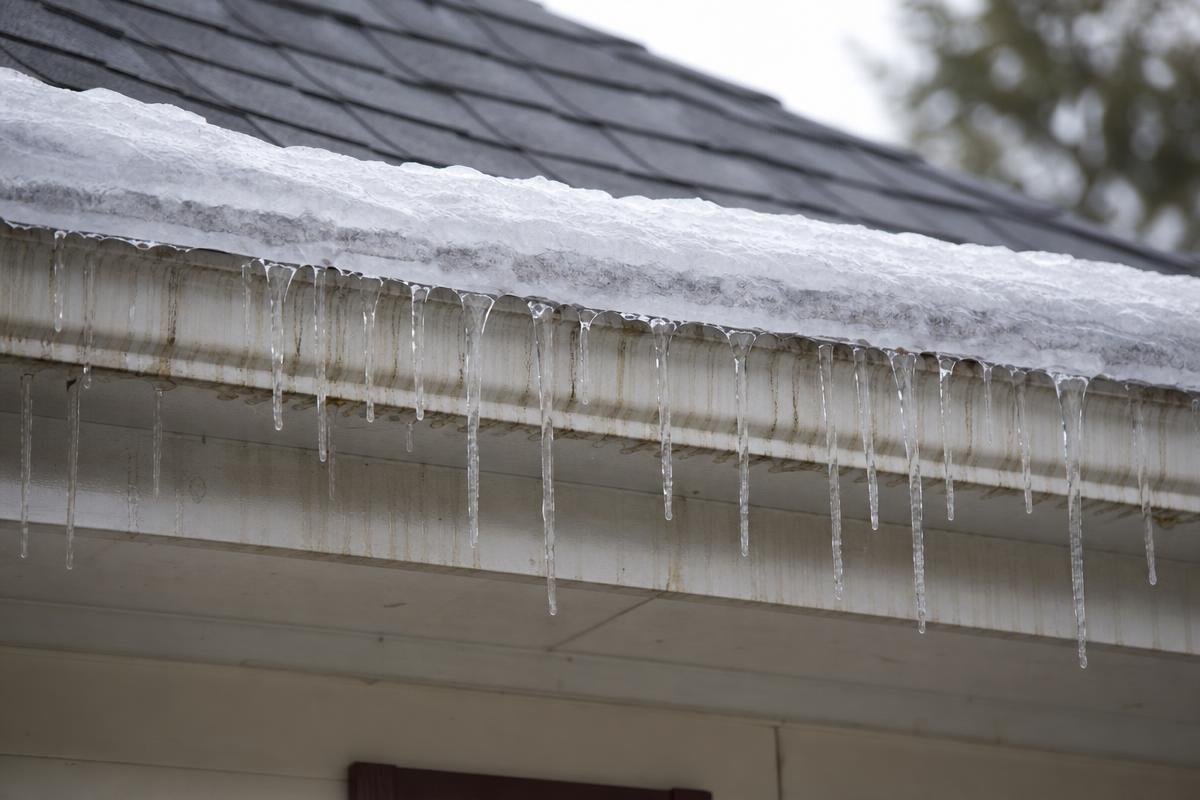
Once that ice ridge forms, water backs up behind it with nowhere to go. It finds the path of least resistance, which is under your shingles. From there it soaks into the roof deck. Left unchecked, it saturates your attic insulation, destroying its R-value and creating the exact warm, damp conditions that mold needs to grow. We have found wet insulation in attics after freeze events. If moisture is not addressed, those conditions can support mold growth.
After the attic insulation, the water reaches ceiling drywall and wall cavities. That is when a roofing problem becomes a full interior repair job. Water damage from ice dams in Allen homes can run into the thousands before you ever see a single water stain on your ceiling. Scheduling a post-freeze roof inspection can catch early infiltration before it reaches that stage. Whether your homeowners insurance covers ice dam damage depends entirely on your policy language and how the claim is characterized, which makes prevention a far more reliable financial strategy than hoping for a payout.
The 5 Core Ice Dam Prevention Strategies Every Allen Homeowner Should Know
Most ice dam problems come down to the same root causes: too little insulation, poor attic airflow, and no protective membrane under the shingles. Addressing those conditions can help reduce ice dam risk. Here are the five strategies we walk homeowners through across Allen every winter season.
1. Upgrade Attic Insulation to the Right R-Value
This is an important part of reducing ice dam risk. Proper attic insulation stops warm air from rising through your ceiling and heating the roof deck. When the deck stays cold, snow melts evenly instead of pooling and refreezing at the eaves.
Attic insulation needs vary with the home's construction, existing insulation, and applicable energy-code guidance. An inspection can identify gaps and recommend an appropriate upgrade. Blown-in fiberglass or cellulose are common retrofit options for existing homes. We cover attic insulation material comparisons in detail elsewhere on our site if you want to weigh your options before deciding.
Want to know your attic's current R-value? We can check it during an inspection and tell you exactly where the gaps are.
2. Verify Attic Ventilation Is Working Correctly
Insulation and ventilation work together. Insulation keeps heat in the living space. Ventilation releases heat that escapes into the attic through properly sized exhaust vents near the roof peak. Ventilation requirements depend on the applicable local code, attic configuration, and selected roof system.
Soffit vents and ridge vents must form an unobstructed air channel from eave to peak. Blocking soffit vents with insulation during installation is one of the most common mistakes we see, and it defeats the whole system. Our attic insulation and ventilation service includes a check of both components so nothing gets missed.
3. Install a Protective Eave Membrane
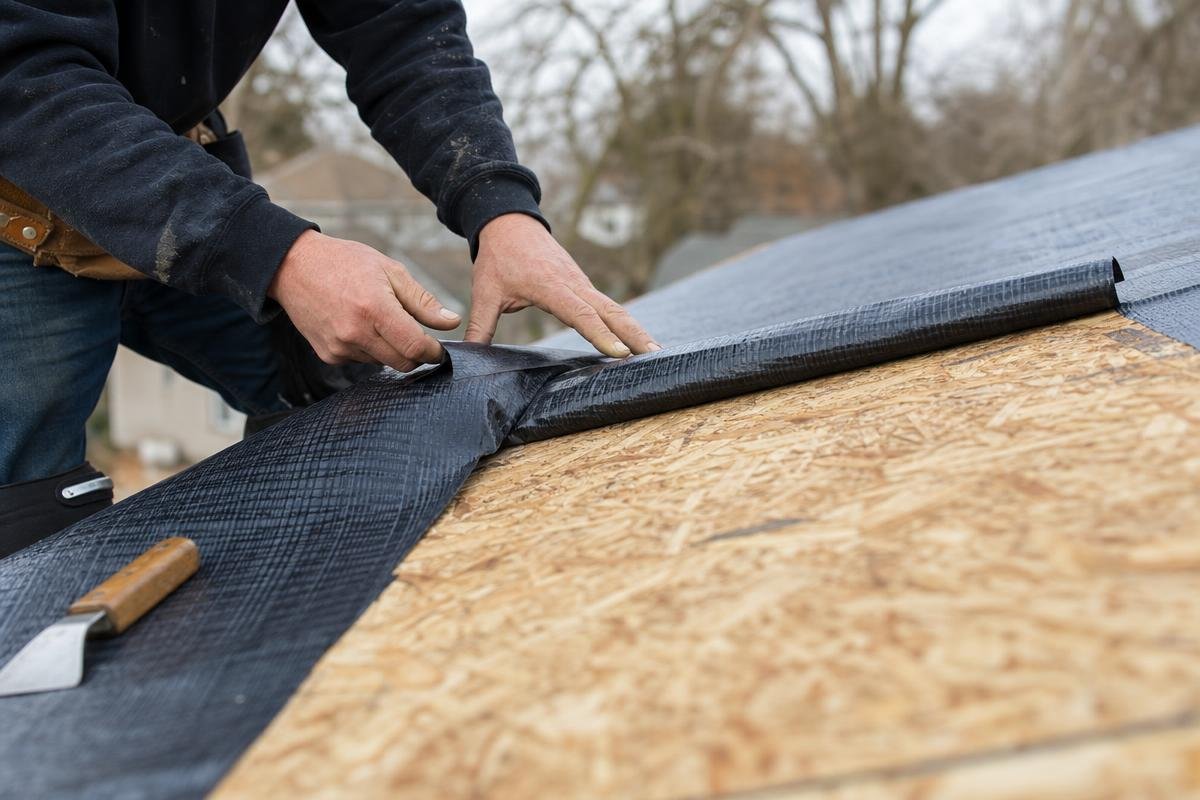
Ice and water shield is a self-adhering rubberized asphalt membrane installed directly on the roof deck before shingles go down. It seals around nail penetrations and blocks water from backing up under shingles when an ice dam forms.
Local code and the selected roof system determine whether ice-and-water protection is needed and how far it should extend. Ask the contractor to explain the installation details for your roof before work begins. If you are not sure what is under your shingles, ask us during your next inspection. It is a standard part of any shingle roofing service we do today.
4. Size and Maintain Your Gutters Properly
Gutters that are too small or clogged with debris trap meltwater at the eave. That water refreezes overnight and grows the ice dam from below. Gutter sizing should be based on roof area, pitch, drainage layout, and local rainfall conditions.
Gutters also need to be pitched correctly toward the downspouts so water drains before it has a chance to refreeze. Gutter guards help reduce debris buildup through fall. Our team handles gutter services including sizing, cleaning, and guard installation.
5. Seal Ceiling Air Gaps Before They Become a Problem
Recessed light fixtures, plumbing penetrations, attic hatches, and HVAC ducts are all common leak points. Warm air from your living space pushes through these gaps into the attic and heats the roof deck from below. That is exactly the condition that creates ice dams.
Sealing with caulk or spray foam is low-cost and high-impact. An attic inspection identifies the worst offenders fast. We have seen homes near Watters Crossing where air sealing alone cut heating bills noticeably, and the ice dam risk dropped with it.
Winter Roof Prep Checklist for Allen Homeowners
Freeze events in this area don't give you much warning. Temperatures can drop quickly, and if your roof is not ready, you are reacting instead of preventing. Homeowners who complete this checklist in October or early November are in a far better position when that first hard freeze arrives.
Before the First Freeze: What to Check
Work through this list while you can still safely access your attic and gutters. Print it out and check each item off.
- Measure attic insulation depth at the eaves. Insulation needs depend on the home's construction, existing insulation, and applicable energy-code guidance. Thin spots at the eaves can contribute to ice dam risk. Our attic insulation and ventilation service can identify gaps fast.
- Confirm soffit vents are clear of debris, insulation, and wasp nests. Blocked soffits kill airflow and raise deck temperatures.
- Clean gutters of fall leaves and seed pods. Clogged gutters trap meltwater and freeze solid.
- Verify downspouts extend at least 4 feet from the foundation.
- Inspect flashing at chimneys, skylights, and valleys for lifted edges or rust.
- Confirm a protective membrane was installed at the eaves during your last shingle roofing service. If you don't know, check your paperwork or call us.
- Look for dark staining on attic sheathing. That staining means prior moisture intrusion and a roof that's already vulnerable.
- Test your attic hatch weatherstripping and insulation cover. Warm air escaping through a bare hatch heats the deck directly above it.
Gutter maintenance is a key part of winter roof prep. Clean gutters move meltwater away from the eave before it can refreeze and back up under shingles.
During a Freeze Event: Safe Emergency Steps
If snow has accumulated on your roof, use a roof rake with a telescoping handle from ground level. Pull snow down and away from the eave. Never use a metal shovel. Never climb onto an icy roof.
If you want to create a drainage channel through an existing ice dam, lay calcium chloride ice melt in a nylon sock perpendicular to the eave. Do not use rock salt. Rock salt corrodes metal gutters, flashing, and downspouts, and it damages asphalt shingles.
These emergency steps buy time. They are not a substitute for the structural prevention work covered in the prior section. If you see active water coming through your ceiling during a freeze, stop and call for emergency roofing service immediately. That is not a situation to manage with a bucket.
Got questions about your roof before winter hits? Call us at (972) 954-7186 and we'll walk you through exactly what to look for.
How Allen's Winter Weather Pattern Creates Unique Ice Dam Risk
Allen's Freeze Pattern: Short, Intense, and Cyclical
Most people think ice dams are a Minnesota problem. They're not wrong that cold climates carry more risk, but our freeze pattern is actually more dangerous in one specific way: the rapid cycling. We sit at 33.1 degrees north latitude and experience intermittent days with lows below freezing. That sounds mild. But those freeze events don't ease in gradually. They spike hard and reverse fast, sometimes within the same 24-hour window.
That swing, snow melting on a warm roof deck, refreezing at the cold eave, then melting again, is exactly how ice dams grow. One intense freeze-thaw event can cause significant water damage within days. Homes that shed water fine on the first afternoon end up with a solid ridge of ice at the eave by the second morning.
How Your Roof Type Affects Ice Dam Vulnerability
Homes across Allen include a range of construction eras, roof pitches, and roofing materials. Steep enough to shed some snow, but not steep enough to prevent meltwater from slowing near the eave and refreezing.
Flatter roofs at 3:12 and below, common on commercial and mixed-use properties along US-75, carry higher risk because meltwater moves slowly and pools before it can drain. On the other end, metal roofing in Allen sheds snow and ice more readily than asphalt shingles. Lower surface friction and no granule texture mean meltwater moves off the deck faster. Tile and slate carry higher thermal mass, which can moderate temperature swings at the deck surface.
If your home came out of that construction wave and still has its original shingle roof, winter roof prep matters more than you might expect. A quick roof inspection service before the next hard freeze can tell you exactly where your vulnerability sits.
When to Call a Roofing Professional for Ice Dam Issues
Some ice dam problems you can spot yourself. Others are already causing damage inside your walls and attic before you notice anything on the surface. Catching that damage early is the difference between a repair bill and a full replacement.
Warning Signs of Ice Dam Formation or Damage
Older homes in established neighborhoods across Garland, Richardson, and Wylie are especially vulnerable. Many were built before current insulation and underlayment standards, so the warning signs show up faster and more severely. Call us if you see any of these:
- Water stains or wet spots on ceilings or upper walls near exterior walls
- Paint bubbling or peeling on interior walls adjacent to the roofline
- Large icicles or visible ice buildup along gutters and eaves
- Gutters that are sagging, pulling away, or detached from ice weight
- Shingles that appear lifted, buckled, or show concentrated granule loss at the eave
- A musty odor in the attic, which often means moisture has already reached the point of mold growth
Any of these signs warrants a roof and attic inspection. Do not wait until spring to find out how bad it got.
What a Professional Ice Dam Inspection Covers
A proper inspection goes well beyond looking at the roof surface. Our team checks attic thermal performance, measures insulation depth, and verifies ventilation airflow. We confirm whether a protective membrane is present at the eaves, inspect flashing integrity at all penetrations, and assess gutter condition and pitch. You can learn more about what we cover on our roof inspection service.
We focus on identifying long-term solutions rather than quick patches. Executive Vice President McDowell Pickle is directly reachable when customers have questions. If you need a roof repair team after an inspection reveals damage, we handle that too.
Frequently Asked Questions
Do Allen Homes Really Get Ice Dams?
Yes, and the February 2021 freeze proved it. Temperatures dropped to single digits for multiple consecutive days across the area, and homes with poor attic insulation or blocked ventilation took the hardest hits. Even shorter freeze events can cause problems because our weather tends to cycle hard between freezing and thawing within a single storm.
How Much Does Ice Dam Prevention Cost Compared to Repair?
Preventive maintenance can help reduce the risk of more extensive repairs. Adding attic insulation and sealing air gaps typically costs a fraction of what you pay after a leak reaches your drywall, framing, and insulation. If moisture sits undetected, you add mold remediation to the bill. That turns a manageable upgrade into a serious repair project.
What R-Value Does My Attic Need in Allen, TX?
Attic insulation needs vary with the home's construction, existing insulation, and applicable energy-code guidance. An attic insulation and ventilation service can measure your current R-value and recommend an appropriate upgrade.
When Is Ice and Water Protection Needed for an Allen Roof?
Local building-code requirements and the selected roof system determine whether ice-and-water protection is needed and how far it should extend. Ask a qualified roofing professional to explain the requirements that apply to your roof before work begins.
Should I Use Rock Salt or Calcium Chloride on My Roof?
Skip the rock salt. It corrodes metal gutters, flashing, and downspouts, and it can stain and degrade asphalt shingles. Calcium chloride ice melt in mesh tubes or socks, laid perpendicular to the eave, is the safer choice. It creates drainage channels through an active ice dam without damaging your roofing materials.
Does Homeowners Insurance Cover Ice Dam Damage?
It depends on your policy. Most standard policies cover sudden and accidental water damage but may exclude damage tied to lack of maintenance or gradual deterioration. Document everything with photos immediately. A written damage assessment from a qualified roofing professional can help document the condition and gives your insurance agent something concrete to work with. You can also request a roof inspection service to get that documentation in hand fast.
If you are not sure whether your attic insulation, ventilation, or underlayment can handle the next hard freeze, call our team at (972) 954-7186 or schedule an inspection online. We are based at 1333 W McDermott Dr Ste 200, Allen, TX 75013 and serve homeowners across Frisco, Prosper, Fairview, Murphy, Wylie, Richardson, Garland, Carrollton, and Dallas. Catching a vulnerability now costs far less than repairing water damage after a storm. We will give you a straight answer about what your roof needs and what it does not.
Ready to Get Started with Pickle Roofing Solutions?
Call (972) 954-7186 to speak with our team directly. We're ready to answer your questions, walk you through your options, and help you find the right solution for your needs. Whether you're just starting to plan or ready to move forward, we'll make the process simple and stress-free. Reach out today and let's talk about how we can help.