After a hail storm rolls through Allen, roofing scams follow fast. Out-of-state storm chasers arrive within a day or two, targeting subdivisions like Twin Creeks, Stacy Ridge, and Bethany Ridge while the damage is fresh and homeowners are stressed. At Pickle Roofing Solutions, we have replaced hundreds of roofs across Collin County since 2012 as a GAF Master Elite certified contractor, and we see the same scam patterns repeat every spring storm season.
This guide covers the five most common roofing scams targeting Allen homeowners right now, so you can spot them before they cost you thousands. Think you've already been approached by a storm chaser? Talk to a permanent, local Allen roofer before you sign anything.
Key Takeaways
Roofing scams spike in Allen after hail events, especially during the March through June storm season in Collin County.
Storm chasers often travel from out of state and disappear before warranty work is ever completed.
Never sign a contract or assignment of benefits form before speaking with your insurance claims adjuster.
A legitimate local contractor will have a verifiable office address, a Texas license, and proof of insurance before work begins.
Low bids that seem too good to be true usually include hidden material upgrades or change orders added mid-job.
Roofing fraud causes real harm. We are talking about substandard repairs that fail within a year, manufacturer warranties voided because an uncertified crew installed the materials, insurance claims denied because paperwork was filed incorrectly, and deposits paid to contractors who simply disappear. The financial damage can reach tens of thousands of dollars.
We have watched these patterns repeat after every major storm season since 2012. Below you will find five specific roofing scams that target homeowners in this part of North Texas, the warning signs for each one, and the concrete steps you can take to protect yourself before signing a contract.
If you want to understand your rights before a contractor shows up, our breakdown of Texas roofing laws homeowners should know is a good place to start. Let's dive into what you need to watch for.
What Roofing Scams Are and Why Allen, TX Attracts Them
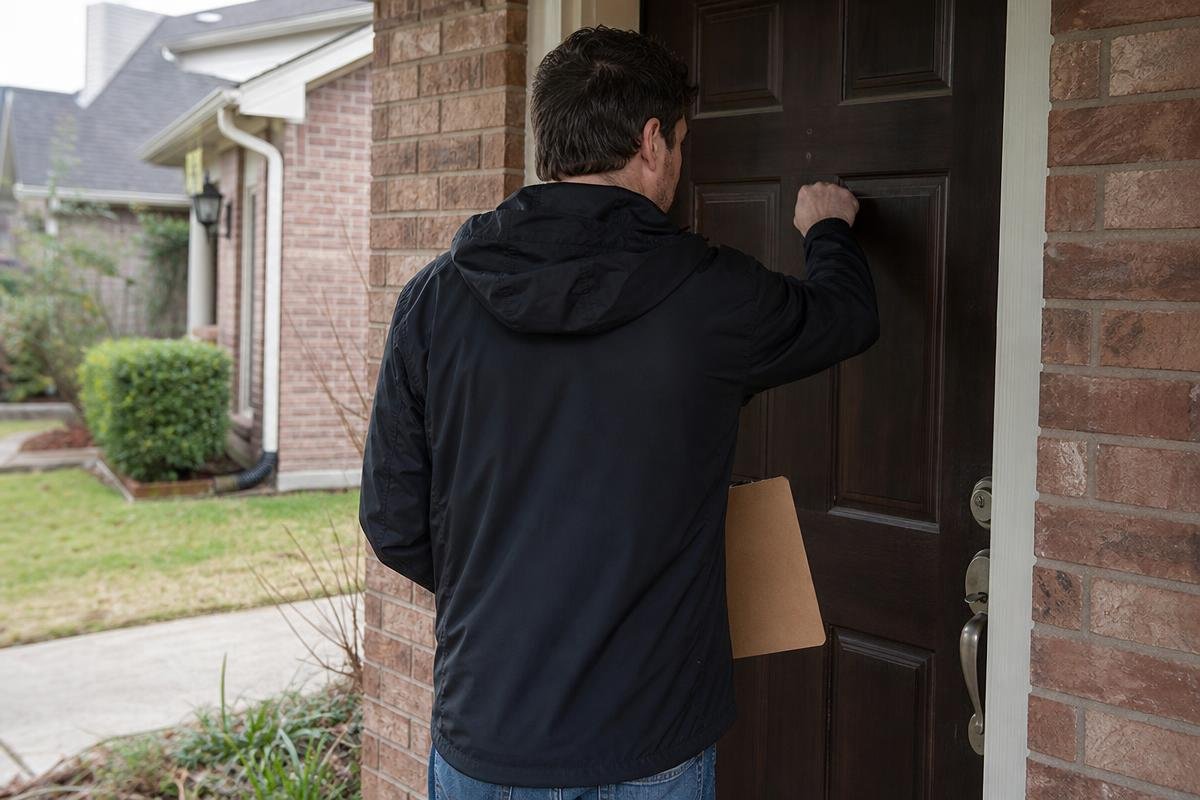
Roofing scams are fraudulent schemes where contractors collect payment for work that is never completed, done poorly, or priced far above what the job actually costs. They happen everywhere, but North Texas neighborhoods get hit especially hard after major hail events. Understanding why this area draws so many bad actors is the first step toward protecting yourself.
Collin County is one of the fastest-growing counties in the country. That means a large share of homeowners in neighborhoods near Watters Creek and Exchange Parkway are new to the area and unfamiliar with North Texas storm patterns. That unfamiliarity is exactly what fraudulent contractors count on.
Why North Texas Hail Events Create the Perfect Conditions for Fraud
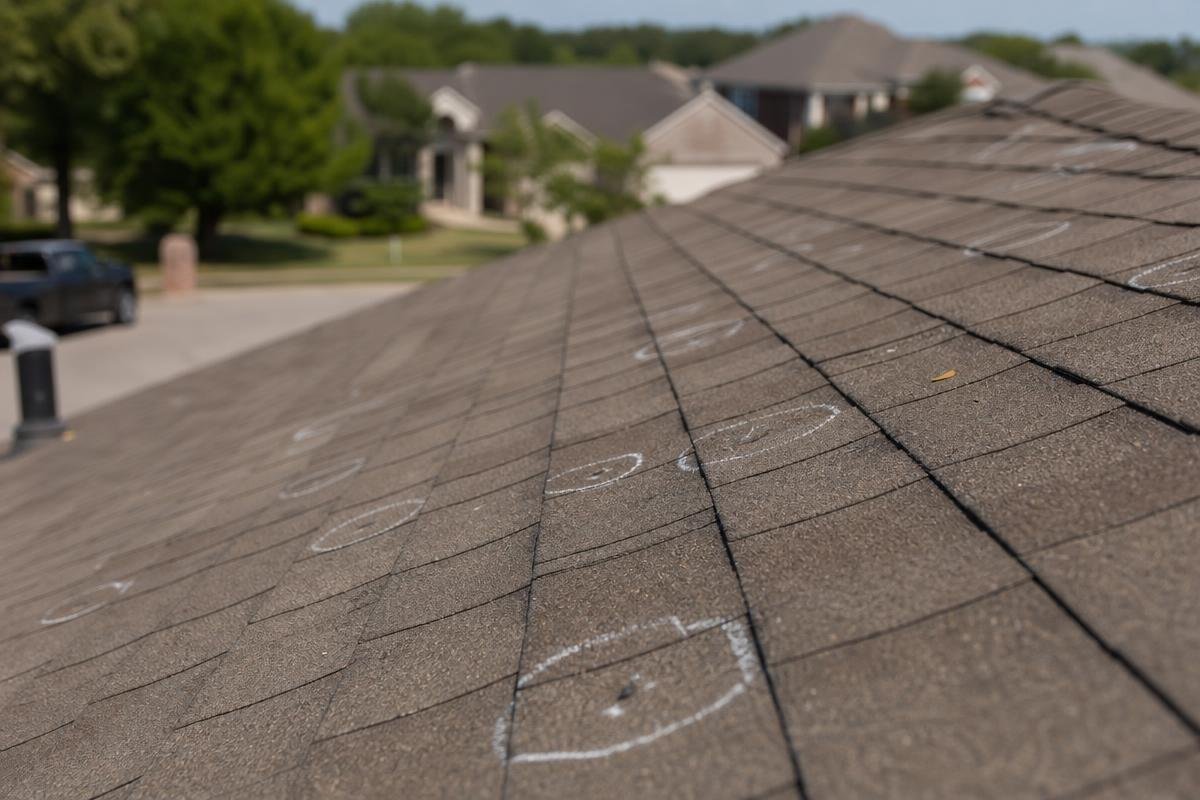
Our area sits in the heart of Tornado Alley, one of the highest hail-frequency regions in the United States. Spring storm season, roughly March through June, brings concentrated hail activity across Collin County. A single storm can affect Plano, McKinney, and Frisco all at once, creating a sudden surge in homeowners looking for hail damage roof repair at the same time.
That demand spike is the problem. Hail causes cracked shingles, dented metal flashing, and bruised underlayment, damage that is genuinely hard for an untrained eye to assess. Fraudulent operators know this. They show up fast, point to damage that may or may not require a full replacement, and push you to commit before you have time to think. Knowing what Texas roofing laws require from contractors puts you in a much stronger position.
The Difference Between a Storm Chaser and a Local Roofing Contractor
A storm chaser is an out-of-town contractor who follows severe weather events, sets up a temporary local presence, collects payment or completes substandard work, then moves on to the next affected city. They travel the US-75 and SH-121 corridors between affected communities, moving through Fairview, Lucas, and Murphy in a matter of days. They have no long-term stake in the quality of their work here.
A legitimate local contractor has a permanent, verifiable office address, proper Texas licensing and insurance, manufacturer certifications, and a documented history of completed work in the community. When you need to call someone back six months later about a leak, a local contractor is still there. A storm chaser is not.
The 5 Most Common Roofing Scams Targeting Allen Homeowners After Storms
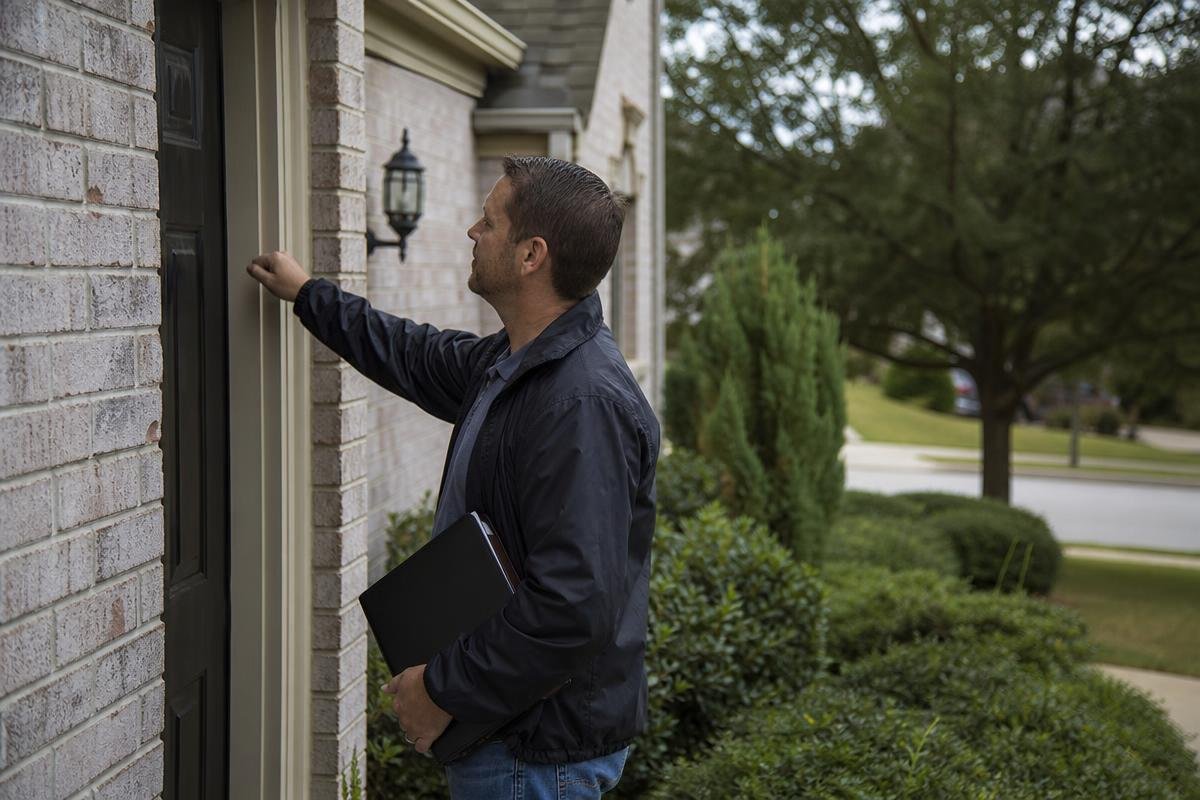
Storm chasers move fast. After a single hail event, crews fan out across Allen subdivisions and adjacent towns within hours. Knowing exactly how each scam works is the best way to shut it down before any paperwork gets signed.
Scam 1. The Aggressive Door-to-Door Pitch
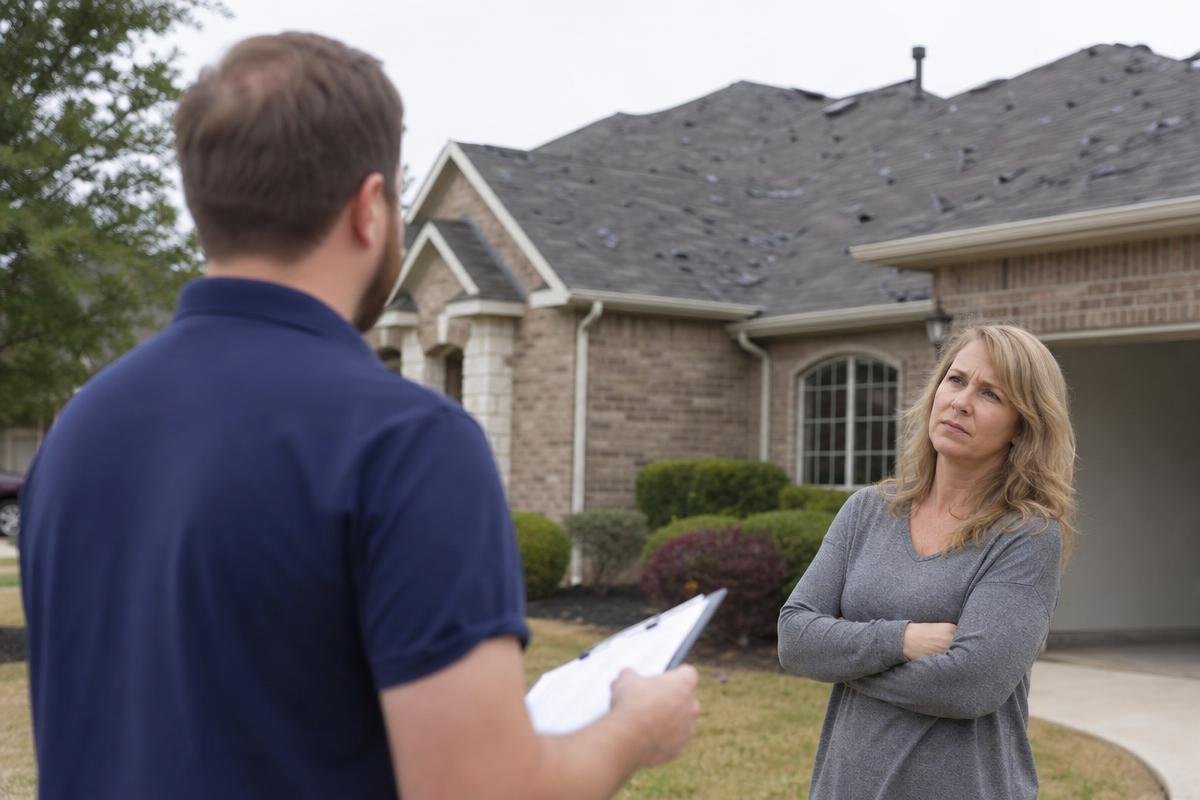
A stranger knocks and says, "I was just finishing up at your neighbor's house and noticed your roof took some hits." That line is scripted. Door-to-door roofing scams after hail rely on urgency and social proof to get you to commit before you think.
Warning signs to watch for:
No local office address they can verify on the spot
Pressure to sign a contract or authorization form before an adjuster visits
Refusal to provide a written estimate
Ask for proof of both general liability and workers' compensation insurance, and ask whether they will pull the required permit through the City of Allen Building Inspections department. Legitimate reroofs in Allen are permitted, and a real local contractor knows this and handles it. If they hesitate or claim the work does not need a permit, close the door.
Scam 2. The Lowball Bid That Disappears After the Deposit
A bid more than 20% below competing estimates is a red flag, not a deal. The contractor collects a large upfront cash deposit, then either vanishes or returns with a list of "unexpected" costs that push the final price well above the original quote.
Protect yourself with three steps:
Get two to three written estimates before committing
Pay no more than 10 to 15 percent upfront
Require a written contract that names the specific manufacturer and product line being installed
No written contract means no accountability. Already signed something or handed over a deposit? Call us before work starts. We will review your contract at no cost and give you an honest second opinion from a licensed Allen roofer.
Scam 3. The Insurance Assignment of Benefits Trap
An Assignment of Benefits, or AOB, is a document that transfers your insurance claim rights directly to the contractor. Once signed, the contractor negotiates with your insurer without your involvement and can inflate the claim far beyond actual damage. You lose control of your own claim.
Watch for these warning signs:
Being asked to sign anything before your adjuster has inspected the roof
Documents containing the phrases "assignment of benefits" or "direction to pay"
A contractor who discourages you from contacting your insurer directly
State law governs how AOB agreements work here, and our overview of Texas roofing laws homeowners should know explains what to look for. Read it before you agree to transfer your claim rights to anyone.
Scam 4. Inflated or Fabricated Damage Claims
Some roofing contractor scams after hail involve exaggerating damage to maximize your insurance payout. The contractor pockets the difference between what the insurer pays and what the actual repair costs. Here is the problem: you can be held liable for insurance fraud even if you did not initiate it.
One rule prevents most of this exposure. Be present during both the contractor's inspection and the insurance adjuster's inspection. Do not let either party inspect the roof without you there. Getting a professional roof inspection from a GAF Master Elite certified contractor before the adjuster arrives gives you an independent, written baseline you can stand behind.
Scam 5. Substandard Materials Billed at Premium Prices
A contractor quotes you a GAF Timberline HDZ or another premium shingle by name, then installs a lower-grade product once work begins. You would never know by looking at the finished roof from the street.
Here is how to protect yourself:
Ask for the specific product name and manufacturer data sheet before signing
Verify the contractor holds manufacturer certification, such as GAF Master Elite status, which means GAF independently audits installation quality
Request the material delivery receipt on the day installation begins so you can confirm what was actually delivered to your property
Insurance claim roofing fraud through material substitution is more common than most homeowners realize. The contract language and the delivery receipt together are your best protection.
How to Verify a Roofing Contractor Is Legitimate Before You Sign
A contractor knocking on your door after a hail event is not automatically a scammer. But some are. Knowing how to tell the difference protects your home and your insurance claim. These steps work whether you are dealing with someone from Fairview, Lucas, or a crew you have never heard of.
The Checklist Every Allen Homeowner Should Use
Run through this list before you agree to anything. A legitimate contractor will have no problem answering every question.
Confirm a permanent local office address. Ask for a physical street address, not a P.O. box. Our office at 1333 W McDermott Dr, Suite 200 is a verifiable, permanent location. A contractor operating out of a truck with no fixed address is a warning sign.
Verify contractor registration and insurance. Ask for a certificate of general liability and workers' compensation coverage. Then call the insurer directly to confirm the policy is currently active. Do not skip the phone call.
Check BBB accreditation. Go to bbb.org and search the company name. Look for an A or A+ rating and read the complaint history. Our team holds a BBB A+ rating.
Read Google reviews for patterns. Look for reviews that describe completed work, not just estimates or first impressions. Our team carries a 4.8-star rating across 378 reviews.
Ask for local references. Request contacts from recent jobs in Murphy, Fairview, or Plano. Call them. Also confirm manufacturer certification directly at gaf.com if the contractor claims to be GAF-certified. You can verify our GAF Master Elite certification there yourself.
Understanding your rights as a homeowner also helps. The roofing laws that apply to homeowners and builders in North Texas give you real legal footing when a contractor pushes back on these questions.
How to Read a Roofing Contract Before Signing
A legitimate roofing contract is specific. Vague language protects the contractor, not you. Before you sign, confirm the contract includes all of the following:
The contractor's full legal business name and license number
Specific materials listed by manufacturer and product name, not just "shingles" or "underlayment"
Total price with a clear payment schedule
Project start date and estimated completion timeline
Warranty terms for both materials and labor, stated separately
A defined process for handling change orders
Any blank fields, vague material descriptions, or assignment of benefits (AOB) clauses are red flags. An AOB clause transfers your insurance claim rights to the contractor. Never agree to one. Take 24 to 48 hours to review any contract before committing, regardless of how urgent the contractor says the situation is. Pressure to commit same-day is itself a warning sign of roofing scams.
What to Do If You Have Already Been Scammed
Finding out you have been targeted by insurance claim roofing fraud is stressful. You are not alone, and there are concrete steps you can take right now. Acting quickly gives you the best chance of recovering your money and protecting your home.
Immediate Steps to Take After Roofing Fraud
Stop all payments immediately. Do not send another dollar to the contractor, regardless of what they tell you. Then gather every piece of documentation you have: photographs of your roof, signed contracts, receipts, text messages, and any written estimates.
Call your homeowner's insurance carrier right away. Ask specifically whether your policy covers contractor fraud or incomplete work. Many policies include provisions that homeowners overlook in these situations.
If you paid by credit card, contact your card issuer and open a dispute. Credit card disputes for services not rendered are a legitimate consumer protection tool. This is one of the strongest recovery options available to you, which is exactly why reputable contractors never pressure you to pay in cash.
Get a professional roof inspection in Allen, TX from a licensed local contractor. A written inspection report documents the actual condition of your roof and gives you solid evidence for insurance disputes, credit card chargebacks, or legal proceedings.
Where to Report Roofing Contractor Scams After Hail
Report to the right agencies. Each one handles a different piece of the problem:
Texas Department of Insurance (tdi.texas.gov): for assignment of benefits fraud and contractor misrepresentation
Texas Attorney General's Office (texasattorneygeneral.gov): for consumer protection complaints
Better Business Bureau (bbb.org): for contractor complaints that warn other homeowners
National Insurance Crime Bureau (nicb.org): for suspected insurance fraud
Local law enforcement: if a contractor took your deposit and disappeared, that may constitute criminal theft under state law
Storm chasers moving between Allen, Lucas, and Murphy after hail events often count on homeowners not knowing where to report them. Filing a report changes that. Already dealing with a bad contractor situation? Our team provides written inspection reports that can support your dispute. Call us at (972) 954-7186 and we will help you document what actually happened to your roof.
Why Allen Homeowners Trust Our Team After Storm Events
Storm chaser roofing contractors show up fast and disappear just as quickly. That is the core problem. When a warranty issue surfaces eight months after your repair, you need a contractor with a real office and a real phone number, not a temporary operation that moves on to the next storm market. We have operated out of 1333 W McDermott Dr, Suite 200 since 2012, founded by Randy Pickle. That permanent address is verifiable. We were here before the storm, and we will be here after.
Our credentials are independently verified, not self-reported. We hold GAF Master Elite Certification, a status earned by fewer than 2% of roofing contractors nationwide. We also carry a 3-Star GAF President's Club Award and a BBB A+ rating. These are third-party checks, not marketing claims. When you are trying to figure out how to avoid roofing scams, verified credentials like these are one of the clearest signals that a contractor is operating legitimately.
Homeowners in the Twin Creeks, Stacy Ridge, and Watters Creek corridors consistently tell us the same thing. They felt guided through an unfamiliar process rather than pressured into a quick decision. That matters after a storm, when you are stressed and a door-to-door contractor is standing on your porch asking you to sign something today. You deserve a second opinion from someone with no stake in rushing you.
If a contractor has already knocked on your door and you are unsure whether the offer is legitimate, the right move is a professional roof inspection in Allen, TX from an independent team before you commit to anything.
Allen, TX Storm Season and the Local Roofing Fraud Pattern
Our spring storm season runs from late March through early June, and that window brings the highest concentration of severe hail events to this part of the DFW metro. Neighborhoods near Watters Creek and along Exchange Parkway take a beating most years, and subdivisions like Bethany Ridge see repeat claims. A second, smaller wave of storm activity hits in late summer and early fall.
Storm chaser roofing contractors monitor National Weather Service data and hail tracking tools in real time. Within 24 to 48 hours of a significant event, out-of-state crews arrive in the 75002 and 75013 zip codes and start knocking on doors. The US-75 and SH-121 corridors make this area easy to reach and easy to leave. A crew can collect deposits in one neighborhood, load up, and be in Garland or Murphy by the following week.
Here is something most homeowners do not know. Most property insurance policies in our state allow one to two years from the date of a storm event to file a damage claim. The urgency door-to-door roofing scams create is manufactured. You have time to check credentials, get multiple written estimates, and make an informed choice.
A contractor who cannot give you a permanent, verifiable local office address is almost certainly not a local business. Our team works out of a fixed office at 1333 W McDermott Dr, Suite 200. That address does not change after the next storm moves through. For a full picture of your rights after a storm event, review the Texas roofing laws that apply to homeowners before agreeing to any work.
Frequently Asked Questions
Do I legally have to let a contractor inspect my roof if they knock on my door?
No. You are never required to allow access to your property. Door-to-door solicitation is not automatically illegal in the DFW area, but the Texas Business and Commerce Code gives you a three-day right of rescission on any contract signed at your home. That means even if you sign something at the door, you have three business days to cancel in writing with no penalty.
Any contractor who refuses to acknowledge that right, or pressures you to waive it, is a serious red flag. For a full breakdown of your rights, see our guide to the Texas roofing laws that protect homeowners.
Can I be held responsible for fraud my contractor commits without telling me?
Yes, and this surprises a lot of homeowners. If you sign off on inflated damage documentation without personally verifying it, your insurer can treat that as fraud on your part, even if the contractor initiated it. Always be present during the adjuster's inspection. Never sign a claim supplement you have not reviewed line by line.
What does GAF Master Elite actually mean for my warranty coverage?
GAF Master Elite is earned by fewer than 2% of roofing contractors in the country. It requires meeting GAF's standards for licensing, insurance, ongoing training, and installation quality. Homeowners who hire a GAF Master Elite contractor qualify for enhanced coverage, including the GAF Weather Stopper System Plus warranty, which covers both materials and labor. Our team holds that certification. You can review the details on our GAF Master Elite certification page.
How much of a deposit is normal before work starts?
A reasonable deposit runs 10 to 15 percent of the total contract value. Anything above that, especially 50 percent or more before a single shingle is installed, is a warning sign. If a contractor cites material costs as the reason for a large upfront payment, ask for itemized proof. If you need help covering costs, check out available roofing financing options for Allen homeowners before committing to any contractor's payment terms.
How long do I have to file a storm damage claim in Texas?
Most homeowner's insurance policies in this state allow one to two years from the storm event date to file a claim. You do not need to rush into a contract with the first contractor who shows up after a hail event. Take time to verify credentials, get multiple written estimates, and speak with your adjuster first.
If a contractor knocked on your door after a recent storm and you are not sure whether the offer is legitimate, do not commit to anything yet. Call us at (972) 954-7186 or visit our office at 1333 W McDermott Dr, Suite 200 to schedule an independent inspection. We will give you an honest, written assessment of what your roof actually needs, with no pressure and no obligation. That report is yours to keep, whether you hire us or not.
Ready to Get Started with Pickle Roofing Solutions?
Call (972) 954-7186 to speak with our team directly. We're ready to answer your questions, walk you through your options, and help you find the right solution for your needs. Whether you're just starting to plan or ready to move forward, we'll make the process simple and stress-free.
Reach out today and let's talk about how we can help.