Texas homeowners face some of the most severe weather in the country. From baseball-sized hail in the Dallas-Fort Worth metroplex to hurricane-force winds along the Gulf Coast, roofs across the state endure punishing conditions that standard building codes were never designed to address. A fortified roof offers a solution, providing construction methods and materials that exceed minimum requirements and deliver measurable protection against storms.
The FORTIFIED program, developed by the Insurance Institute for Business and Home Safety after decades of research and real-world testing, has become the national benchmark for resilient construction. With more than 100,000 families having chosen the FORTIFIED program, this voluntary certification represents a widely adopted approach to reducing storm damage. For Texas homeowners considering a roof replacement, understanding what a fortified roof offers could mean the difference between surviving the next major storm with minimal damage or facing extensive repairs and insurance headaches.
What Is a FORTIFIED Roof?
A fortified roof is a roofing system built or retrofitted to meet construction standards established by the Insurance Institute for Business and Home Safety. These standards go beyond typical building codes to address the specific vulnerabilities that cause most storm-related roof failures. Where standard codes set minimum acceptable performance thresholds, FORTIFIED standards specify materials, installation methods, and quality controls that have been proven through laboratory testing and post-storm field research to significantly reduce damage.
The program emerged from IBHS research conducted over more than 20 years at their facility in South Carolina, the only research center in the world capable of subjecting full-scale buildings to hurricane-force winds, rain, and hail simultaneously. By studying how roofs fail during actual storms and then testing solutions under controlled conditions, IBHS identified common weak points in conventional construction and developed specific upgrades to address each one.
FORTIFIED standards are not a single product or material but rather a comprehensive system approach. The program can be applied to virtually any roof type, including asphalt shingle roofing, metal roofing, tile, and low-slope commercial systems. What matters is how components are selected, installed, and documented to create an integrated defense against wind, rain, and impact.
The Three Levels of FORTIFIED Designation
IBHS offers three progressive levels of FORTIFIED certification, each building upon the previous level to provide increasing protection. Understanding these tiers helps homeowners determine which level of investment makes sense for their situation and risk exposure.
FORTIFIED Roof
The foundational tier focuses exclusively on the roof system, which IBHS research identifies as the most critical component in preventing storm damage. FORTIFIED Roof requirements include a sealed roof deck that prevents water intrusion even if shingles or other covering materials are blown off, enhanced edge protection to resist wind uplift at the most vulnerable perimeter areas, improved deck attachment using ring-shank nails in specific patterns, and roof covering materials rated for high wind performance. This level addresses the reality that 70 to 90 percent of storm-related insurance claims involve roof damage.
FORTIFIED Silver
The second tier includes all FORTIFIED Roof requirements plus additional protections for building openings. Silver designation requires impact-resistant windows and doors or approved protection systems, pressure-rated garage doors, and reinforced gable end walls on homes with gable roof designs. These upgrades address the cascade effect where a single breach allows wind and rain to enter, causing catastrophic interior damage and potentially structural failure from internal pressure buildup.
FORTIFIED Gold
The highest tier adds all Silver requirements plus a continuous load path connecting the roof to the walls, the walls to the floors, and the floors to the foundation. This structural integration helps the entire building resist uplift forces during the most severe wind events. Gold designation is most relevant for homes in hurricane-prone coastal areas or tornado-exposed regions where extreme wind loads can lift entire roof assemblies.
FORTIFIED Designation Levels Compared
| Level | Key Requirements | Protection Focus |
|---|---|---|
| FORTIFIED Roof | Sealed roof deck, enhanced edge protection, improved deck attachment, high-wind rated covering | Prevents roof covering loss and water intrusion during high winds and rain |
| FORTIFIED Silver | All Roof requirements plus impact-resistant openings, pressure-rated garage doors, gable end bracing | Prevents windborne debris damage and internal pressure failure |
| FORTIFIED Gold | All Silver requirements plus continuous load path from roof to foundation | Resists structural uplift during hurricane-force winds and tornadoes |
Key Components of a FORTIFIED Roof System
Every FORTIFIED roof designation requires specific upgrades in four critical areas. These requirements work together as a system, and each addresses a documented failure mode observed in post-storm damage assessments.
Sealed Roof Deck
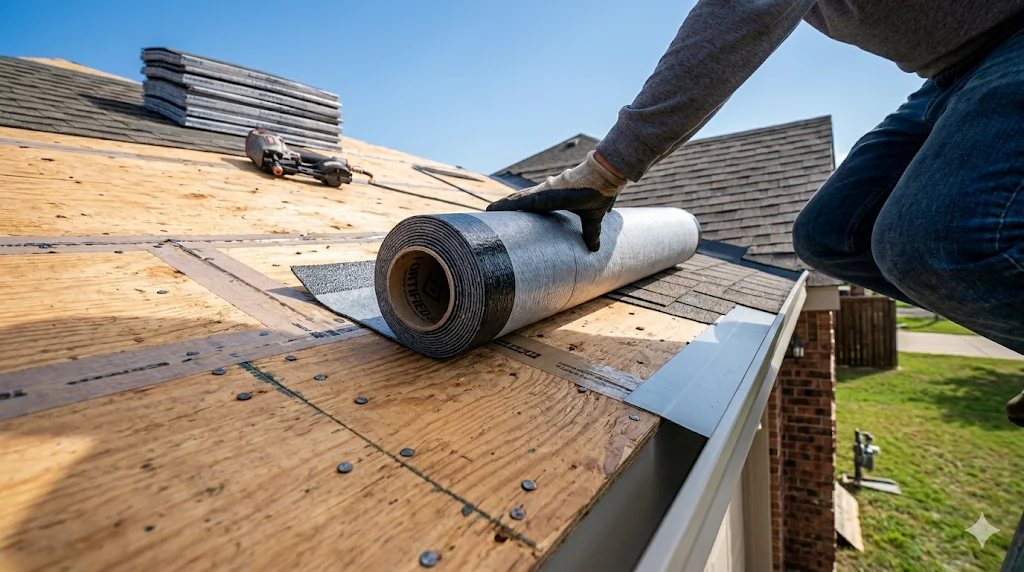
The roof deck, typically plywood or oriented strand board sheathing, must be sealed to prevent water intrusion if the roof covering is damaged or blown off. Approved sealing methods include self-adhering membrane underlayment, taped seams with compatible underlayment, or two layers of felt underlayment installed in specific configurations. This secondary water barrier provides critical protection during the vulnerable period between storm damage and permanent repairs.
Enhanced Edge Protection
Roof edges are the most vulnerable points during wind events because uplift forces concentrate at these locations. FORTIFIED requires wider drip edge profiles, fully adhered starter strips, and specific installation details that prevent wind from getting underneath the roof covering and progressively peeling it away. These edge treatments address a failure pattern responsible for billions of dollars in storm damage annually.
Improved Deck Attachment
The 2025 FORTIFIED standards require all roof decks to meet tighter nailing patterns regardless of location. Ring-shank nails provide significantly greater withdrawal resistance than smooth-shank fasteners, and the specified nailing schedules ensure adequate connection strength across the entire roof surface. Proper deck attachment prevents sheathing loss during high winds, which can lead to catastrophic structural failure.
Impact-Resistant Materials
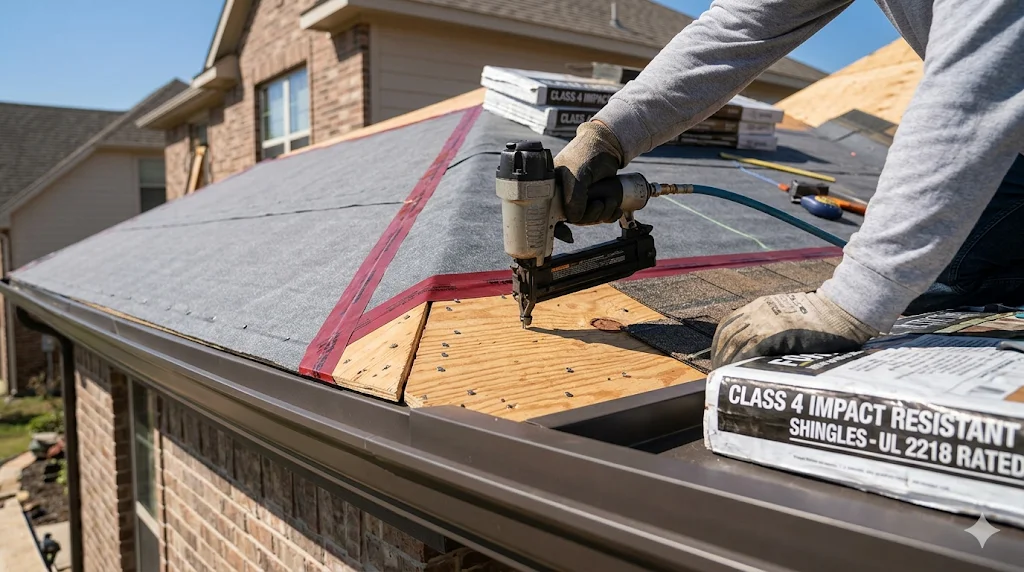
For areas prone to hail, FORTIFIED offers an optional Hail Supplement that requires roof covering materials tested and rated for impact resistance. Asphalt shingles must achieve Good or Excellent ratings on the IBHS Impact-Resistant Shingle Performance Ratings, which test against realistic hailstones rather than the steel balls used in standard UL 2218 testing. Metal, tile, and low-slope systems must meet UL 2218 Class 4 requirements. These materials can protect homes from hail up to two inches in diameter.
Why Texas Homeowners Should Consider FORTIFIED
Texas presents a unique combination of severe weather threats that makes FORTIFIED construction particularly relevant. The state leads the nation in hail-related insurance claims, with over 1,100 major hail events recorded in 2023 alone. North Texas, including the Dallas-Fort Worth metroplex, experiences more frequent hail than almost any other metropolitan area in the country.
Beyond hail, Texas homeowners face severe thunderstorms capable of producing straight-line winds exceeding 80 miles per hour, tornadoes ranging from EF-0 through EF-5 intensity, and for coastal residents, hurricane threats from June through November. Each of these hazards can exploit the weak points that FORTIFIED standards specifically address.
The financial stakes are substantial. Texas averages more than $2,200 in hail-related property damage per 100 residents annually. A peer-reviewed 2025 study by the University of Alabama found that FORTIFIED Roof homes had 73 percent fewer insurance claims and 72 percent lower total losses than standard construction homes after Hurricane Sally. The researchers estimated insurers would have saved over $105 million if all affected homes had met FORTIFIED standards.
Insurance Benefits and Cost Savings
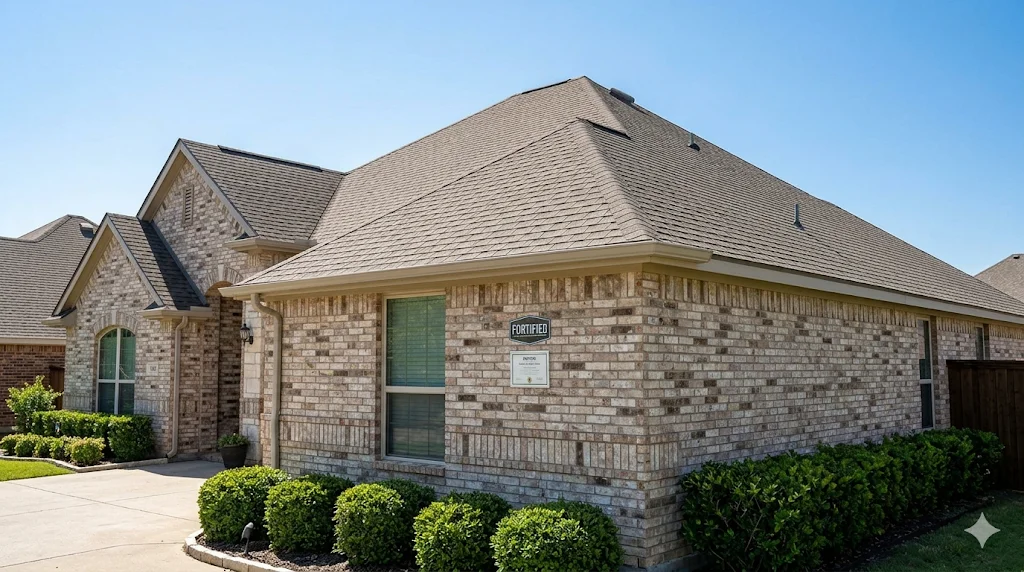
Insurance companies recognize that FORTIFIED homes present lower risk, and many offer premium discounts that can offset or exceed the additional construction costs over time. Insurance discounts may be available for qualifying FORTIFIED-designated homes, but availability and savings vary by insurer, policy, location, and eligibility.
The Texas Windstorm Insurance Association offers credits for homes meeting FORTIFIED standards, and major carriers including State Farm provide premium reductions for qualifying impact-resistant roofing and FORTIFIED designations. Whether insurance savings offset added construction costs depends on the policy, eligibility, project scope, and the homeowner’s specific circumstances. Homeowners should contact their insurance provider to determine specific discounts available for their policy and location.
Beyond insurance savings, FORTIFIED homes demonstrate increased resale value. A FORTIFIED designation may be a consideration for buyers, but any effect on resale value depends on the property and local market. In storm-prone markets, this advantage becomes increasingly relevant as buyers factor resilience into their purchase decisions.
How Much Does a FORTIFIED Roof Cost?
FORTIFIED construction costs vary based on home size, materials, project scope, local labor, and the requirements needed for designation. IBHS estimates the additional cost ranges from $1,000 to $3,000 for a typical 2,000-square-foot home. This increment covers upgraded materials, more detailed installation procedures, and the documentation required for certification.
Several factors influence the actual cost premium for any specific project. Roof complexity affects labor requirements, as homes with multiple penetrations, valleys, and intersecting roof planes require more time to properly seal and protect. Material choices matter because some roof covering products already meet FORTIFIED requirements while others require upgrades. Geographic location influences both material availability and whether the home falls under hurricane, high wind, or high wind and hail standards.
Texas homeowners may also qualify for grant assistance. Grant programs, eligibility requirements, and available funding can change, so homeowners should confirm current options directly with the program administrator. These programs, when available, can significantly reduce out-of-pocket expenses and accelerate the return on investment from insurance savings.
The FORTIFIED Certification Process
Obtaining a FORTIFIED designation requires more than simply using the right materials. The program includes a verification system that ensures construction actually meets the documented standards. This process involves coordination between homeowners, contractors, and certified evaluators.
Any licensed roofing contractor can install a roof to FORTIFIED specifications, though working with a contractor who has completed FORTIFIED training provides advantages in understanding requirements and documentation procedures. FORTIFIED-trained contractors have demonstrated knowledge of specific installation methods and the photographic evidence required throughout the construction process.
A certified FORTIFIED Evaluator, independent from the contractor, must verify that the work meets program standards. The evaluator reviews documentation, conducts inspections at critical stages before elements are concealed, and submits findings to IBHS for final review. If everything meets requirements, IBHS issues a FORTIFIED designation certificate with a unique identification number.
FORTIFIED designations remain valid for five years. At the end of each term, homes can be re-designated through an inspection process that verifies the roof covering and any substantive changes still meet program requirements. Maintaining an active designation is typically required to continue receiving insurance discounts. A roof inspection before the designation expires can identify any issues that need to be addressed for renewal.
Protect Your Texas Home with a Stronger Roof Now!
If you are considering a roof replacement or want to learn whether your home could benefit from FORTIFIED construction, contact Pickle Roofing Solutions for a consultation. Our experienced team will assess your property, explain your options, and provide a detailed estimate for upgrading to a storm-resistant roofing system. Call (972) 954-7186 or visit our contact page to schedule your free evaluation and take the first step toward a roof built to withstand whatever Texas weather delivers.
Frequently Asked Questions
Can any roof type be FORTIFIED?
Yes. FORTIFIED standards can be applied to asphalt shingles, metal panels, clay and concrete tiles, and low-slope commercial systems. Each roof type must meet specific testing and installation requirements appropriate to the material, but the core principles of sealed decks, enhanced edges, and proper attachment apply across all covering types.
Is FORTIFIED required by code in Texas?
FORTIFIED is a voluntary program that exceeds building code requirements. Texas building codes establish minimum standards, while FORTIFIED represents an enhanced level of construction proven to reduce storm damage. Homeowners choose FORTIFIED for the protection and potential insurance benefits, not because regulations require it.
How do I verify if my existing roof is FORTIFIED?
FORTIFIED roofs receive official designation certificates from IBHS with unique identification numbers. If you purchased a home with a FORTIFIED roof, request a copy of the certificate from the previous owner. If you cannot locate your certificate, you can contact IBHS directly to request verification or a duplicate. The IBHS website also provides a warranty lookup tool to confirm designation status.
Do I need a FORTIFIED contractor to install a FORTIFIED roof?
Any licensed contractor can build to FORTIFIED standards, but FORTIFIED-trained contractors have completed coursework on proper materials, installation techniques, and documentation requirements. Working with a trained contractor typically streamlines the certification process and reduces the risk of errors that could delay or prevent designation.
What happens if my FORTIFIED designation expires?
Designations can be renewed through a re-designation inspection before or after expiration. If your designation lapses, you may lose eligibility for insurance discounts until it is renewed. The re-designation process focuses on verifying that the roof covering remains in good condition and that no changes have compromised the FORTIFIED system.
Is FORTIFIED worth the extra cost?
Whether FORTIFIED construction is worthwhile depends on the home, local risk, project costs, insurance options, and the homeowner’s priorities. The upfront cost premium is typically recovered within several years through insurance discounts, and the protection benefits last throughout the roof's service life. Homeowners in particularly storm-prone areas or those with elevated insurance costs often see the fastest return on investment.
About Pickle Roofing Solutions
Pickle Roofing Solutions is a GAF Master Elite certified roofing contractor in Allen serving homeowners in Allen and throughout the Dallas-Fort Worth metroplex. Our team specializes in storm-resistant roofing systems designed for North Texas conditions, including installation methods that meet or exceed FORTIFIED standards. We combine manufacturer certifications, extensive regional experience, and a commitment to quality workmanship to deliver roofs that protect your home and investment for decades.