

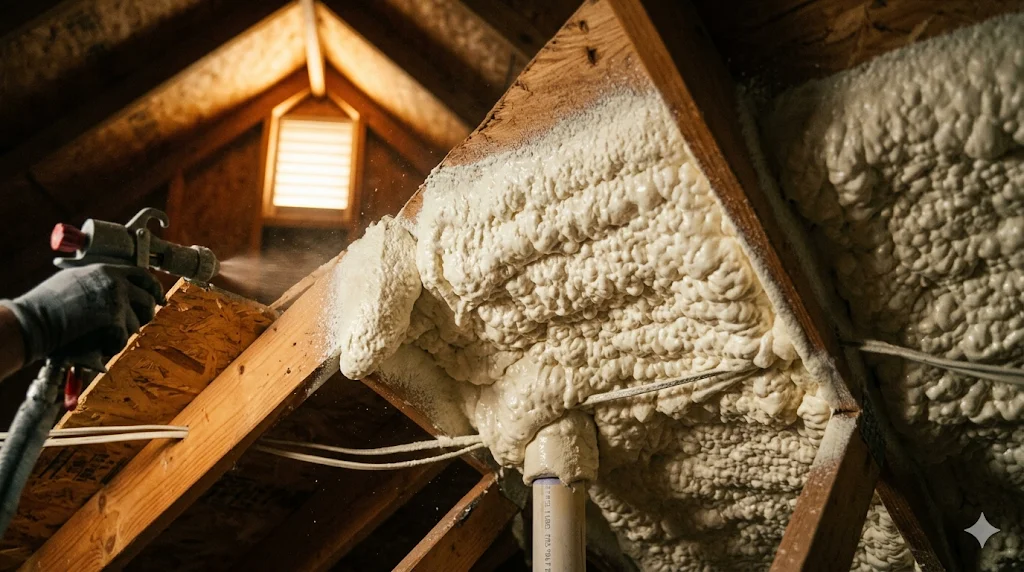
If you've been researching ways to lower your energy bills or improve your home's comfort in Allen, TX, foam insulation has likely come up. It's one of the most effective insulation options available, and it can make a real difference in a Texas climate where summer heat is relentless and energy bills can climb fast.
But foam insulation isn't the right fit for every home or every situation. There are different types with very different applications, and the decision involves more than just picking the most expensive option. This guide walks through what foam insulation is, how it works, the types available, and how to decide whether it makes sense for your Allen home.
What Is Foam Insulation?
Foam insulation is a category of insulating material that expands on contact, filling gaps, cracks, and voids to create an air seal and thermal barrier simultaneously. Unlike traditional batt insulation (fiberglass rolls), foam insulation adheres to surfaces and hardens, which means it seals air leaks while providing insulation value at the same time.
The two primary types of foam insulation used in residential roofing and attics are open-cell spray foam and closed-cell spray foam. Each has distinct properties that make it appropriate for different applications.
Types of Foam Insulation
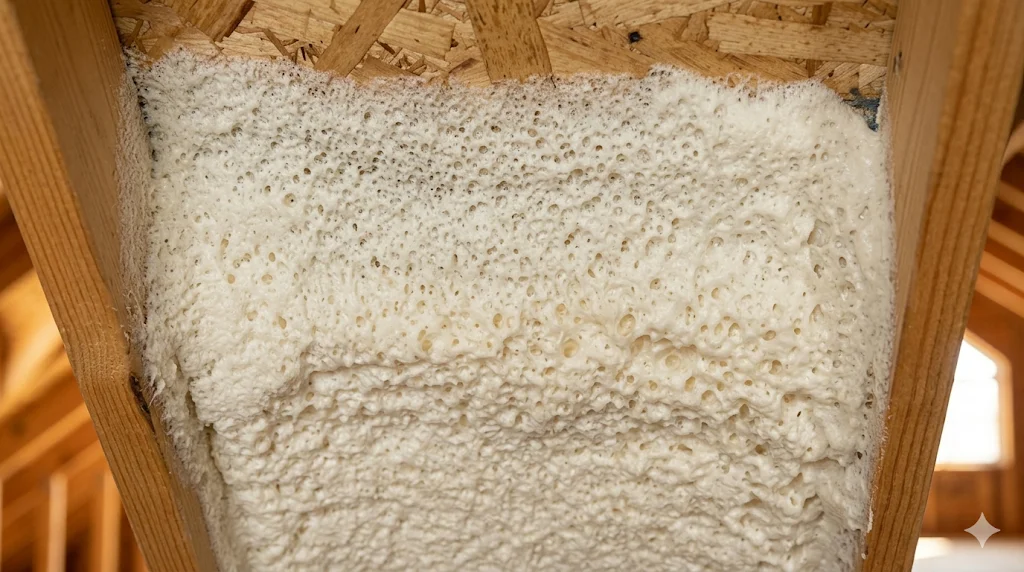
Open-Cell Spray Foam
Open-cell spray foam is the softer, more flexible of the two. It expands significantly when applied and has a sponge-like texture when cured.
Key characteristics:
- Lower R-value per inch (roughly R-3.5 to R-4 per inch)
- Permeable to moisture vapor, which means it allows some humidity to pass through
- Less expensive per square foot than closed-cell
- Excellent sound dampening properties
- Works well for interior attic applications where vapor permeability is acceptable
Because open-cell foam allows moisture vapor to move through it, it's generally better suited for interior applications like spray-applying to the underside of roof decking in a conditioned attic space. In Allen's humid climate, using open-cell foam in exterior or semi-exterior applications without proper planning can lead to moisture accumulation issues.
Closed-Cell Spray Foam
Closed-cell spray foam is denser and harder. Its cells are fully enclosed and filled with gas rather than air, which gives it much better insulating and moisture-blocking properties.
Key characteristics:
- Higher R-value per inch (roughly R-6 to R-7 per inch)
- Acts as a vapor barrier, blocking moisture movement
- Structurally rigid and can add some rigidity to surfaces
- More expensive per square foot than open-cell
- Ideal for rooflines, crawl spaces, and exterior-facing applications
For roofing applications specifically, closed-cell spray foam is typically the preferred choice. It can be applied to roof decking, rafters, or flat roof surfaces and provides both insulation and moisture protection in a single product.
Spray Polyurethane Foam (SPF) Roofing
There's also a category called SPF roofing, where spray polyurethane foam is applied directly to the exterior of a flat or low-slope roof to serve as the roofing membrane itself, not just insulation. This is more common on commercial buildings and flat-roof residential applications. If you have a flat roof addition or outbuilding, SPF roofing may be worth discussing with a contractor.
Benefits of Foam Insulation for Allen Homes
Energy Efficiency in a Hot Climate
Allen, TX sits in a climate zone where summer heat is the dominant energy concern. Attics can reach extreme temperatures during July and August, which radiates heat down into living spaces and forces air conditioning systems to work harder.
Foam insulation, particularly closed-cell, creates a continuous thermal barrier with very few gaps or penetrations. Compared to traditional fiberglass batts, which lose significant effectiveness if they're compressed, damp, or improperly installed, spray foam maintains its R-value over time and leaves no gaps for air to bypass.
Air Sealing Included
One of the biggest advantages of spray foam is that it serves as both insulation and an air barrier in one application. Air leakage accounts for a significant portion of energy loss in most homes. Spray foam fills every crack and gap it contacts, sealing penetrations, joints, and irregular surfaces that batts or blown-in insulation can't fully address.
Moisture Control
In North Texas, summer humidity is a real concern. Closed-cell spray foam applied to a roofline or attic space can help prevent moisture from entering through the roof assembly, reducing the risk of condensation, wood rot, and mold growth.
Durability
Spray foam, once cured, is extremely durable. It doesn't settle, shift, or degrade the way loose-fill or batt insulation can over years of temperature cycling. This makes it a long-term investment rather than something that needs regular attention or replacement.
When Foam Insulation Makes Sense for Your Allen Roof
Not every home needs foam insulation, and it's not always the most cost-effective first step. Here are situations where it tends to deliver the strongest return.
Older homes with poor attic air sealing. If your home was built before the 1990s and hasn't had insulation upgrades, the attic likely has significant air leakage. Spray foam applied to the roof deck or attic floor penetrations can dramatically reduce that.
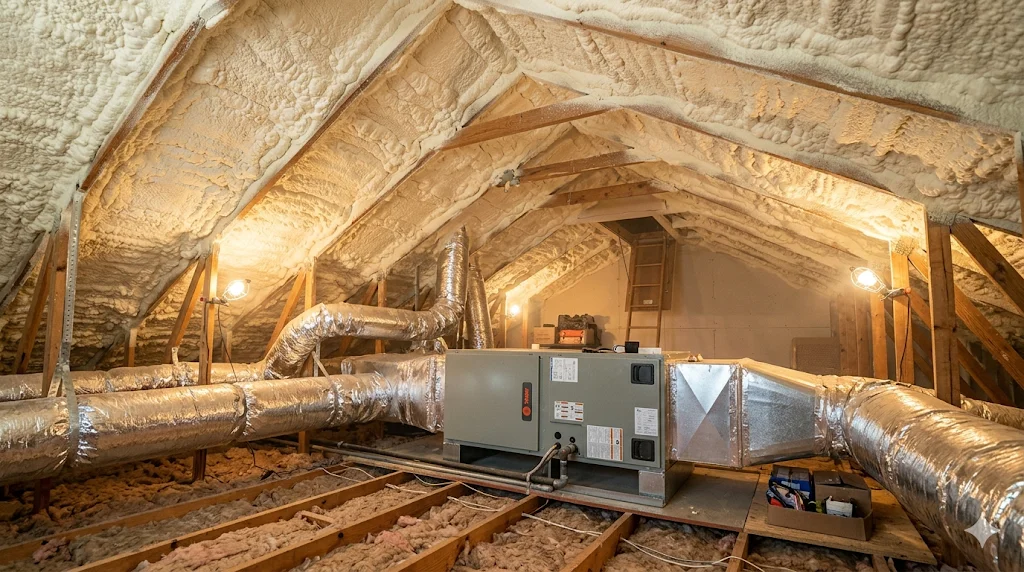
Homes with HVAC equipment or ductwork in the attic. If your ductwork runs through an unconditioned attic, it's losing efficiency every day. Spray-foaming the attic roofline brings the attic into the conditioned space, dramatically improving HVAC efficiency.
Flat or low-slope roofs. Flat roofs are harder to insulate with traditional materials and are more prone to moisture issues. Spray foam is often the best solution for these roof types.
After a re-roof. If you're already replacing your roof, it's an ideal time to assess and upgrade your attic insulation at the same time, since access is already partially available.
Significant energy bill concerns. If your cooling costs are consistently high and your attic temperatures are extreme, foam insulation is one of the highest-impact upgrades you can make.
When Foam Insulation May Not Be the Right Fit
You have a well-insulated, well-sealed attic already. If your current insulation is in good shape and your energy bills are reasonable, additional foam may not deliver enough return to justify the cost.
Budget constraints. Spray foam costs more upfront than fiberglass batts or blown-in insulation. In some cases, combining blown-in insulation on the attic floor with targeted foam sealing of penetrations can deliver most of the benefit at lower cost.
Roof replacement is needed soon. If your shingles are near the end of their life, it makes more sense to address the roof first. Some foam applications can complicate future roofing work if not planned properly.
What Does Foam Insulation Cost?
Pricing depends on several factors, including the type of foam, the thickness applied, the area being treated, and accessibility. Closed-cell foam typically costs more than open-cell per square foot, but you need less of it to achieve the same R-value.
Costs vary based on your home's size, current insulation situation, and what specific areas are being addressed. The best approach is to get an on-site assessment so you can understand exactly what your home needs and what the return on investment looks like for your situation.
What to Ask a Contractor Before Committing
If you're considering foam insulation, these questions will help you evaluate your options:
- Is open-cell or closed-cell more appropriate for my specific application?
- Will you be applying it to the roof deck (hot roof) or the attic floor?
- How will this affect my attic ventilation system?
- Is there any prep work needed before installation?
- What is the expected payback period based on my current utility usage?
A reputable contractor will answer these questions clearly and won't pressure you into a scope that doesn't fit your home's actual needs.
Work with a Roofing Professional Who Understands North Texas
Foam insulation decisions are closely tied to your roof's condition, your ventilation setup, and your home's overall building envelope. Getting the right advice from a roofing professional who understands Allen's climate, building codes, and common construction types makes a meaningful difference.
Pickle Roofing Solutions has extensive experience with North Texas homes and can help you assess whether foam insulation is the right upgrade for your specific situation, and how it fits with your current or upcoming roofing work.
Call (972) 954-7186 to schedule a free consultation. We'll take a look at your roof and attic setup and give you straightforward guidance on your best options.
Frequently Asked Questions
What is the difference between open-cell and closed-cell spray foam insulation
Open-cell foam is softer and less dense, providing good sound dampening and air sealing at a lower cost. Closed-cell foam is denser, provides a higher R-value per inch, and acts as a vapor barrier. For roof deck applications in Texas, closed-cell is generally preferred because of its greater moisture resistance and higher R-value in a thinner layer.
Does spray foam insulation void my roof warranty
It can, depending on the manufacturer and how the foam is applied. Some roofing material warranties have specific requirements about attic conditions and ventilation. Always check your current roof warranty before adding spray foam and discuss the implications with your roofing contractor.
Is spray foam insulation worth the higher upfront cost in North Texas
In many cases, yes. North Texas sees extreme summer heat and moderate winters. A properly applied spray foam system that creates a conditioned attic can significantly reduce HVAC loads and energy costs. The payback period varies based on your current insulation situation, utility rates, and the size of your home.
Can foam insulation cause moisture problems in my attic
When installed correctly, spray foam reduces moisture problems rather than creating them. However, an improperly applied system that covers ventilation elements or does not fully seal can trap moisture in areas where it should not accumulate. Professional installation and a pre-installation assessment of your attic's current moisture conditions are essential.
How do I know if my home is a good candidate for spray foam roof insulation
Homes that use the attic as conditioned space, have HVAC equipment or ductwork in the attic, struggle with hot ceilings and high cooling costs, or have persistent ice dam issues (less common in Texas) are often good candidates. A contractor who can assess your attic and existing insulation will give you the most accurate recommendation.
About Pickle Roofing Solutions
Pickle Roofing Solutions is a GAF Master Elite certified roofing contractor serving Allen, Plano, McKinney, Frisco, and surrounding Collin County communities. Call (972) 954-7186 to schedule your free consultation.