

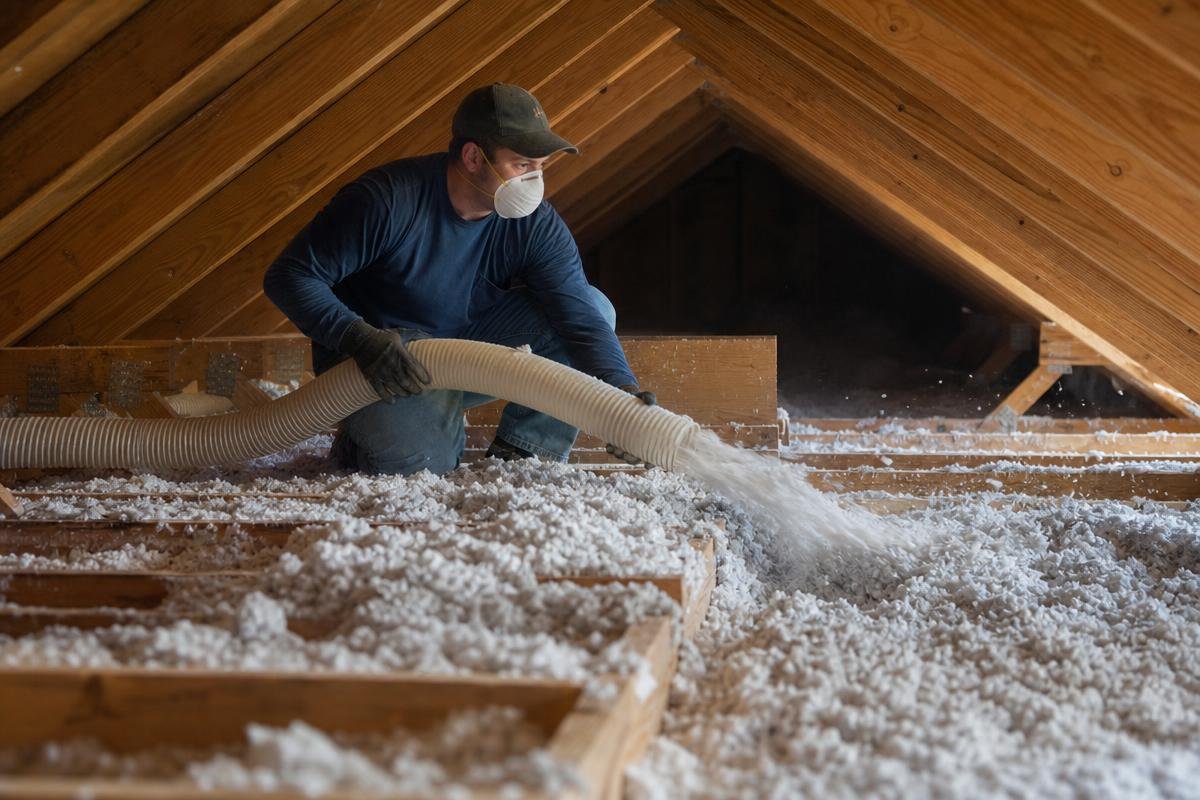
Your attic could be costing you money every single month. Many Allen homes built during the city's major growth years in the 1990s and early 2000s still carry original builder-grade insulation rated R-11 to R-19, well below the R-38 to R-60 the Department of Energy recommends for our climate zone. Choosing the right attic insulation type makes a real difference in energy bills, comfort, and long-term roof health.
At Pickle Roofing Solutions, we have worked with Texas homeowners since 2012 and know firsthand which insulation options hold up when North Texas attic temperatures push past 150°F. This guide walks you through five types so you can make an informed decision. Not sure which attic insulation type fits your Allen home? Our team can compare your options on-site and pinpoint the right fit.
Key Takeaways
Allen, TX homes in Climate Zone 2A need attic insulation rated R-38 to R-60 to meet current DOE standards.
The five main attic insulation types are fiberglass batt, blown-in fiberglass, blown-in cellulose, spray foam, and mineral wool.
Summer attic temperatures in North Texas regularly exceed 150°F, making heat resistance a key factor in choosing your insulation type.
Many local homes approaching 20 to 30 years old are strong candidates for an insulation upgrade or full replacement.
Spray foam runs highest on upfront cost but delivers the best R-value per inch and the strongest air-sealing performance.
Your Summer Electric Bills Are Trying to Tell You Something
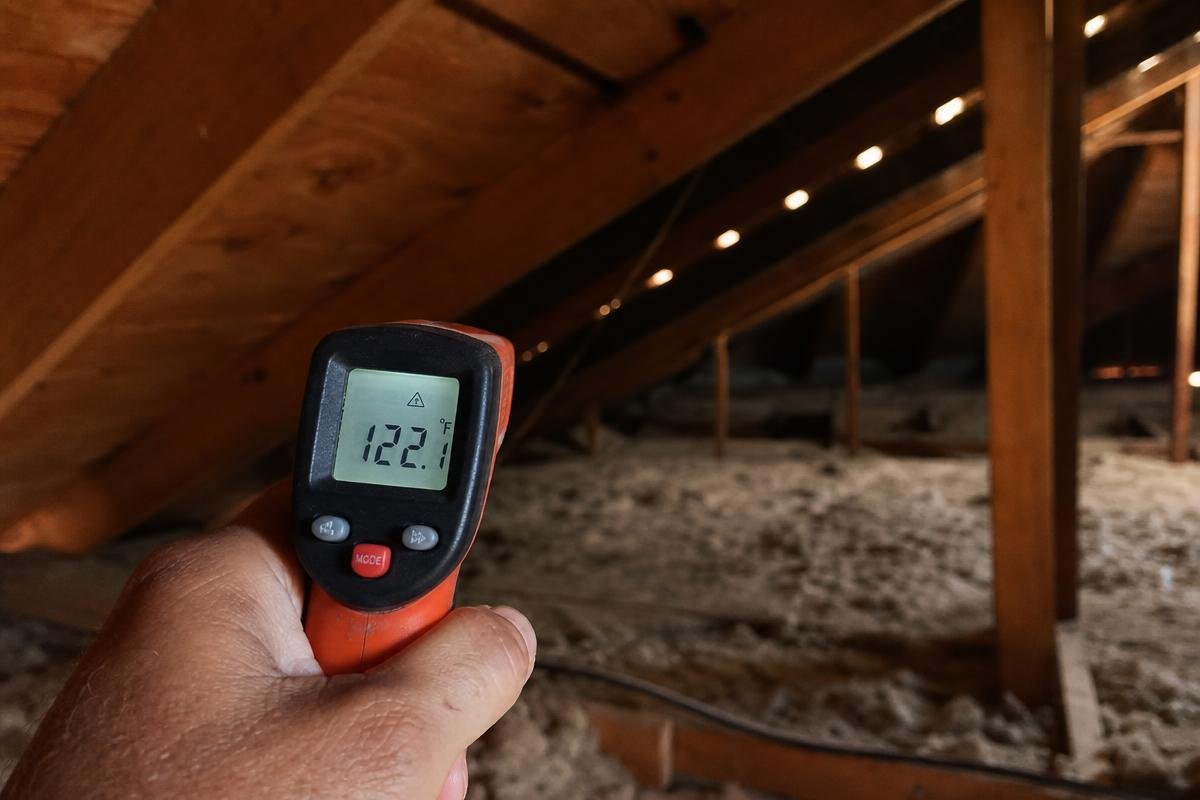
If your electric bill spikes every July and August despite a newer HVAC system, your overhead space is likely the problem. When an attic soaks up radiant heat all afternoon, it presses straight down into your living space, forcing your air conditioner to run almost constantly.
In more than a decade of Allen attic work, we have seen this pattern again and again. The culprit is usually thin, aging builder-grade insulation that never met today's DOE targets. R-value measures resistance to heat flow; the higher the number, the better the insulation performs. The Department of Energy recommends R-38 to R-60 for existing homes in our hot-humid climate zone, yet a lot of older Collin County houses sit far below that line.
This guide covers five insulation types so you can make an informed choice: fiberglass batt, blown-in fiberglass, blown-in cellulose, spray foam, and mineral wool. You can also read about how much spray foam insulation costs before committing to any option. Let's explore each one.
Why Attic Insulation Matters More in Allen Than in Most U.S. Cities
Allen's Climate and the Attic Heat Problem
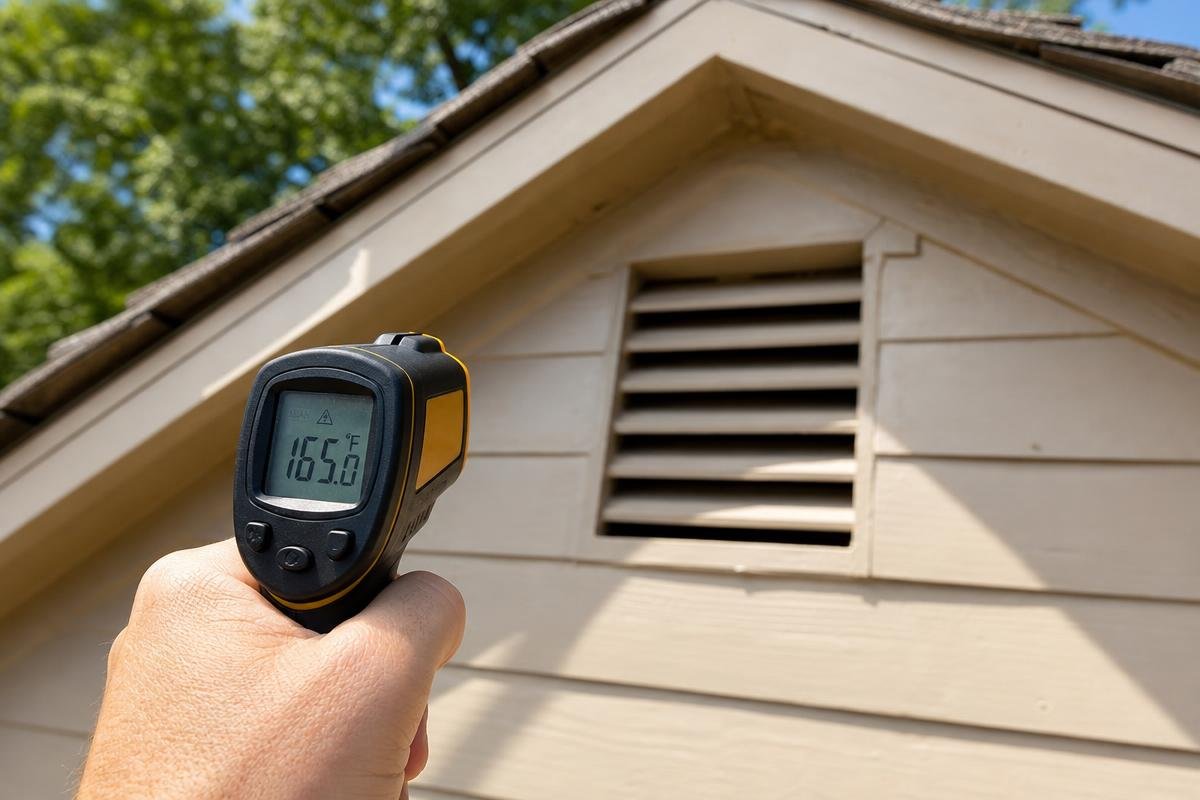
Allen sits in DOE Climate Zone 2A, where attic temperatures regularly exceed 150°F, conditions that degrade standard insulation faster and demand higher R-values than most of the country. According to Texas A&M AgriLife Extension research, attic temperatures in our region can hit 150 to 160°F on a summer afternoon. That heat does not stay up there. Without sufficient insulation, it bleeds straight through the attic floor, which is the ceiling of your top floor, and directly into your living space.
Homes in established neighborhoods like Watters Creek and Twin Creeks are especially vulnerable, since many date to that same 1990s and early 2000s building boom and still carry the thin R-11 to R-19 insulation that came with them. Good insulation and proper airflow work together, and our complete guide to roof ventilation for Texas homes explains how both systems affect your comfort and energy bills.
Winter matters too. Temperatures across Collin County dip into the 20s and 30s during January cold snaps. Insulation works in both directions. It keeps heat out in July and keeps heat in when the cold arrives. This is a year-round problem, not a seasonal one.
How the Right R-Value Saves You Money Year-Round
R-value measures a material's resistance to heat flow per inch of thickness. The higher the R-value, the better it slows heat transfer. For our Zone 2A climate, the recommended range for existing homes is R-38 to R-60. Most older homes in this area fall far short of that target.
The gap matters financially. ENERGY STAR data shows that upgrading from R-11 to R-38 can cut heating and cooling energy use by 20 to 30 percent. On a $250 summer electric bill, that is roughly $50 to $75 in monthly savings during peak cooling months, and it repeats every July and August for years. If you are curious about one of the more effective options for sealing and insulating together, see what spray foam insulation costs compared to its long-term savings.
The 5 Attic Insulation Types Allen Homeowners Most Commonly Use
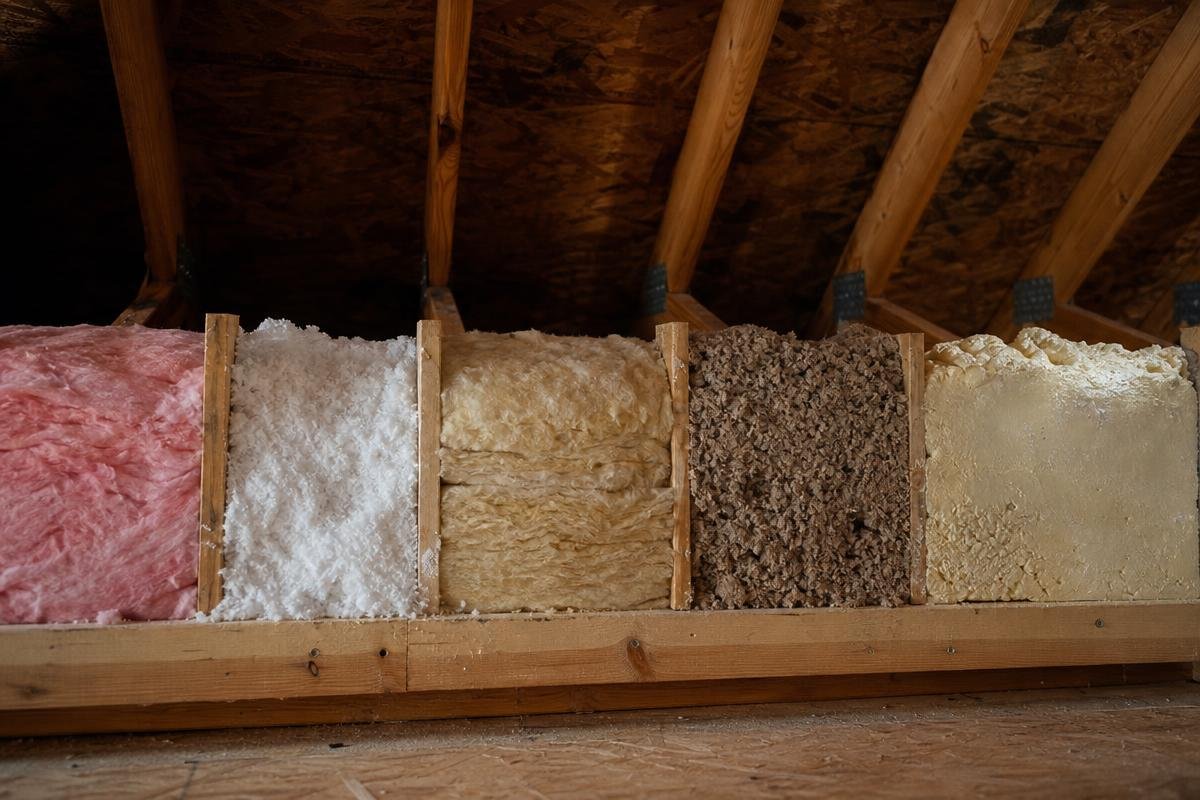
Not every insulation type performs the same way under those same extreme summer temperatures we see across Collin County. Choosing the wrong material means paying to cool air that escapes right through your ceiling. Here is a plain breakdown of each option, including the real downsides contractors do not always volunteer upfront.
1. Fiberglass Batt Insulation
Fiberglass batt insulation consists of pre-cut panels of spun glass fibers sized to fit standard 16-inch or 24-inch joist spacing. It is the most common insulation type found in Watters Creek and Twin Creeks-era homes, usually installed at builder-grade R-values that no longer meet code.
R-value: R-2.9 to R-3.8 per inch; you need roughly 10 to 13 inches to reach R-38
Pros: Lowest upfront cost; widely available; DIY-friendly for straightforward joist bays
Cons: Gaps around wiring, pipes, and irregular framing kill effective R-value fast; compression from storage or foot traffic permanently reduces performance; no meaningful air-sealing benefit
Best for: Homeowners on a tight budget with clean, unobstructed joist bays and no existing moisture issues.
2. Blown-In Fiberglass Insulation
Blown-in fiberglass uses the same glass fiber material as batts, but a blower machine shreds it into loose fill and distributes it across the floor. It covers obstructions like pipes and cross-bracing far better than pre-cut panels.
R-value: R-2.2 to R-2.7 per inch; expect 14 to 17 inches to reach R-38
Pros: Better coverage around irregular framing; faster to install over existing insulation; lower installed cost than spray foam
Cons: Settles 1 to 2 inches over time, reducing R-value; requires rented or contractor-owned blower equipment; minimal air-sealing effect
Best for: Topping off existing insulation in older homes where the framing layout makes batt installation impractical.
3. Blown-In Cellulose Insulation
Blown-in cellulose is made from 75 to 85 percent post-consumer recycled paper treated with borate, a naturally occurring mineral that acts as a fire retardant. It resists air infiltration better than loose fiberglass because the fibers pack more densely.
This is a strong option for Collin County homes where spring humidity cycles are a real concern, but cellulose absorbs moisture when wet, losing R-value and creating mold risk. Always schedule a professional roof inspection before installation to rule out any active leaks above the insulation layer.
R-value: R-3.2 to R-3.8 per inch; roughly 10 to 12 inches to reach R-38
Pros: Better air infiltration resistance than loose fiberglass; recycled content; good coverage around obstructions
Cons: Moisture absorption is a real risk in humid spring conditions; heavier than fiberglass, adding ceiling load; requires professional blower equipment
Best for: Homes with confirmed dry roof decks and good ventilation where air sealing is a priority but a spray foam budget is not available.
4. Spray Foam Insulation (Open-Cell and Closed-Cell)
Spray foam is the only attic insulation type that seals air gaps while insulating simultaneously. Open-cell foam runs R-3.5 to R-3.8 per inch and stays soft and vapor-permeable. Closed-cell foam runs R-6 to R-7 per inch, acts as a vapor barrier, and adds structural rigidity to the roof deck. Per DOE data, spray foam reduces air infiltration by up to 40 percent compared to loose-fill options.
A conditioned-attic strategy, where foam is applied to the underside of the roof deck rather than the floor, keeps ductwork inside the thermal envelope and is increasingly popular across our service area. This is the highest upfront cost option. See our breakdown of spray foam insulation costs before budgeting.
R-value: Open-cell R-3.5 to R-3.8/inch; closed-cell R-6 to R-7/inch
Pros: Best air sealing of any option; closed-cell doubles as a vapor barrier; long service life
Cons: Highest installed cost; professional-only installation; closed-cell can trap moisture if applied over a leaking deck
Best for: Homes prioritizing maximum energy performance, duct efficiency, or a fully conditioned attic space.
5. Mineral Wool (Rockwool) Batt Insulation
Mineral wool, often sold under the Rockwool brand, is made from volcanic rock or industrial slag spun into dense batts. It is naturally fire-resistant without added chemical retardants and repels water rather than absorbing it, making it a better moisture performer than standard fiberglass batts in our humid spring months.
R-value: R-3.0 to R-3.3 per inch; roughly 12 to 13 inches to reach R-38
Pros: Holds shape better than fiberglass batts over time; water-repellent; no chemical fire retardants needed; good sound dampening
Cons: 20 to 30 percent higher cost per square foot than fiberglass batts; less commonly stocked at local suppliers, which can extend project timelines
Best for: Homeowners who want batt-style installation with better durability and moisture resistance than standard fiberglass, and who are willing to pay a modest premium for it.
Want a professional assessment of which insulation type fits your Allen home? Our licensed Texas roofing crew will measure your current R-value and recommend the best option for your budget.
How Do These Insulation Types Compare Side by Side?
R-Value, Cost, and Installation Complexity at a Glance
Reading through five insulation types takes time. This table gives you the key numbers in one place so you can compare quickly.
Closed-cell spray foam: R-6 to R-7 per inch | Highest cost | Not DIY-friendly | Strong moisture barrier
Open-cell spray foam: R-3.5 to R-4 per inch | High cost | Not DIY-friendly | Vapor-permeable
Blown-in fiberglass: R-2.2 to R-2.7 per inch | Low to moderate cost | DIY-possible | Moderate moisture resistance
Blown-in cellulose: R-3.2 to R-3.8 per inch | Low to moderate cost | DIY-possible | Poor moisture resistance
Mineral wool (rock wool): R-3.0 to R-3.3 per inch | Moderate to high cost | DIY-possible | Good moisture resistance
Depth matters too. To reach R-38, closed-cell spray foam needs roughly 5.5 inches, while blown-in fiberglass needs 14 to 17 inches. If your overhead space is tight, that difference is real. For detailed pricing, see our page on spray foam insulation pricing.
Which Type Handles North Texas Heat and Humidity Best?
Our area throws two problems at insulation: radiant heat during those punishing summer afternoons, and spring storms that bring humidity spikes and hail risk. Those two factors together change the ranking.
Closed-cell spray foam ranks first for this climate. It resists heat, blocks moisture, and doubles as an air barrier. Mineral wool ranks second for moisture resistance. Blown-in cellulose ranks last. We have pulled wet, compacted cellulose out of Collin County homes after hail storms punched small holes in aging shingles and let water in.
Once cellulose gets wet, it loses R-value fast and can grow mold. A storm damage roof repair and a roof inspection should always come before any insulation upgrade, because damaged decking or missing flashing will ruin new insulation regardless of type.
Have a spray foam question or want a written comparison for your home? Call us at (972) 954-7186 and we will walk you through the right choice for your specific situation.
What to Check Before Choosing an Attic Insulation Type
Before you spend money on blown-in insulation or any other upgrade, you need two things: an honest look at what is already up there, and a roof and ventilation system that will not undo your investment. Skipping this step is one of the most common mistakes we see in homes across ZIP codes 75002 and 75013. A few minutes of prep work can save you thousands.
Assess Your Current Insulation Level First
You can do a basic self-assessment before calling anyone. Here is how to do it safely and accurately:
Go up early. Enter the space in the early morning before heat builds. Summer afternoons are dangerously hot up there, so early morning is far safer.
Dress for it. Wear a dust mask, safety glasses, and long sleeves. Fiberglass particles irritate skin and lungs.
Measure depth at several points. Use a ruler or tape measure. Check near the access hatch, in the center, and in the corners. One reading is not enough.
Identify what you have. Pink or yellow fluffy material is fiberglass batt or blown-in fiberglass. Gray fluffy material is cellulose. Rigid foam adhered to surfaces is spray foam.
Compare to DOE targets. For our climate zone, the Department of Energy recommends R-38 to R-60 for existing homes. R-38 requires roughly 12 inches of fiberglass batt or 10 to 12 inches of cellulose. If you measure under 10 inches of any loose-fill material, your home is almost certainly under-insulated.
Homes built in the 1990s in established neighborhoods like Watters Creek and Twin Creeks frequently still have their original thin insulation. That is well below current standards and a clear sign an upgrade is overdue.
Roof Condition and Ventilation Are Non-Negotiables Before You Insulate
Installing new insulation over a leaking roof is a costly mistake. A single active leak saturates cellulose or fiberglass and destroys R-value within months. Spring hail storms in Collin County make this especially relevant. Get a professional roof inspection before committing to any insulation project.
Ventilation matters just as much. Poor airflow traps heat and moisture, reducing the effectiveness of any insulation type you choose. Insulation and ventilation must be addressed together. Our complete guide to roof ventilation for Texas homes covers exactly what to look for. If your soffit vents are blocked or your ridge vent is undersized, fix that first. Adding the best attic insulation for Texas heat on top of a ventilation problem will not deliver the energy savings you expect.
Why Allen, TX Homeowners Trust Us for Attic Work
Attic insulation is not just a standalone project. It connects directly to how your roof deck breathes, how your ventilation performs, and how long your shingles last. That full-system understanding is exactly what separates a roofing company from a general contractor, and it is what we bring to every job.
Local Experience Since 2012 and a GAF Master Elite Credential
Randy Pickle founded this company in 2012. Since then, our team has worked with homeowners across Plano, McKinney, Carrollton, Garland, Richardson, and Wylie, in addition to the neighborhoods right here in our own backyard. That firsthand experience across so many DFW homes means we have seen nearly every insulation scenario possible.
As a licensed Texas roofing contractor, we hold a GAF Master Elite certification and President's Club Award, credentials held by fewer than 2% of U.S. roofing contractors. We are also BBB Accredited with an A+ rating. These are not just wall decorations. They reflect a standard of work that covers the entire system, from the roof deck down through the insulation layer.
If you are researching blown-in insulation in Allen TX or comparing spray foam options, you want a contractor who understands how those choices interact with your ventilation and roof structure. Our office is located at 1333 W McDermott Dr, Suite 200, Allen, TX 75013. We are a local team, not a national franchise.
What Our Customers Say About Working With Us
We average 4.8 stars across 378 reviews. The themes that come up repeatedly are direct access to ownership, honest guidance through a confusing process, and no pressure to buy more than what the home actually needs. Texas homeowners tell us they chose us because we explained their options clearly and then let them make an informed decision.
That approach does not change for insulation work. We assess what is already in your space, tell you what the numbers mean, and recommend what fits your home and budget.
Frequently Asked Questions
What is the best attic insulation type for Allen, TX homes?
Closed-cell spray foam is the top performer for our extreme summer heat. It delivers the highest R-value per inch and seals air gaps that other materials leave open. That said, blown-in cellulose is a strong, cost-effective choice for well-ventilated spaces that are already free of leaks or moisture. The right pick depends on your budget, your existing insulation, and whether your overhead space has any air sealing needs.
How much attic insulation do I need in North Texas?
The U.S. Department of Energy recommends R-38 to R-60 for homes in our hot-humid zone. That translates to roughly 10 to 17 inches of blown-in material, or about 5.5 to 6 inches of closed-cell spray foam. If you already have some insulation in place, measure what is there and add only enough to reach the target. You do not need to tear out good existing material to hit the right R-value.
Can I add new insulation on top of my existing insulation?
Yes, in most cases. Blown-in fiberglass or cellulose insulation can be added directly over existing dry, undamaged batts or loose-fill. The R-values stack together, so you get credit for what is already there. The exception is existing insulation that is wet, compressed, or shows any sign of mold. That material must come out before anything new goes in.
How much does attic insulation cost in Allen, TX?
Fiberglass batts are the least expensive option per square foot, while closed-cell spray foam sits at the high end. Spray foam costs more upfront, but it delivers the highest R-value per inch and the longest useful lifespan of any common insulation material. For a detailed breakdown of spray foam pricing, see our spray foam insulation cost guide. We provide a full written estimate before any work begins, so there are no surprises on installation day.
Does attic insulation affect my roof or shingles?
Proper insulation moderates temperature swings in the overhead space, which reduces thermal stress on the roof deck and shingles below it. That is a good thing. However, insulation without adequate ventilation traps heat and moisture, and that combination accelerates shingle breakdown from the inside out. Our complete guide to roof ventilation for Texas homes explains how to keep both systems working together correctly.
Should I insulate my attic floor or the roof deck (rafters)?
Floor insulation is the standard approach when your HVAC ductwork runs through the living space below. Roof deck insulation, which creates a conditioned overhead space using spray foam applied directly to the rafters, is the better choice when ductwork runs through the overhead area itself.
Keeping ducts inside the thermal envelope prevents them from losing conditioned air to the intense summer heat. Many homes built in this area before 2005 have ductwork running through the overhead space, making roof deck insulation worth a serious look.
Ready to stop paying for heat that is pouring through your overhead space? Our team serves Plano, McKinney, Garland, and surrounding cities across the region. Call us at (972) 954-7186 or schedule a free assessment online. We will tell you exactly what your space needs and what it will cost before any work begins.
Ready to Get Started with Pickle Roofing Solutions?
Call (972) 954-7186 to speak with our team directly. We're ready to answer your questions, walk you through your options, and help you find the right solution for your needs. Whether you're just starting to plan or ready to move forward, we'll make the process simple and stress-free.
Reach out today and let's talk about how we can help.